For decades, a historic Black church sat abandoned. SC nonprofit says it’s nearly restored.
Nov 29, 2026 | 1:00 pm ET
Description
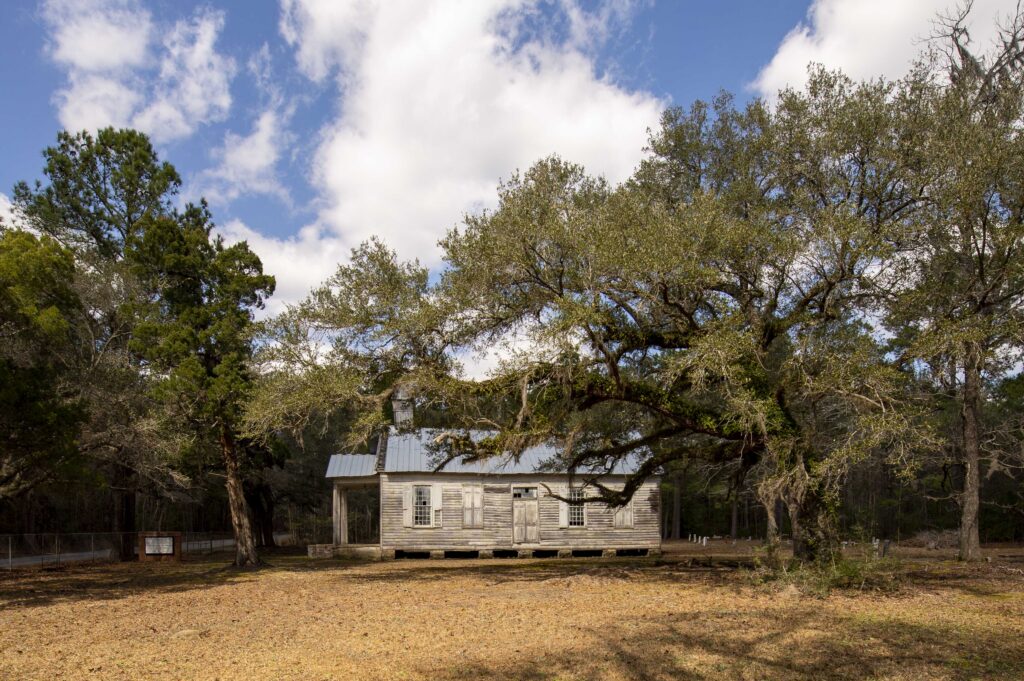
Taveau Church sits tucked behind trees in rural Berkeley County. (Photo courtesy of Preservation South Carolina)
Most people who visit Cordesville, a small, unincorporated part of Berkeley County, don’t notice Taveau Church.
For decades, the historic Black church sat in disrepair between the more well-known religious sites Mepkin Abbey, a historic monastery, and Strawberry Chapel, the only remaining structure from the 1707 town of Childsbury.
Tucked behind a grove of trees along the scenic Cooper River between the two was Taveau, “a Black church that was forgotten,” said Bill Fitzpatrick, who is helping lead the effort for its restoration.
Preservation South Carolina, a nonprofit dedicated to saving the state’s historic buildings, wants to tell the story of one of the oldest surviving Black churches in the state.
In 2022, the nonprofit bought Taveau for restoration. In about a year, officials expect Taveau Church to welcome visitors and tell the story of Black religion in the Lowcountry, said Fitzpatrick, who sits on the nonprofit’s board.
The nonprofit has raised roughly $1.2 million in donations and grants for research and restoration. The most recent grant, $28,530 from the National Park Service, will go toward hiring a researcher to find out more about what happened to the church following the Civil War, Fitzpatrick said.
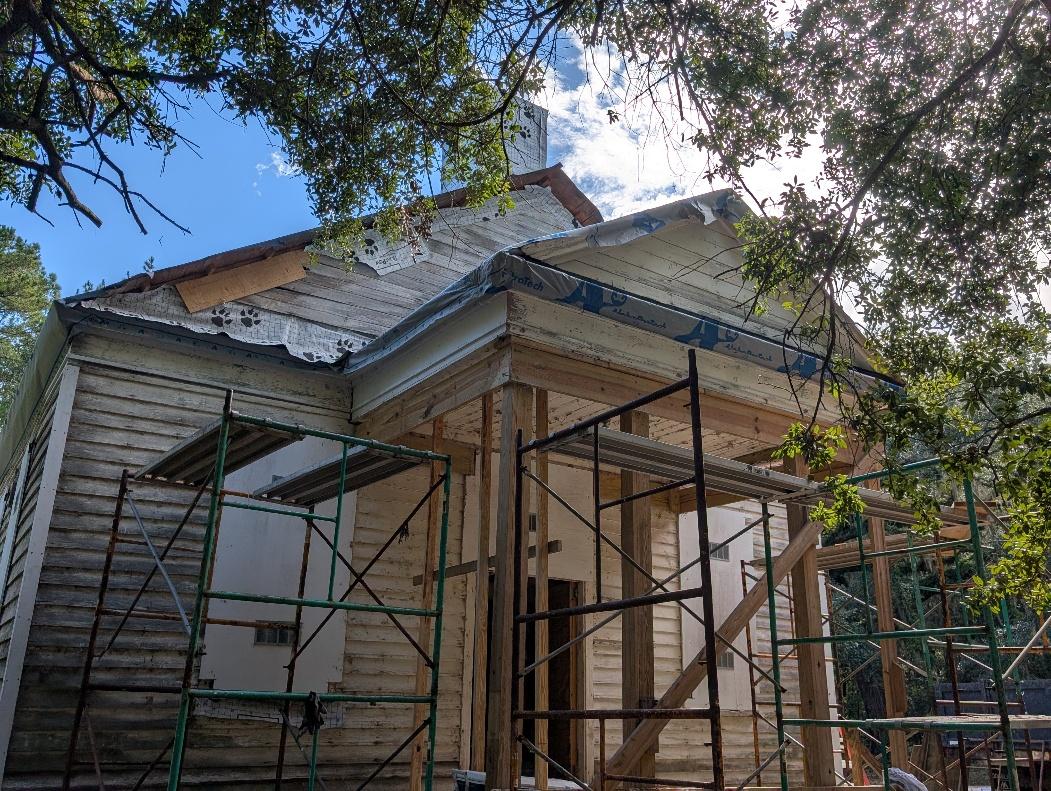
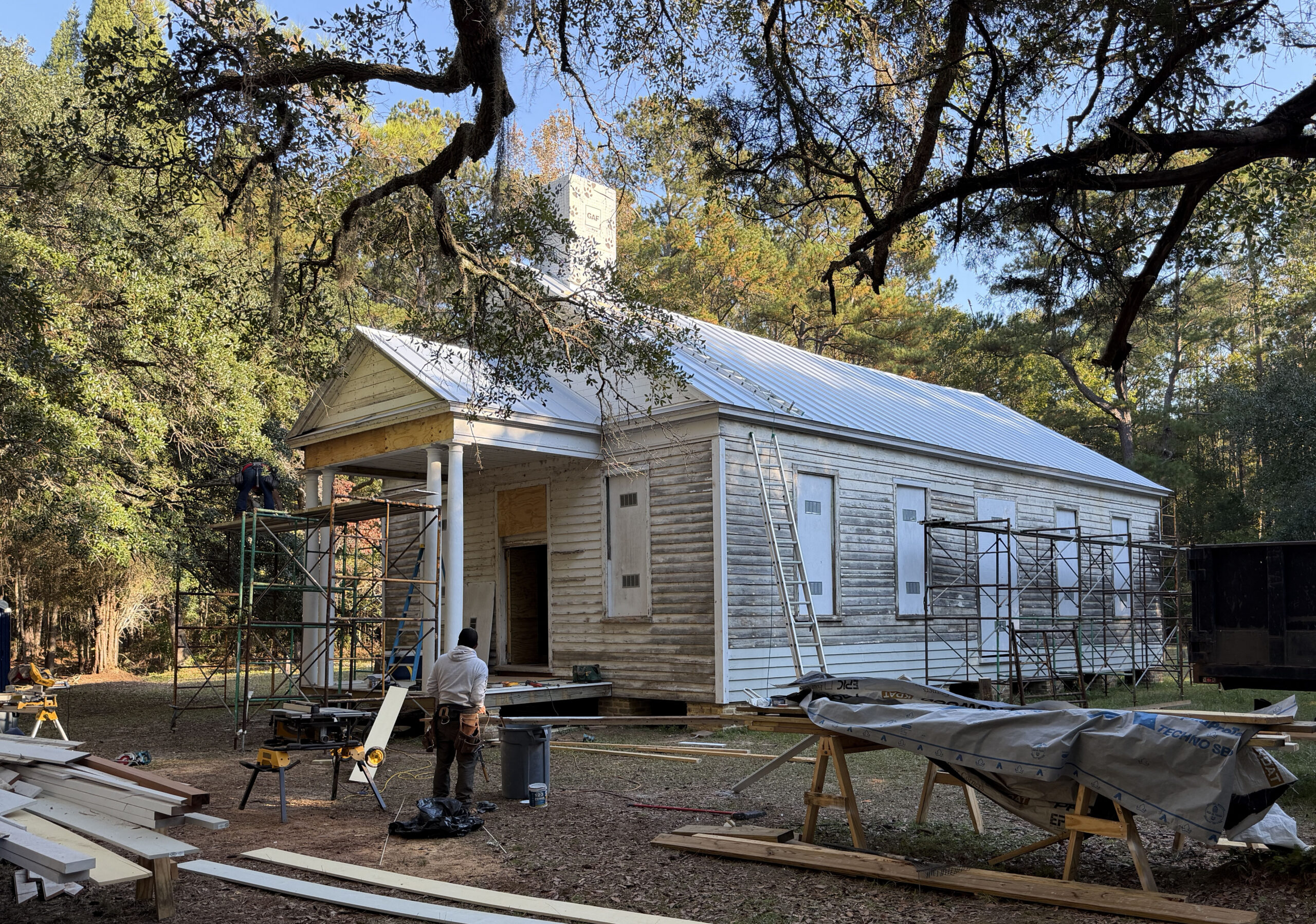
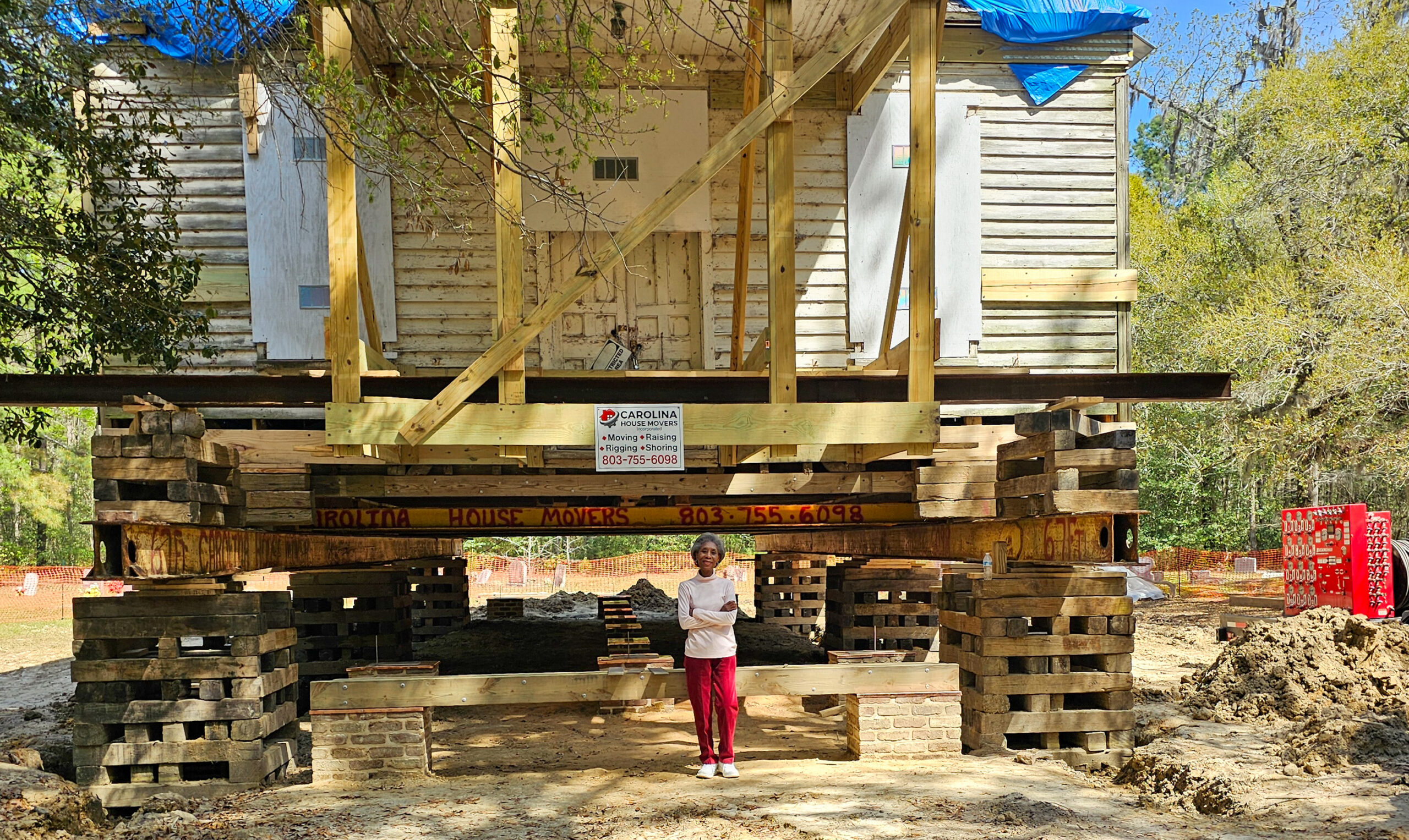
Over the next two months, crews will finish work on the building’s exteriors, including new windows, a new roof and fixes to the foundation, Fitzpatrick said.
“It’ll look brand new in about one to two months,” Fitzpatrick said.
After that, the nonprofit will get to work remodeling and decorating the interior, then adding signs and museum elements explaining the church’s history.
That work should finish up in roughly a year, Fitzpatrick said. The nonprofit will then find a local group to run the church on a day-to-day basis, welcoming tourists and coordinating events.
Taveau’s history
The historic Black church’s history begins with a white slave owner.
Martha Caroline Swinton Ball Taveau had the church built around 1835 on Clermont Plantation, Fitzpatrick said. According to local lore, she wanted a place to worship as a Presbyterian in the otherwise Episcopalian area.
The full truth of that story is unclear, Fitzpatrick said. Regardless of the reason, Ball Taveau commissioned a high-quality church that has stood the test of time.
Ball Taveau, who often went by Caroline, was married twice.
According to writings from the time, the family of her first husband, John Ball Sr., generally considered her bad luck and blamed her for any misfortune in the family, Fitzpatrick said. She was known for her frivolous spending and for her sons causing mischief, he said.
After Ball’s death in 1817, Ball Taveau married Augustus Louis Taveau. Between her two marriages, Ball Taveau had 15 children.
Letters suggest Ball Taveau was deeply religious, Fitzpatrick said. She often wrote to her sons after they moved out, reminding them to pray daily and respect the Sabbath every Sunday.
Ball Taveau was influential in bringing the Methodist missionaries, largely based in Charleston, to Berkeley County to teach slaves about Christianity, Fitzpatrick said. After her death in 1847, Black Methodists began worshipping in the church as part of the Methodist Mission Circuit.
After the Civil War, the church became an influential place for Black worship, blending Christian and Gullah Geechee beliefs. The church remained a pillar of the community for the next century as other Black churches sprang up around it.
“You can almost tell the story of Black religious history by standing on the front porch of Taveau, because this is ground zero to that story,” Fitzpatrick said.
In the 1970s, the congregation dwindled. The United Methodist Conference closed the church in 1974 to consolidate with nearby congregations, and the abandoned church fell into disrepair.
Saving the church
Fitzpatrick first happened upon the church in 2013, as he traveled the state to document historic landmarks. He had recently sold a company he’d founded and used the funds to take some time off work, allowing him to pursue his passions in photography and history, he said.
He found rural churches fascinating because of the outsized impact they had on local communities. His work led him to Taveau Church, the forgotten relic lost between two more famous historic religious sites.
Although the church has been listed on the National Register of Historic Places since 1978, little of the church’s history was documented. As Fitzpatrick walked around the property, he felt as if he had stepped back in time, much like seeing the Roman Coliseum or the Taj Mahal, he said.
Most of the rural churches he’d seen were small, cinderblock structures. Taveau, by contrast, is a rare surviving example of a wooden antebellum structure with a gable roof and four columns supporting a portico out front, according to the National Register listing.
“It demands attention,” Fitzpatrick said of the church. “It demands respect. I mean, even in ruined condition, it just caught my eye, like, ‘What are you doing here?’”
On his quest to document more than 1,000 landmarks, Fitzpatrick got his photos and left. But the beauty and the history of the area stuck with him, and he returned in 2021.
He found the church to be in much worse shape than the last time he saw it. The roof had collapsed, allowing rainwater inside. The entire front of the building had detached from the rest. The brick foundation showed signs of crumbling.
Fitzpatrick, recognizing the church’s significance to the area, wanted to find a way to save the building.
“You can’t lose this place,” he said. “You cannot lose this church.”
Although many locals loved the church and had fond memories there, the area doesn’t have the tax base to support a massive restoration effort, Fitzpatrick said. No local organizations had the resources necessary for the project.
“To ask a community of that type to take on this multimillion-dollar preservation project, it’s not going to happen,” Fitzpatrick said.
So, in 2022, Preservation South Carolina bought the church with the hopes of telling a story nearly lost to time.
Telling the story
Pinning down the church’s precise history after Ball Taveau’s death is difficult, said Cynthia Gibbs, chair of preservation group Taveau Legacy. The area’s Black history wasn’t taught in schools, and not much was written down. Most of what remains is passed down through family stories, she said.
“Our history is not going to be in the local Berkeley paper,” she said. “It’s just going to be in the memories of folks.”
Gibbs grew up just five miles down the road from the church. She attended a so-called sister church and sometimes went to events at Taveau or met congregants at events put on by her home church, she said.
When she heard about the condition of the church, she got in touch with Fitzpatrick. At the encouragement of a church trustee, Gibbs agreed to help lead the effort to save the church.
Despite her personal ties, she has heard stories through her work that she’d never heard before, she said.
A few years ago, a researcher the nonprofit hired to track down documentation of the church’s history came across a roster of students and teachers under the church’s name from 1869 and 1870. Few people in the area knew the church had served as a schoolhouse for Black children during Reconstruction, Gibbs said.
Many of the students share last names with people who still live in the area. Gibbs recognized names of relatives from both sides of her family, and after asking around, she confirmed her ancestors went to school there, she said.
She hopes to track down other descendants of Taveau’s students and teachers to connect them with history and see whether they have more stories about the church, she said.
Part of the research the nonprofit is doing on the church involves collecting oral histories to fill in those gaps, she said.
“Taveau’s story itself is missing, and we must get it told,” Gibbs said.
Even though the church’s history didn’t get recorded in a traditional sense, understanding what happened there is essential to understanding the state of religion in the area during the 19th and 20th centuries, she said.
Tourists often visit the nearby abbey and chapel but miss out on the history of Black religion in the South.
Gibbs envisions Taveau as one day becoming an essential stop for tourists going to the other religious buildings in the area, she said.
She wants Taveau to again become a working church, offering weddings, funerals and prayer services alongside historic tours. That way, people can really understand the church’s place in history, she said.
“Without Taveau’s story, it’s like picking up the New Testament and it’s missing one of the four gospels,” she said. “Without Taveau’s story, the history of the area is incomplete.”

Columbia