How will data centers impact Michigan’s renewable energy goals? It’s complicated, new research says
Nov 25, 2026 | 8:00 am ET
Description
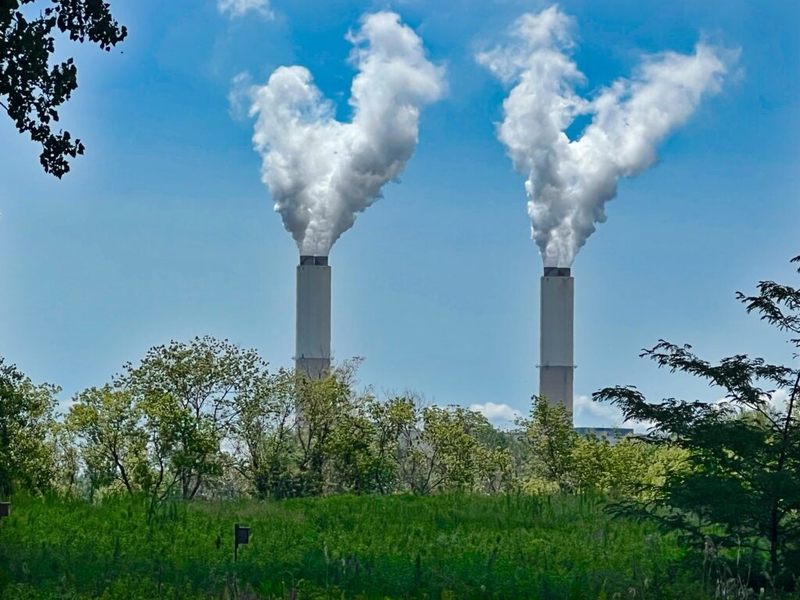
DTE Monroe power plant (Photo by Susan J. Demas/Michigan Advance)
As data center proposals pop up across Michigan, concerns about the amount of energy and water used by hyperscale facilities across the country has been at the forefront of arguments against the projects.
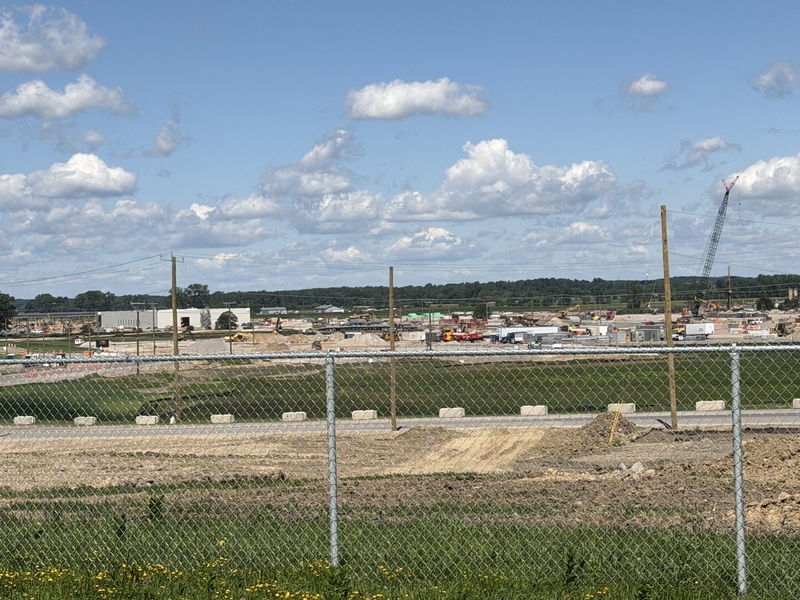
With a facility under construction in Saline Township expected to use 1.4 gigawatts of electricity – roughly equivalent to the power usage of 1.2 million Michigan homes – and another in Van Buren Township expected to demand 1 gigawatt from the grid, environmental advocates have raised concerns over how the electricity demand from facilities like these will impact Michigan’s clean energy goals.
In 2023, the Democratic-led Michigan Legislature passed a series of clean energy bills, including legislation requiring Michigan energy companies to supply power from a portfolio of 100% clean energy resources – which can include nuclear energy and natural gas facilities using 90% effective carbon capture and storage technology – by 2040.
Along with the clean energy standard, the law also requires energy companies to secure 60% of their power from renewable sources including solar, wind, geothermal energy and the movement of water by 2035.
While the law has benchmark requirements for energy providers to build up their portfolio of renewable energy resources, organizations such as the Michigan Environmental Council have argued that increased energy demand from data centers could extend the lifespan of fossil fuel plants, and incentivize companies to build additional gas plants.
In a recent research brief, the nonpartisan Citizens Research Council of Michigan examined how data centers could impact the state’s efforts to meet that 60% renewable energy standard within the next nine years.
Currently, only about 13% of Michigan’s electricity is generated from renewable energy sources, the report notes.
The state is also facing separate challenges in building up its renewable resources, including ongoing legal challenges to the law around renewable energy siting, expiring tax credits from the federal Inflation Reduction Act, the growing cost of energy generation and the difficulties connecting energy resources to the grid.
The brief also noted that Michigan’s clean energy law was crafted in 2023, meaning policymakers hadn’t considered the possibility of rapid growth in electricity demand from hyperscale data centers when setting these goals. It also points to comments from the Data Center Coalition, an industry group, acknowledging that increased electricity demand from data centers “may challenge the utility’s ability to procure or develop sufficient clean energy sources, implicating statutory or regulatory clean energy and emissions reductions targets.”
Data center tax breaks come with a clean energy requirement
When Michigan lawmakers penned the bills creating the sales and use tax exemption for data centers, they included requirements for data center developers to procure 90% clean energy. However the brief explains that the law does not specify how data centers would demonstrate this, leaving certification of the clean energy requirement to the Michigan Strategic Fund.
Under the fund’s guidelines, a data center can meet the clean energy requirement by contracting with an electric utility that is “actively pursuing compliance” with Michigan’s clean energy law.
If the utility does not comply, the data center does not lose certification for the tax credit, the brief explains, noting that this effectively makes the 90% clean energy requirement a non-factor in meeting the requirements for a tax exemption. Considering the difficulty that new data center energy loads will impose on the utilities, the Citizens Research Council said that could prompt utilities to delay complying with the state’s clean and renewable energy requirements, through the law’s “off-ramp” provision.
Given that two utilities – DTE Energy and Consumers Energy – supply 90% of Michigan’s electricity, the Citizens Research Council examined each company’s plans for meeting the state’s renewable energy requirements.
Consumers Energy is already supplying power to a hyperscale data center, which the council defines as a facility using more than 100 megawatts at peak demand. Additional data center contracts are pending local approval.
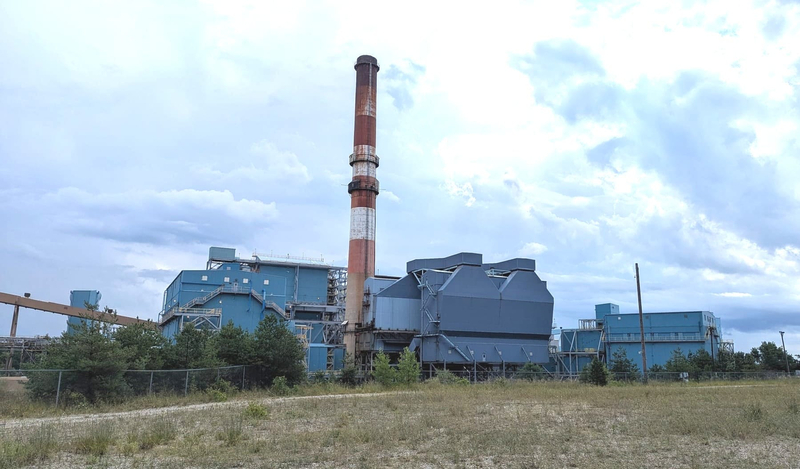
In its most recent integrated resource plan, Consumers Energy acknowledged it must accommodate an additional 2,000 megawatts of electricity demand that it had not anticipated in its 2021 plan. It must do so while replacing 3,000 megawatts of fossil fuel generation as it retires the J.H. Campbell coal plant in Ottawa County and winds down operations at the Dan E. Karn Generating Plant in Bay County by 2031.
To meet that demand, Consumers plans to add 3,000 megawatts of solar energy generation and 1,200 megawatts of wind by 2031, continuing at a similar pace through 2041. The company expects to bring 17,500 megawatts of renewable energy online over the next 15 years, which its analysts say will allow it to meet the state’s clean and renewable energy benchmarks.
DTE Energy, meanwhile, is contracted to provide power to both the Saline Township and Van Buren Township data centers.
The Saline Township project includes an agreement for the data center to fund 1.4 gigawatts of 4-hour battery storage capacity, which would be owned by DTE. While battery storage is complementary to renewable energy use, the council notes that the batteries do not generate renewable energy.
In order to meet the state’s renewable energy portfolio standards while supplying power to the Saline Township data center, the council’s brief says Google will need to bring more renewable energy resources online than previously planned.
As for the Van Buren Township project, Google, which is developing the data center, plans to ensure 40% of the power it receives will be generated by renewables. Google will also be funding 480 megawatts of energy storage and 1.6 gigawatts of renewable generation capacity, although the report said the renewable energy credits created by these sources will not be available to DTE.
In order to serve the Google data center and maintain compliance with the state’s renewable portfolio requirements, DTE estimates that it will need to increase its long-term renewable energy target by 10.8%, which will be funded by a surcharge on Google’s bill. According to the company, the Google data center will be funding 40% more renewable energy than it uses
In its briefing, the council noted that funding for renewable energy and battery storage from these two data centers is critical to DTE’s recently proposed Integrated Resource Plan.
While these agreements will help bring more renewables online, the Citizens Research Council said these data centers will also bring substantial, unanticipated energy load growth, creating a challenge for DTE to provide enough power for these energy loads while it works to retire 3 gigawatts of coal by 2032.
However, DTE expects to meet this challenge while complying with the state’s renewable portfolio requirements by building roughly 15 gigawatts of renewable generation, 4.5 gigawatts of battery storage, and two new natural gas plants for peak energy demand with a combined generation capacity of 2.1 gigawatts.
Data centers bring both opportunities and risks for renewable energy
While the two utilities have provided plans to meet Michigan’s renewable energy requirements while supplying power to data centers, the Citizens Research Council does acknowledge concerns from environmental advocates that these companies would not need to develop a combined 3.5 gigawatts of new natural gas generation if they were not serving data centers.
Although it is theoretically possible to meet current and future energy demand with renewables alone, the council said that could prove difficult, and could be “unacceptably costly.” It notes that while fossil fuel energy generation can be turned on and off to meet demand, renewable energy is contingent on climate and weather.
Power transmission could also present a challenge, the council said, as redistributing energy generation from a few large fossil fuel plants to several smaller renewable sites could require a substantial investment into transmission infrastructure that would ultimately be paid for by energy customers.
According to the council, if Consumers and DTE did not plan to build this additional natural gas generation, they would need to build at least 10 gigawatts of additional renewable energy alongside additional battery storage and transmission infrastructure to make that power available where it is needed.
“Michigan’s utilities are obligated to meet Michigan’s renewable goals, but they are also obligated to do so without impairing reliability or incurring excessive costs,” the council’s brief stated.
Although DTE and Consumers plans appear to meet their regulatory obligations, the council said these plans may not reflect real-world constraints. While together the utilities have planned to build more than 30 gigawatts of solar generation and substantial wind and battery storage, the addition of solar alone would require 150,000 acres of land, or 235 square miles, the brief explains.
Identifying suitable land and securing leases from landowners will be difficult, the council states. It also notes that utilities may struggle to obtain project approvals and secure labor and materials at the required pace.
While the council set out to determine whether data centers would make it more or less difficult for Michigan to meet its 60% renewable energy standard, its final conclusion is complicated.
In the short term, the additional electricity demand from data centers will make it more difficult for Michigan utilities to meet the state’s renewable energy requirements by 2035, the council found. The projects will require a rapid expansion of renewable generation, while potentially increasing the reliance on natural gas.
Over the longer term, however, the data centers could help utilities meet those requirements by funding new renewable energy generation and battery storage. Contracts that allow data centers to reduce their electricity consumption during periods of high demand could also ease pressure on utilities.
However, the council cautioned that utilities may nevertheless need to delay compliance with the state’s renewable energy targets.
Lansing, MI