Georgia food banks, families struggle to stretch aid this holiday season
Nov 25, 2026 | 4:00 am ET
Description
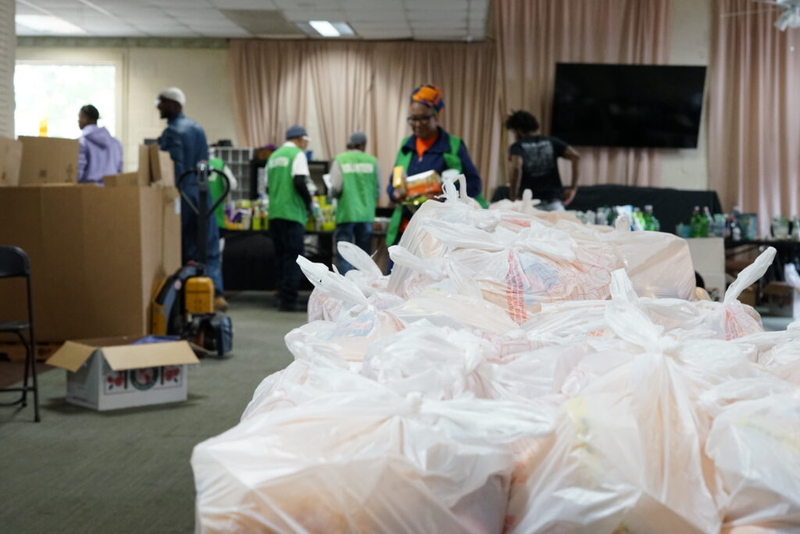
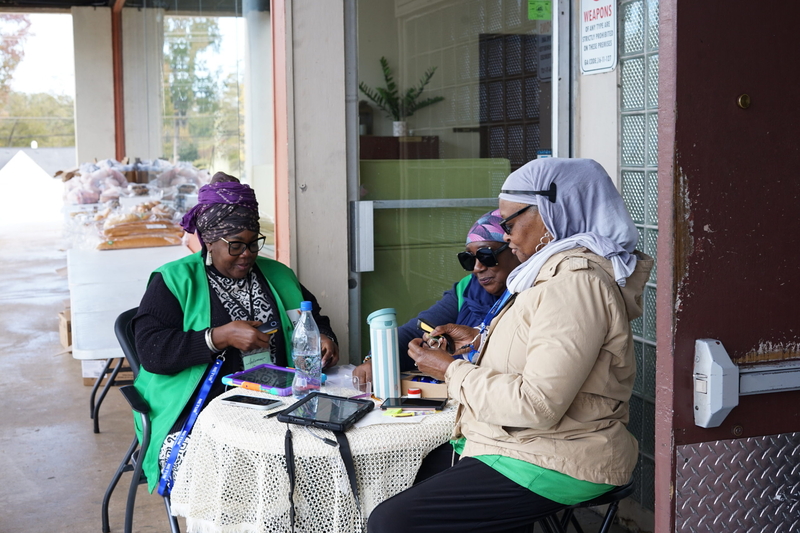
Volunteers at the Enough to Share food pantry, which operates out of the Atlanta Masjid of Al-Islam mosque in DeKalb County, prepare for its bi-weekly food distribution event on Nov. 18, 2026. Alander Rocha/Georgia Recorder
Twice a month, people line up in cars and on foot at Enough to Share, a volunteer-run food pantry that operates out of the Atlanta Masjid of Al-Islam mosque in DeKalb County.
When Enough to Share started in 2017, five volunteers pooled $20 each to buy groceries at a dollar store to provide food assistance to about 30 families. Today, it serves about 240 families every two weeks.
“The demand has increased tremendously,” Nafeesah Madyun, a longtime volunteer, said as she prepared to check in “neighbors,” which is what the organization calls the people they serve, for their food distribution event a week ahead of Thanksgiving.
But at a time when grocery costs continue to climb, the bags that volunteers hand out are getting lighter. Organizers at Enough to Share say that a single bag once covered three to four meals per family. Now it stretches to about two, which forces those who need assistance to rely on multiple pantries and pop-up events during the holidays to piece together groceries.
Community pantries like Enough to Share purchase much of the food they distribute from food banks. Nafeesah Madyun’s husband Nassar, also a volunteer who manages the pantry’s order with the food bank, said that they get less than half the food they do now for the same price they did just as a few years back.
Whereas he used to buy 12,000 pounds of food for about $400, that same amount only gets the pantry about 5,000 pounds of food today. To fill that gap, he scours local greenhouses, partner groups and farmer markets for donations while the pantry dips into its own funds from fundraisers to buy groceries from supermarkets.
“Our primary source being the food bank, and when the food bank doesn’t have food, we don’t have food,” said Amina Ali, vice president of Enough to Share.
At the Atlanta Community Food Bank, which distributes food to hundreds of organizations across 29 metro Atlanta and North Georgia counties, interim president and CEO Jon West said that post-pandemic food inflation has largely eroded purchasing power for both households and nonprofits, which has a two-fold effect. It tightens families’ budgets, forcing many to rely on food banks – which increases demand – and it forces the food bank to get creative to fill the gap.
“Those dollars just aren’t going as far for us either,” West said. “As need goes up, resources are constrained and tight – and tight for us – we’re just not getting as much bang for our buck as we used to. There’s a lot of parallels between what’s happening at the household level and then what’s happening with us and our operations right now as well.”
West added that growing demand is coming from families who have no record of ever utilizing their food banks, saying that about 30% of visitors who got assistance over the last three months were first-time visitors.
The struggle is even sharper outside of metro Atlanta, West said, where there are fewer food banks and nonprofits providing food assistance and that requires residents to travel farther for help.
“Rates of food insecurity are actually higher in our rural areas than they are in our urban areas, and so there’s a variety of economic reasons behind that, but what that means also is that we have more hungry people in places that don’t have as many resources available to help them,” West said, pointing to Haralson County illustrate the issue.
“We just have fewer partners in that county because there are fewer organizations for us to connect with and partner with, and so you have to travel farther to get to resources, which takes more time, energy and fuel, and just makes it really harder to navigate,” he added.
Wesley Myrick, the executive director of the Georgia Interfaith Public Policy Center, said that because there is still significant demand in rural areas with fewer providers with less availability, they can get overwhelmed when they host a food distribution event.
“In our rural communities, you’ve got one, maybe two providers that service the whole county, and that one provider is bombarded as soon as they offer it,” Myrick said.
And at the same time, assistance from the federal level that low-income families rely on is shrinking. The Trump administration cut SNAP funding by about 20%, or about $187 billion, over the next decade through H.R.1 last year, which has already caused 5.5 million people to lose access to the food safety net program – representing a 13% drop, said Joseph Llobrera, senior director of research on food assistance at the Center on Budget and Policy Priorities.
In Georgia, SNAP participation has declined by almost 10%, or roughly 150,000 people, overall and about 8% among households with children. Llobrera said that the decline in households with children is particularly alarming because households with children under 14 are exempt from the new law’s stricter work requirements.
“I think we are seeing historic, unprecedented changes to food assistance in this country,” Llobrera said.
Elaine Waxman, a senior fellow at the Urban Institute, said that as a result, state agencies are scrambling to avoid potential cuts to their SNAP federal funding. The new law could shift a share of the cost to administer SNAP benefits onto states if they fail to quickly lower their payment error rates, which measures administrative and paperwork mistakes rather than fraud, a focus of the current administration. As a result, states have demanded more frequent documentation, which has created a backlog that results in eligible families being knocked off the SNAP rolls.
“[State officials have] been so focused, understandably, on trying to reduce the risk of having to pay benefit costs that the scramble to do that has led to people falling through the cracks,” Waxman said.
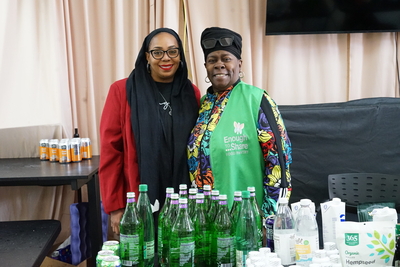
Back at the mosque where Enough to Share hosts their bi-weekly food distribution event, Brenda Rasheed, another longtime volunteer, said that despite slimmer bags due to the rising cost of food and less funding to address the gap, the mood in the drive-thru and walk-up lines has not changed.
“You see the gratitude on faces, the relief on faces,” Rasheed said. “People are grateful to have some support, some supplementing with their own foods that they’re able to secure.”
Atlanta, GA