Voter turnout set record for midterm elections, officials say
Nov 24, 2026 | 10:09 pm ET
Description
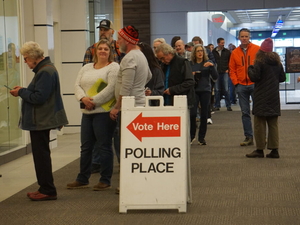
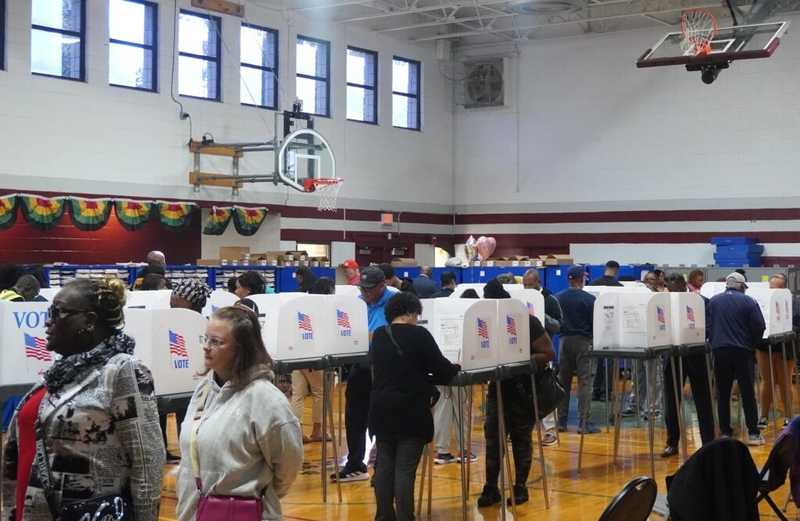
Dozens of Prince George's County voters stand in line and cast their ballots on the last day of early voting Thursday inside the Upper Marlboro Community Center. Despite record turnout for a gubernatorial election, Maryland election officials reported few problems this year. (Photo by William J. Ford/Maryland Matters)
A record number of Maryland voters cast ballots in this year’s midterm elections, and relatively few problems were reported despite fears going in of possible federal inteference, election officials said Tuesday.
It was, in other words, a “smooth and boring” election, just the way Maryland State Elections Administrator Jared DeMarinis likes it.
“Marylanders had a heightened awareness of this election,” DeMarinis said Tuesday, just days after the final votes from the Nov. 3 election were counted. “I’m ecstatic, and I want to have everyone make their voices heard and be a part of the process in how we want to take Maryland forward.”
As of Saturday, all Maryland precincts had finished their canvassing for the general election, with the returns to be officially certified Dec. 1. About 53.2% of Maryland’s eligible voters participated in this year’s election, while the 2022 midterm elections – which saw the two candidates running for governor – garnered participation from nearly 49.3% of the state’s registered voters.
Incoming Democratic Congress fuels hope of more federal dollars for elections
In all, 2,284,985 ballots were cast this year, 253,800 more that the 2,031,185 cast in 2022, according to board of elections data. The most votes were cast in the governor’s race, where the 2,254,987 ballots were divided between Gov. Wes Moore (D) with 65% of the vote to 30% for Republican challenger Dan Cox. Green Party nominee Andy Ellis and Working Class Party nominee Cathy White each got about 2% of the vote.
Of the statewide ballot issues, Question 3, to lift restrictions on congressional redistricting, drew the most votes, with 2,171,366. Of those, 68% voted for passage and 32% opposed the measure.
Turnout during the Oct. 22-29 early voting period reached 604,396 this year, compared to just to 381,972 four years ago. The state elections board had also counted 507,357 mail-in ballots of the 645,962 that were mailed out to voters this year.
Alysoun McLaughlin, director of the University of Maryland’s Election Resilience Lab, said in late October there has been an uptick in voters who prefer to use mail-in ballots since the pandemic, though the rate may be remaining steady as the quarantine time period gets further away.
“We’ve kind of returned to a trend that’s more similar to what we were seeing before the pandemic,” she said. “We’re sort of through the blip. We’ve had a policy change where permanent voting by mail is now available. Voters have some experience with that now, so they’re doing it.”
McLaughlin, who has previously worked as a Montgomery County election official, noted less than a week before Election Day that voters shouldn’t be worried about the security of mail-in ballots. The U.S. Postal Service works with election officials to ensure proper ballot tracking and is in constant communication with directors in the event something goes wrong.
“It’s a dynamic that you manage, a dynamic that you watch. But you know, I do recognize that voters are going to have their own desires, and I’m not really going to argue with them if they’re more comfortable,” McLaughlin said. “That’s why we have choices.”
She said the biggest pressure on election officials this year would be the “scrutiny” driven by voter narratives. It’s easy for people to worry about the credibility of an election when looking at localized incidents on social media or when seeing candidates mobilize voters based on these fears, McLaughlin said.
These concerns shouldn’t deter people from voting, she added. McLaughlin urged voters to trust that officials were set to do their jobs and handle or alert the community if rules weren’t being followed.
“In the course of voting, know that the people who are sitting there, the election judges … who are working hard that day … to make sure that every voter gets one, and only one, opportunity to cast their ballot are people, too,” she said in late October.
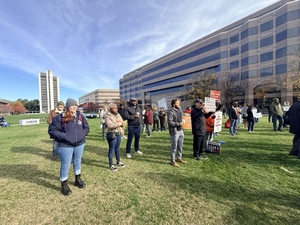
SecureTheVoteMD, an organization striving to promote secure and accountable elections, held a news conference in front of the Maryland State Board of Elections office in Annapolis Tuesday to highlight its concerns surrounding election transparency and to call for DeMarinis’ resignation for what they say was a mishandling of the election.
Among other issues, they pointed to the board’s decision earlier this year to mail out 565,000 replacement mail-in ballots for the primary election, after an error by the state’s printing vendor resulted in some voters receiving a ballot for the wrong party. In Maryland, primary elections are limited to voters registered with the Democratic or Republican party.
DeMarinis said Tuesday there was “no reality” to the claims they made about election security and lost ballots.
“Elections have been transparent. This activity out here is designed to do one thing, and that’s to sow distrust,” he said of the group’s gathering.
Annapolis, MD