Delawareans file lawsuit seeking second U.S. House seat
Nov 24, 2026 | 8:35 am ET
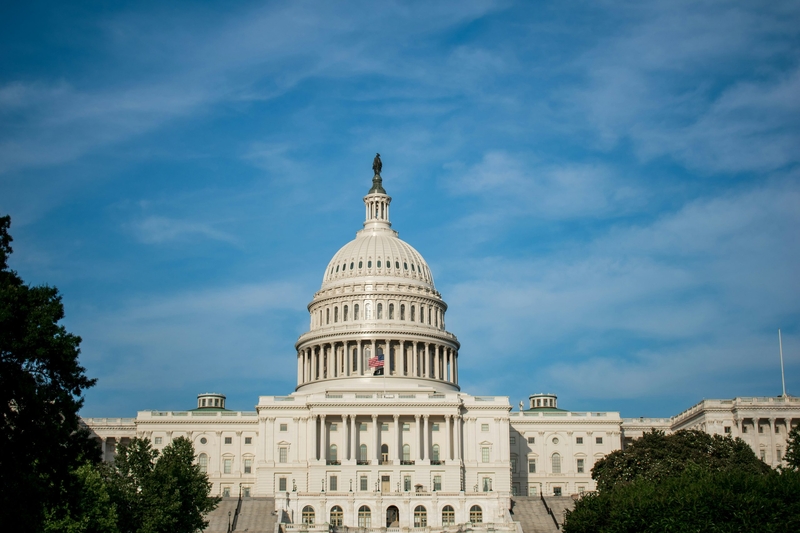
Description
Photo courtesy of Spotlight Delaware
Why Should Delaware Care?
Congress has capped the House of Representatives at 435 members for decades, and reapportioned its members between states as populations change. That system has recently shortchanged Delaware though, as it is now the most populous state with just one representative, but two advocates are trying to increase Delaware’s representation in national politics.
Two Delaware residents are trying to convince a federal judge that the First State deserves a second voice in the U.S. House of Representatives.
In a lawsuit filed earlier this month, Wilmington resident Kevin Price and Newark resident David Redlawsk challenged the constitutionality of the current size of the 435-member House. They argue the court should give Congress a deadline to increase the chamber’s membership, granting Delaware a second representative to “cure the violation” currently befalling the state.
Should Congress not act, the suit requests a judicial order that would award Delaware an additional representative in time for the 2028 elections.
Redlawsk, a University of Delaware political science professor who was elected to the Delaware House of Representatives earlier this month, said the matter has been on his mind for years. Once the midterm election furor subsided, he and Price decided to move forward.
“Given all of the focus we’ve had on voting rights in many different perspectives, the one thing we haven’t had is this [conversation],” Redlawsk said. “Why is the Congress capped, and what are the implications for representation that it is capped?”
Except for a brief period of time in the 1960s, during which additional slots were added to the House to allow for members from Alaska and Hawaii, the number of representatives has stayed at 435 thanks to a 1929 law that capped the body’s total membership and stopped House expansion.
Since then, Congress has reapportioned House seats every decade in accordance with the results of the U.S. Census — awarding states with growing populations additional Congressional representatives and taking them from other states to maintain the 435-member cap. Delaware’s population, which rose 10.2% from 2010 to 2020, nearly garnered it another representative in the last reapportionment, but the seat was instead given to Montana.
Delaware now has the largest population among the six states with only one House member. The lawsuit emphasizes that it does not seek to take a representative from another state’s delegation, but instead to secure another representative for Delaware and leave the House of Representatives at 436 members.
“The 435-seat limitation imposes a severe and avoidable disparity on Delaware’s voters,” the lawsuit says. “A second Delaware seat would satisfy the Constitution’s requirements for whole seats, State boundaries, and at least one Representative for every state. The statute’s age and automatic operation supply no justification for continuing to deny Delaware that representation.”
On average, members of the House each represent about 761,169 constituents. U.S. Rep. Sarah McBride, Delaware’s lone House member, represents more than 1 million people, according to the latest estimates from the U.S. Census.
McBride’s office did not answer a request for comment on the lawsuit.
If Delaware were granted an additional seat in the U.S. House, its Congressional districts would become the two smallest in the country.
Redlawsk said if the lawsuit is successful, it could theoretically open the door for more states to argue for further House expansion and more seats for themselves.
While Redlawsk said he is not aware of previous legal efforts that have emphasized the constitutionality of the House’s representative size, the lawsuit’s chances of success seem slim, considering the House hasn’t been permanently expanded in 97 years. Redlawsk said that independent of the lawsuit’s outcome, he hopes the litigation could eventually lead to necessary change.
“I think this is a conversation that needs to be kickstarted,” Redlawsk said. “We’re basically trying to establish that Congress’s failure to act over so long, in terms of adjusting the size of the House to recognize growing populations, is something that needs to be fixed. If this gets us moving forward on that, then I will feel like we’ve made progress regardless.”
Dover