North Dakota landowners push back on wetland easement rules
Nov 23, 2026 | 7:38 pm ET
Description
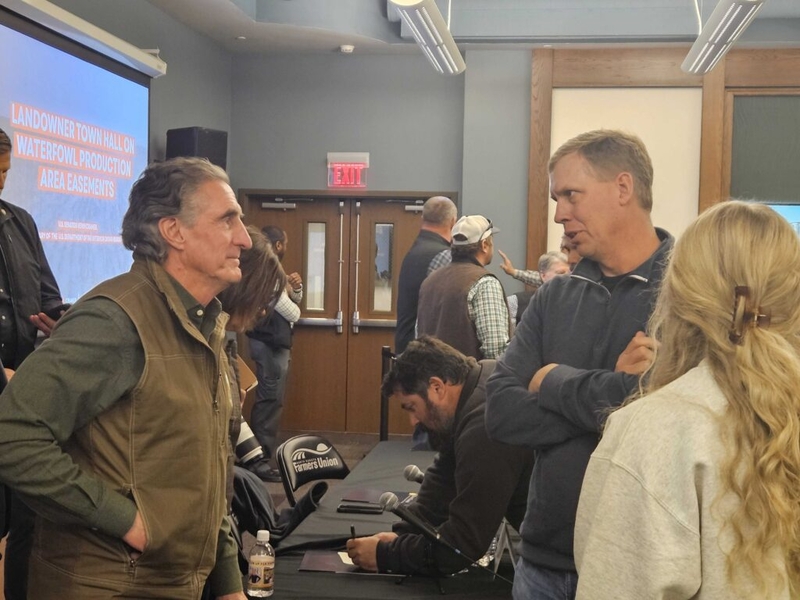
Interior Secretary Doug Burgum, left, speaks with Rolette County farmer Ryan Pederson after meeting about wetland rules in Jamestown, North Dakota, on Nov. 23, 2026. (Photo by Jeff Beach/North Dakota Monitor)
JAMESTOWN, N.D. — Ryan Pederson called signing a conservation agreement with the federal government the “greatest single mistake” that ancestors of North Dakota landowners ever made.
Pederson, who farms in Rolette County, told Interior Secretary Doug Burgum, a former governor of North Dakota, “it is your mistake to have to deal with.” The Interior Department oversees the U.S. Fish and Wildlife Service, which holds the conservation agreements.
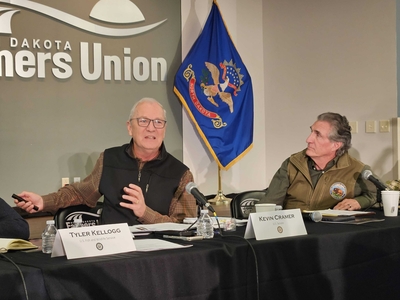
About 200 people filled a room at the North Dakota Farmers Union headquarters in Jamestown on Monday, discussing how to correct a history of poorly documented conservation agreements with the U.S. Fish and Wildlife Service and how to best ensure that ducks and other wildlife can thrive on North Dakota wetlands. The agreements provided the landowners with a payment in return for agreeing not to disturb the wetland.
Outraged over ‘illegal’ wetlands rule, Sen. Cramer blocks dozens of Trump nominees
Burgum called it a national issue but with a disproportionate share of the problem falling on North Dakota, which has prime habitat for breeding ducks. Many in the room were descendants of landowners who signed conservation agreements in the 1960s.
More than 50% of the U.S. Fish and Wildlife Service easements are in North Dakota, said U.S. Sen. Kevin Cramer, R-N.D., who organized the meeting. Cramer said there are more than 16,000 such agreements in the state. Another 30% are in South Dakota.
Cramer said the problem of poorly mapped easements has been exacerbated by a setback rule enacted by the Biden administration. The rule expands the area around wetlands where farmers are not allowed to install drain tile, or plastic tubing buried in the ground that drains excess moisture.
Violating the rules can result in criminal charges.
Landowners showed maps with wetlands as small as less than 1 acre — sometimes less than one-tenth of 1 acre.
With the setback, Burgum said the areas taken out of agriculture production are sometimes more than five times the size of the original easement.
Cramer said the small wetlands often no longer hold water and instead have become heavy with salt deposits, making the area poor for wildlife and farming.
“There are no ducks on saline divots,” Cramer said.
The Fish and Wildlife Service has started a pilot program to try to address the issue.
The agency has met with 18 landowners — 17 in North Dakota and one in South Dakota – to try to agree on new maps that protect a similar number of acres to the original agreement, though the areas protected may shift to create larger protection areas.
Most of the people who spoke at the meeting identified themselves as landowners dealing with restrictions on drain tile and vague records of what was agreed to in the 1960s.
Drew Courtney farms in Dickey County near the South Dakota state line. He said most farmers agree on being good stewards of the land.
“We love our land, we love wildlife habitat, and we love hunting, too,” said Courtney, who showed a map of small wetlands in a farm field and how the setback rules limit his ability to use drain tile.
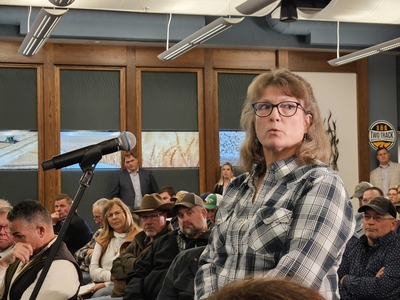
Others spoke in favor of preserving small wetlands.
Jill Shaffer is a retired ecologist from the Northern Prairie Wildlife Research Center who lives south of Jamestown. She said habitat areas of less than 1 acre and seasonal wetlands are important to ducks and other wildlife species.
“They are your everything,” she said.
While the Fish and Wildlife Service pilot program addresses updating maps, changing the Biden-era setback rule is a different challenge.
The agency in August announced in August it would pause a change on the rule as it reviewed more than 200,000 comments.
Sen. John Hoeven, R-N.D., thanked Cramer for leading the North Dakota effort to get the rule changed, but said it may have to go beyond administrative rule changes and include action by Congress or a legal challenge.
Cramer called the rule “theft of property” and a breach of the contract signed by landowners who have lost trust in the federal government.
“We’re here to rebuild that trust,” he said.
Cramer had put a hold on Trump administration confirmations in the Senate while advocating for the Trump administration to change the wetlands rule. He said he has been releasing those as there have been more conversations about the rule change, including visits to North Dakota by Fish and Wildlife officials.
Reach North Dakota Monitor deputy editor Jeff Beach at [email protected]
Bismarck, ND