Nebraska’s projected budget deficit set at $1.1 billion heading into 2027 legislative session
Nov 23, 2026 | 5:58 pm ET
Description
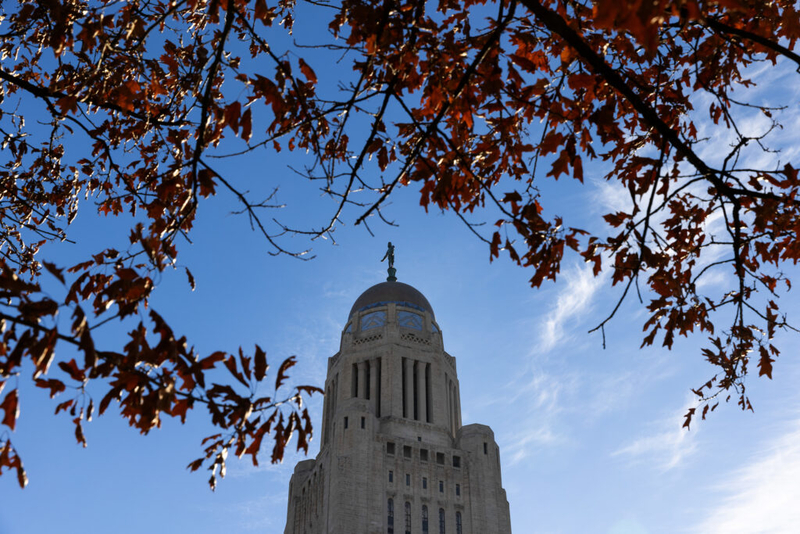
The Nebraska State Capitol Building in Lincoln. (Rebecca S. Gratz for the Nebraska Examiner)
LINCOLN — Nebraska lawmakers will have a $1.1 billion math problem to solve when they convene for the 2027 legislative session in January.
At a Monday meeting, Nebraska’s Tax Rate and Review Committee received an update from the Legislative Fiscal Office that set the state’s projected budget deficit at $1.124 billion for Nebraska’s upcoming two-year budget spanning from July 1, 2027 to June 30, 2029. Additionally, it set a $175 million deficit for the current budget period ending June 30, 2027.
Once lawmakers address the $175 million deficit, that will reduce the next budget’s deficit by roughly the same amount.
The latest numbers reflect changes from Nebraska’s Economic Forecasting Advisory Board meeting Oct. 30. The board predicted revenues for the current fiscal year would remain flat, but lowered expected revenues in the next cycle by about $355 million.
This solidified that 2027 will be the third consecutive legislative session to deal with a projected deficit. After several years of repeated spending cuts, State Budget Administrator Neil Sullivan said everything is on the table for Gov. Jim Pillen in his next approach for balancing the budget.
“I’d say there’s about a billion (dollars) to solve; we probably got $3 billion or more in ideas,” Sullivan said.
Legislative Fiscal Analyst Keisha Patent, who presented the report to the committee, said the report did not include several recent budget requests from state agencies.
Among these is about $38.9 million for the Nebraska Department of Education, which Patent said would be necessary to maintain the 80% reimbursement rate for special education costs that lawmakers first set in 2023.
Last session, in the midst of earlier budget-balancing debates, lawmakers agreed to hold special education funding flat for fiscal year 2027. Patent said changing that to add $38.9 million would require a vote by the new Legislature.
Patent said Nebraska’s Department of Health and Human Services has requested about $254 million more to cover cost increases in several programs, including Medicaid, developmental disability services and child welfare. She said those costs do not factor in the 3% Medicaid reimbursement rate cuts DHHS announced on Friday.
“I anticipate there’s going to have to be something that comes through on the deficit side,” Sullivan said of DHHS’ funding request. “But that’s going to have to … be offset as much as possible.”
Patent’s report did note several areas of savings brought on by federal Medicaid changes under the One Big Beautiful Bill Act. New work requirements are estimated to create about $1.8 million in savings for Nebraska in each of the next two fiscal years. Narrowed eligibility for noncitizens is estimated to create about $3.7 million in savings each year, and the new six-month eligibility requirement is estimated to save $2 million to $3 million per year.
State Sen. Ben Hansen of Blair, who chairs the committee and will not be returning for the 2027 session, said returning lawmakers may need to turn their attention to the large transfers coming out of Nebraska’s general fund every year. These transfers include the state’s two property tax credit programs, as well as the Education Future Fund and the Community College Future Fund, which altogether cost the state nearly $2 billion each year.
Hansen said it might not be a popular idea, but lawmakers may need to consider scaling back some of those funds, increasing income tax rates or revisiting state aid to schools. Otherwise, he said, lawmakers will have to continue to make cuts to a large collection of smaller funding pots, which has been the persisting strategy over the last several sessions.
Inside Nebraska’s budget: Why the state faces structural deficit after $1B surplus
“This is the part where I’m hoping people might actually have to come together and agree on something,” Hansen said. “Whether that means not transferring out as much to education as we did before, along with reviewing tax rates, stuff like that.”
Patent agreed that the general fund transfers are among the “big ticket” items within Nebraska’s budget, and said lawmakers will have some tough decisions to make in 2027.
“(Nebraska’s economy) is not that bad, but it’s also not great enough to produce a lot more revenue in light of the taxable base changes,” Patent said.
Sullivan said the governor’s office is examining the trends within the state’s property tax credit funds, along with other funding models, but declined to say if the governor was considering scaling back those funds.
“Property tax relief is hard. It’s hard to mess with,” Sullivan said. “We’re going to be looking at the trends on that and what’s projected for the future. I’d love to see where is our property tax relief going to, and then that all gets entangled into school funding models as well.”
Lincoln, NE