Rhode Island joins growing list of states to sue TikTok
Nov 23, 2026 | 5:36 pm ET
Description
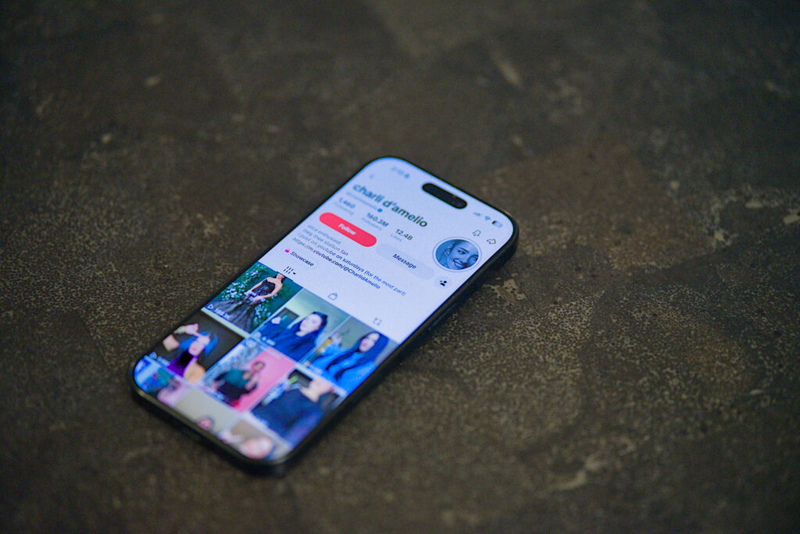
TikTok star Charli D’Amelio is cited in Rhode Island’s lawsuit against the social media company as an example of its alleged selective enforcement of age restrictions. According to the complaint, D’Amelio was allowed to livestream and receive virtual gifts at age 15, despite minimum ages of 16 for livestreaming and 18 for receiving gifts at the time. (Photo by Christopher Shea/Rhode Island Current)
Attorney General Peter Neronha is alleging in a new lawsuit that TikTok knowingly exploited Rhode Island’s youth for their time, attention and money by pitting them “against some of the most powerful and manipulative design features in the world.”
That’s according to a 78-page suit filed Monday against the giant, short-form video platform in Providence County Superior Court, making Rhode Island the latest entry on a list of nearly three dozen jurisdictions to sue TikTok.
Neronha may have only a few weeks left in his term-limited office, but the lawsuit against another tech goliath follows his participation in a successful multistate suit against Facebook parent company Meta earlier this year. The lawsuit argues that TikTok “has been exploiting and deceiving Rhode Island’s children and their parents for the sake of its own profits in violation of Rhode Island law.”
“Rhode Island’s children are not a product to be optimized, and this Office intends to hold TikTok accountable for its alleged actions,” Neronha said in a statement Monday.
The complaint, which formally names TikTok Inc. and TikTok USDS Joint Venture LLC as defendants, argues that the company identified faults in its content moderation practices as well as other dangers with the app, but never addressed — and even downplayed — these problems in favor of profit and maintaining the size of its young user base.
Rhode Island to receive at least $49.4 million in landmark Meta settlement over addictive features
“TikTok has never warned users about the many dangers of its App,” reads the lawsuit signed by Assistant Attorney General Sarah Rice and Special Assistant Attorney General Alex M. Carnevale. “Instead, it falsely portrays the App as a safe place where users and parents can control their engagement, their spending, and their data. None of this is true.”
The partially redacted complaint cites five facets of the platform comprising “a sophisticated mix of design features” that prompt children to return again and again, including:
- Recommendation algorithms, which rely on users’ interests, usage patterns and other data to push more relevant content to users. The lawsuit claims that TikTok analyzes user behavior to curate and push to users eight-video batches of content, which then produce further recommendations based on users’ reactions and interactions with the content.
- Infinite scroll and autoplaying videos, which can facilitate easy and often lengthy consumption of content.
- The app’s frequency of push notifications, which the lawsuit compares to “a salesman constantly knocking on your door for your business.”
- Filters and video effects which promote unreal and unachievable appearances, such as filters that can smooth skin, bleach teeth, fatten lips, slim noses, apply digital makeup and generally sculpt fresh facial features for users.
- TikTok LIVE and its attendant coin-based economy used for gifts given to creators during livestreams — gifts which cost users real money to purchase.
“Before TikTok, few tech companies had monopolized children’s online time for profit as quickly and effectively,” the lawsuit reads.
TikTok did not immediately respond to a request for comment Monday.
The state is asking the court for civil penalties against TikTok, as well as restitution for affected consumers, the disgorgement of allegedly unlawful profits, and a permanent injunction against the practices the complaint describes.

The ‘coveted’ lion
The lawsuit reserves particular scrutiny for TikTok LIVE, which lets users broadcast themselves doing a wide range of activities — playing video games, eating dinner, answering questions, performing music, opening trading cards and so on — and receive virtual gifts purchased by viewers using an in-app currency called coins.
Clicking on a top video on the LIVE page late Monday afternoon, for instance, produced a stream of a woman in Cap’n Crunch cosplay playing Fortnite.
“Welcome to TikTok LIVE!” the live chat reads when a user enters a new livestream. “Have fun interacting with others in real time.”
The disclaimer also reminds users that they must be 18 or older to send gifts.
Neronha’s lawsuit argues that TikTok’s present safeguards to enforce age limitations, also known as age-gating, are largely powerless.
“The process relies on the user, whether a child or adult, to accurately input their actual age [when creating an account],” the lawsuit reads. “But this age-gating process has the opposite effect: it incentivizes children to input a false date of birth when registering.”
The platform then “knowingly harms its users monetarily and psychologically for its own financial gain,” the lawsuit alleges, suggesting children are particularly susceptible to spending money in hopes of attention from content creators.
The opacity of TikTok’s in-app currency served as a special point of concern for the AG’s office.
Gifts for streamers are purchased with coins, which are themselves purchased with real money. The conversion rate can vary and depends on factors like the amount of coins purchased as well as the location and platform of the purchase, but one coin generally costs around 1 cent. On Monday, 30 coins could be purchased on TikTok’s website for 31 cents.
Gifts users can purchase range from a humble ice cream cone — worth 1 coin — to more extravagant affirmations, like what the lawsuit describes as the “coveted” lion animation, which, when gifted during a livestream, runs across the bottom of the screen and roars. It costs 29,999 coins, or nearly $300.
The lucrativeness of receiving gifts can also incentivize young users to perform acts for money, the AG’s office argues, citing national reportage of young users “being sexually exploited over LIVE” by older adults exploiting them to perform on camera in exchange for gifts.
TikTok’s gift economy, Neronha’s office concludes, operates “in part like a virtual strip club.”
Received gifts can be converted into another virtual currency called Diamonds, which livestreamers can then exchange for real money.
But, the lawsuit argues, “TikTok buries its 50% commission in a short article published on its website” and obfuscates how much of users’ money actually goes to creators when they purchase coins.
The AG’s office also points to Rhode Island’s own Youth Risk Behavior Survey, which found that, in 2025, 30% of high school students reported persistent sadness or hopelessness, up from 25.8% a little over a decade ago in 2013.
The lawsuit argues that TikTok is “contributing to a mental health crisis in the state.”
The lawsuit notes that “Rhode Island teenagers’ use of social media remains nearly universal and constant,” with 78.9% of Rhode Island teens in 2025 reporting social media use several times a day — slightly more than the 74% who reported getting fewer than eight hours of sleep on an average school night.
Rhode Island is the latest state to sue TikTok over alleged harm to children, following similar suits recently filed by South Dakota, North Dakota, Idaho, Wisconsin and West Virginia. South Dakota Attorney General Marty Jackley announced Nov. 19 that his office had coordinated with the AGs in those four states.
Alabama has already been successful in its legal challenges against TikTok. The state reached a settlement in September that required $116 million in restitution to the state, a $183 million fund for contingency payments and other stipulations.

Providence, RI