Wisconsin DOA projects $4 billion budget surplus and $2 billion rainy day fund
Nov 23, 2026 | 3:58 am ET

Description
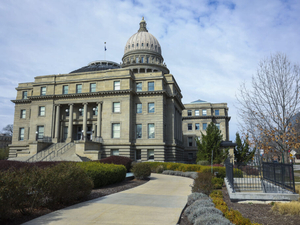
Wisconsin State Capitol (Baylor Spears | Wisconsin Examiner)
The Wisconsin Department of Administration is projecting the state will end the 2026-27 fiscal year with $4.18 billion — over $1.8 billion higher than previously estimated — marking the sixth year of a state budget surplus.
The agency’s report released Friday stated that fiscally Wisconsin is “well-positioned for the future,” as Democrats prepare to write the next state budget, but also said there are some factors that could change the projection.
The state’s stabilization fund — also known as the rainy day fund — is nearly $2.1 billion, the largest in state history and over six times the balance at the end of fiscal year 2017-18.
Gov. Tony Evers said in a statement that the report is proof of his administration’s work to “be good stewards of Wisconsinites’ tax dollars while still making smart, strategic investments in needs that were long neglected before I took office.”
“We have one of the largest budget surpluses in state history, the highest ‘rainy day’ fund balance in state history, and some of the best, record-breaking years Wisconsin has ever seen for tourism, apprenticeship, unemployment, and much more,” Evers said. “Wisconsin’s in darn good shape, and it’s in large part due to the hard work of so many across our administration these last eight years.”
The report is the last before Democratic Gov.-elect David Crowley and state lawmakers take office in January. Democrats will lead the state budget process for the first time since 2009. During the session that produced the 2009-2011 budget, Gov. Jim Doyle and lawmakers were dealing with the Great Recession and a $6 billion budget deficit. Under the resulting budget, most state programs had cuts of at least 1%, but many had cuts of 5% or more.
The DOA report projected the state’s finances in the future considering agencies’ requests for the next state budget. If all were approved, the state would have a $435.7 million surplus at the end of 2027-28 fiscal year and a $4 billion budget deficit at the end of the 2028-29 fiscal year.
Most agencies were directed by Evers not to increase state spending, but exceptions were made in a few areas including K-12 schools aid, the University of Wisconsin system and Medical Assistance.
Of all the agencies, the Department of Public Instruction is requesting the largest investment from the state, putting in a request totaling an additional $2.75 billion. State Superintendent Jill Underly is calling for the overhaul of the funding formula and investments to stop public schools’ reliance on local property tax increases to keep up with costs.
The University of Wisconsin system is seeking an additional $730 million from the state over the two-year period. The Department of Health Services is requesting an additional $1.8 billion in state funds in the 2027-29 budget to continue Medicaid services.
“It is not uncommon for agency requests to exceed available projected revenues,” the report stated. “Again, this imbalance assumes that all state agency requests are approved, which is quite unlikely.”
Democratic lawmakers have said they will address high costs including for education, healthcare and local government. They’ll consider agency requests as well as input from across the state and from the incoming governor as they write the budget.
The incoming chairs of the Joint Finance Committee Rep. Tip McGuire (D-Kenosha) and Sen. LaTonya Johnson (D-Milwaukee) said in a statement about the report that Wisconsinites “spoke loud and clear in November.”
“We are looking forward to crafting a budget that prioritizes working families and puts affordability first,” the lawmakers said.
The report also identifies factors that could change the projections in the future including the war in Iran and artificial intelligence. It states that the conflict in Iran “poses a significant risk” to the economic forecast as there are higher energy prices, weakening consumer demand and the potential for higher inflation.
Investments in AI, meanwhile, could go one of two ways.
“Given the proportion of current economic growth and stability tied to investment in AI, an AI bust would heighten the risk of a recession or at least a sharp slowdown in growth,” the report states. “However, if AI investment proves to be substantially more additive than projected to productivity gains, growth could accelerate from its current trajectory.”
Madison, WI