Boredom, apathy work for North Dakota Republicans
Nov 20, 2026 | 3:03 pm ET
Description
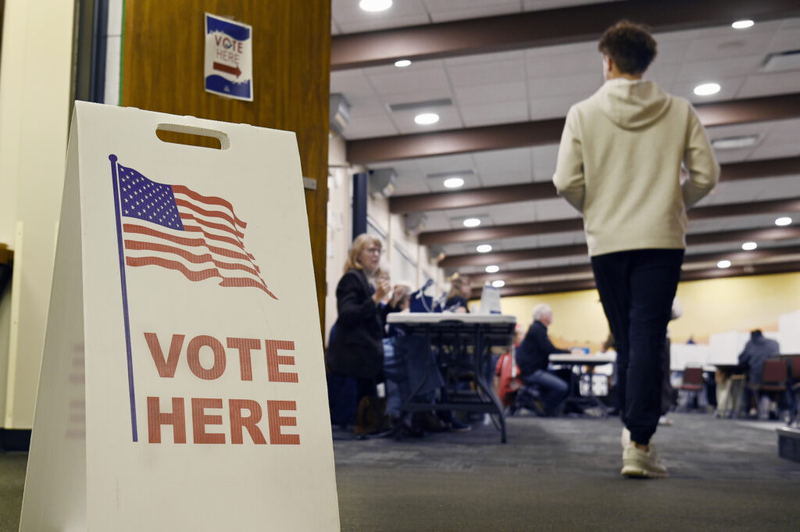
A voter enters the El Zagal Shrine Hall in Fargo, North Dakota, to vote in the midterm election on Nov. 3, 2026. (Photo by Dan Koeck/For the North Dakota Monitor)
In the aftermath of the Nov. 3 midterm elections, the results in North Dakota seem troubling and boring. Boring because a near record-low turnout suggests eligible voters in a one-party state know the outcome before they vote. Troubling because voter non-participation might mean boredom is morphing into apathy, and that’s never a good thing in a representative democracy.
It is easy to conclude the North Dakota election was boring. But for two ballot measures that stirred some interest, there were no competitive races on the ballot to stimulate voter turnout. It’s harder to make the case that apathy afflicts the state’s voters. North Dakotans are more comfortable than apathetic. It’s more about being OK with the political status quo than it is about ballot laziness. A logical stance might be, no sense voting when the outcomes are foregone.
The fact is, North Dakota is doing comparatively well by nearly all measures of voter contentment. A December 2025 poll by the North Dakota News Cooperative showed about two-thirds of those polled had not experienced any changes to their household financial situation. That sentiment likely is nurtured by the strength of the state’s energy sector and by expectations that no matter how Washington trade policies and tariffs hurt agriculture, the Trump administration will treat farmers like welfare recipients and mollify them with multi-billion dollar taxpayer-funded bailouts.
A solid majority of North Dakota farmers and ranchers vote Republican and have supported the president, even as he shredded international commodity markets and pursued policies that cost farmers dearly in record-high fuel, fertilizer and equipment prices. They have given him a pass because they expect he will again squeeze billions of dollars out of the U.S. treasury for “support” checks for farmers. Call it what you will: corporate welfare, ag welfare, Republican food stamps for farmers. It certainly has the look and feel of a 21st century version of agrarian socialism. Ironically, it smells like something the North Dakota Democratic-NPL would advocate. But at this time in the state’s history, Trump’s river of taxpayer dollars cascading into farmers’ larders guarantee Republicans will win big in North Dakota.
That being said, there were tentative signs that Democrats have a spark of life in their hitherto moribund party. The Republican supermajority in the Legislature is a skiff smaller because Democrats picked up a few seats. Also, Democratic U.S. House candidate Trygve Hammer did better this time against one-term incumbent Republican Julie Fedorchak. Hammer got just short of 37% of the vote in a race that also included two independent candidates, compared to about 30% two years ago. That marginal improvement for the blue crowd in a deep red state might reflect creeping discontentment with the occupant of the White House, as was the case in several red states where Democrats won state and federal races, among them Mississippi, Alaska, Kansas, Texas and South Carolina.
Also, in Fargo and Cass County, the most populous places in North Dakota (and among the youngest, most educated, fastest growing and most economically diverse populations in the state) several Democrats earned more votes than Republicans, bucking the GOP wave. Election results from the last few cycles show Republicans are losing – or already have lost – Fargo and Cass County. For example, while Fedorchak won in a blowout statewide, in Cass County she lost to Hammer 51% to 45%. Democrat Vern Thompson topped popular incumbent Republican Agriculture Commissioner Doug Goehring 51% to 49% in Cass, while Goehring won in a statewide landslide. Cass County voters also preferred Democrats for two seats on the Public Service Commission, while Republican incumbents won easily statewide.
Whether from boredom or from the apathy that can come with the comfort of one-party dominance, a majority of eligible North Dakota voters sat out the Nov. 3 election. The result still was a Republican sweep in most places, but not in populous and growing Cass County and Fargo. If it’s the start of a blue trend (that’s a big “if”), voter apathy and boredom won’t be enough for Republicans to win in the future.
Bismarck, ND