New Mexico US Sen. Heinrich’s permitting reform bill passes Senate
Nov 20, 2026 | 12:31 pm ET
Description
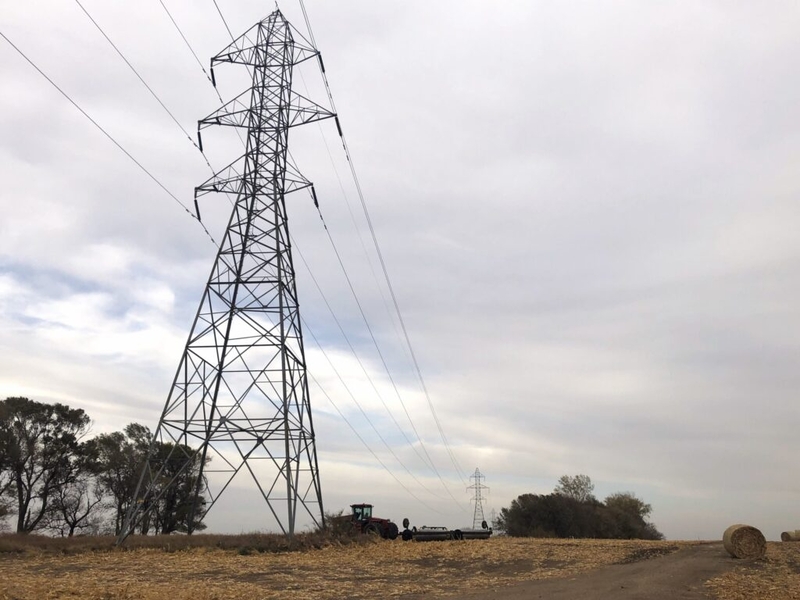
The Bipartisan American Affordability and Jobs Act, the permitting reform legislation cosponsored by U.S. Sen. Martin Heinrich (D-N.M.), passed the U.S. Senate on Nov. 19, 2026. The bill aims to hasten permitting decisions on electricity transmission and other projects. (Photo by Robert Zullo/States Newsroom)
The sweeping permitting reform bill that U.S. Sen. Martin Heinrich (D-N.M.) cosponsored passed the U.S. Senate on Thursday evening, despite strenuous objections from environmental groups and tribes in New Mexico and elsewhere.
The Bipartisan American Affordability and Jobs Act aims to hasten federal reviews of a wide variety of energy projects, including gas pipelines and solar arrays, as well as ensure electricity costs from data center development don’t fall on ratepayers.
But the bill, since Heinrich and bipartisan cosponsors introduced it in a news conference roughly two months ago, has prompted widespread criticism from environmental groups concerned the bill weakens laws aimed at preventing energy projects from polluting water, harming endangered species or having other environmental consequences.
The bill has also provoked strong pushback from tribal and pueblo leaders, some of whom traveled to Washington, D.C. in recent weeks to lobby against provisions in the bill that they say will weaken tribal input in developments, including on sacred or culturally meaningful sites.
The All Pueblo Council of Governors, which represents 19 New Mexico pueblos, has been among the most outspoken tribal opponents of the bill.
The bill now heads the U.S. House of Representatives after senators voted 62-33 in favor of it Thursday night. U.S. Sen. Ben Ray Lujan (D-N.M.) voted against the legislation, saying in a statement after the vote that while he supports permitting reform, “I could not support legislation that fails to address the concerns of our Pueblo and environmental leaders.”
Heinrich, who has received steady criticism from those leaders and members of his own party, hailed the U.S. Senate’s passage of the bill in a statement Thursday. The bill will provide more affordable, clean energy on the grid faster, he said, as well as create jobs and lower costs for ratepayers.
All Pueblo Council of Governors condemns US Senate vote advancing permitting reform bill
“Americans sent Congress a clear message in this historic election: lower costs,” he said. “We don’t have to wait another year to deliver relief. We can act right now.”
Heinrich also described the legislation that the U.S. Senate passed as a “hard-fought bipartisan agreement.” Most U.S. Senate Republicans voted in favor of the bill, as did 14 Democrats.
“It wasn’t easy. But we proved that Democrats and Republicans can put politics aside and deliver meaningful results for the American people,” he said. “I’m proud of what we’ve accomplished. Now let’s get this bill across the finish line and signed into law.”
The bill now heads to the U.S. House, where Democrats are largely split on the issue. President Donald Trump has said he supports the bill.
U.S. Reps. Melanie Stansbury and Teresa Leger Fernandez, both fellow New Mexico Democrats, have repeatedly criticized the legislation and urged Heinrich and other sponsors to wait until January to bring it up for consideration. January is when Democrats will retake both chambers of Congress following the Nov. 3 election.
U.S. Rep. Gabe Vasquez (D-N.M.), who previously declined to weigh in on the legislation, issued a statement Thursday morning also opposing the bill.
“I will continue to work with my House colleagues to improve the existing Senate bill,” he said, “but as the bill is currently written, I cannot support BAAJA at this time.”
New Mexico Mining Watch, a coalition of groups concerned about the bill’s potential hastening of uranium mine proposals across the state, urged U.S. House members to address concerns that tribal nations and groups like theirs have raised about the bill.
“Communities in New Mexico are still living with the consequences of uranium mining that took place decades ago,” Ava Curtis, coordinator of the Multicultural Alliance for a Safe Environment, said in a statement. “Families have spent generations fighting for cleanup, accountability and protection from further contamination. Instead of learning from that history, Congress is advancing legislation that could expose more communities to the same risks.”
Santa Fe, NM