Lawmakers detail what they want in next speaker of Nebraska Legislature
Nov 20, 2026 | 6:45 am ET
Description
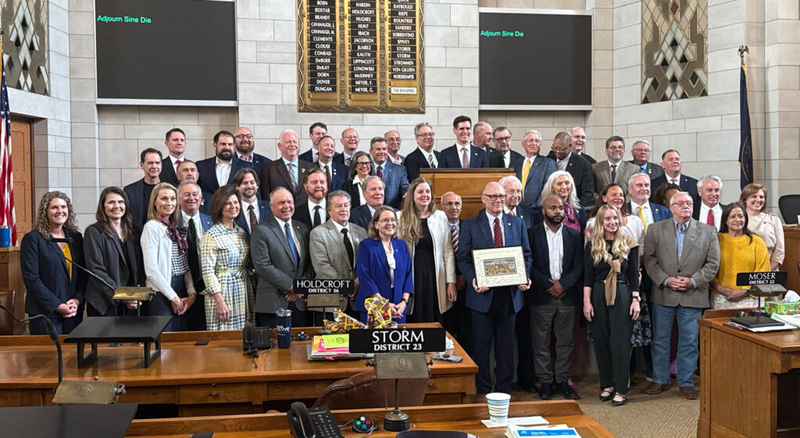
State lawmakers gather on the final day of Nebraska's 2026 legislative session. Not pictured: State Sens. Jana Hughes of Seward and Dan Quick of Grand Island. April 17, 2026. (Zach Wendling/Nebraska Examiner)
LINCOLN — Most returning Nebraska lawmakers say they’re looking for someone who can bring people together and work across the aisle as they consider who will be the next speaker of the Nebraska Legislature.
State Sens. Teresa Ibach of Sumner and Kathleen Kauth of Omaha so far have said they’ll seek the top role for the 2027-28 legislative cycle. Any of the Legislature’s 49 members could run by Jan. 6. Speaker John Arch of La Vista, who has held the role since 2023, is exiting the Legislature after eight years due to term limits.
Leadership votes are decided by secret ballot on the first day of each legislative biennium for speaker, the chair and vice chair of the internal Executive Board and 16 committee chairs.
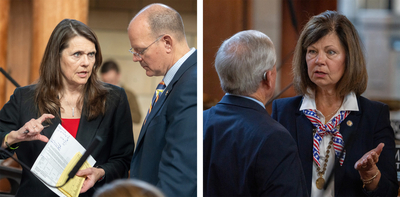
Gov. Jim Pillen was reelected to another four years to lead the executive branch. The next speaker and new chair of the Legislature’s Exec Board will lead the legislative branch.
The Nebraska Examiner asked all 34 returning state lawmakers whether they were running for leadership in 2027 and asked two dozen of them what qualities they want in the next speaker.
Fourteen freshman lawmakers will also join the Legislature in 2027, as will former state Sen. Patty Pansing Brooks, who sat out four years due to term limits. The class finished training, or “senator school,” on Nov. 10.
Some returning senators declined to take a position on Ibach or Kauth, some noting the possibility that other candidates might jump into the race or their concern of possible retaliation if they picked a side. Others explained why one of the pair has their support or opposition.
Here’s what lawmakers had to say about what they’re looking for in their next speaker.
‘Managing 48 cats’
State Sen. Barry DeKay of Niobrara, Agriculture Committee chair, said the chamber will need to “figure out how to play well together and get some bipartisan stuff done.” He said he’s waiting to hear specifically from Ibach and Kauth on their proposed paths toward getting 25 votes on legislation or, in the face of a filibuster, how to get to 33 votes to end debate.
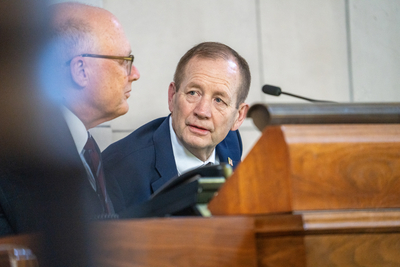
“I think there’s some opportunity to work very well together and get some bipartisan legislation passed without having to go to 33,” DeKay said.
DeKay and others noted that the Legislature will no longer have 33 Republicans. That supermajority had allowed conservatives, when united, to pass legislation despite filibusters.
In 2027, the Legislature will have 30 Republicans, 18 Democrats and one registered nonpartisan.
State Sen. Jana Hughes of Seward said the Legislature will need someone who has a “good temperament,” is very calm and fair-minded, and is willing to work with all sides on an issue, not just Republican-Democrat divides but also geographic rural-urban separations and other considerations.
“That, to me, is No. 1 on who should be speaker,” Hughes said
“You’re managing 48 cats,” Hughes added. “You’ve got to have somebody that has the patience to be able to do that.”
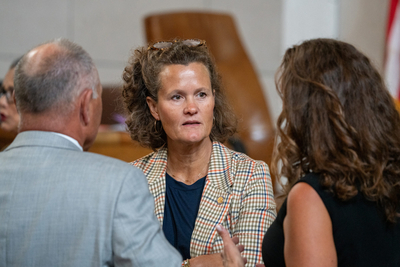
State Sens. Rick Holdcroft of Bellevue, Stan Clouse of Kearney and Tony Sorrentino of Elkhorn were among a handful of lawmakers who said they feel both Ibach and Kauth would do the job well. Holdcroft noted Kauth will be term-limited after 2028 and Ibach after 2030.
Given the changing Legislature, Holdcroft also noted the minority can block everything with a filibuster, which was at times tough to overcome even with 33 Republicans.
‘Get along with everyone’
State Sen.-elect Cindy Maxwell-Ostdiek of Omaha, a registered nonpartisan, defeated state Sen. Brad von Gillern of Elkhorn this fall. He had been seen as a frontrunner for speaker, but state Sen. Mike Jacobson of North Platte had said he would run for speaker if von Gillern lost rather than try to succeed him as Revenue Committee chair.
Kauth had pledged to run no matter von Gillern’s fate.
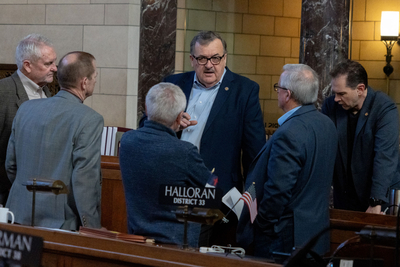
Jacobson, chair of the Legislature’s Banking, Commerce and Insurance Committee, said that when then-Gov. Pete Ricketts appointed him to the Legislature in 2022, it was in part because Jacobson wanted to make a difference for rural Nebraska and all Nebraskans. He said that he needs to be in a position where he can do that, and that the Revenue Committee will be “front and center” as the Legislature faces a projected $1.2 billion budget deficit through mid-2029 and as lawmakers again say they’ll focus on property taxes.
“I just feel like having a seat at the table, and potentially the seat at the head of the table of the Revenue Committee, is the best place that I can make a difference,” Jacobson said.
“Some have said we’d be removing a chess piece from the floor,” Jacobson added, if he became speaker. “I think that did resonate with me. I may be making the wrong decision, but I don’t think so. I think this is the right place for me at this time.”
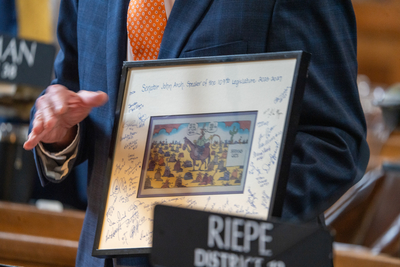
When Jacobson bowed out of the speaker’s race, he endorsed Ibach. She jumped into the race Nov. 8, months after Kauth and after the election. Jacobson said Ibach has qualities to succeed.
“I don’t think we want a lightning rod to be the speaker. I don’t think we want someone who’s going to be divisive,” Jacobson said. “We need to bring someone who can bring people together and get along with everyone in the body.”
‘Truly listen to everyone’
State Sen. John Fredrickson of Omaha declined to comment on Ibach’s candidacy, but he did describe Kauth’s tenure as “laser-focused on fringe culture-war issues.”
“That’s not the leadership this body needs,” Fredrickson said in a text. “I wish her well.”
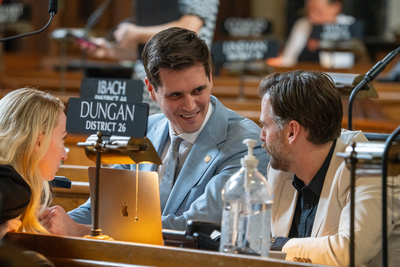
He criticized Kauth for creating the new Nebraska Conservative Leadership Fund political action committee, which waded into 16 of 25 legislative races this year, including Fredrickson’s reelection. The PAC spent more than $800,000, and Republicans won in 10 of those 16 races.
Fredrickson, state Sen. George Dungan of Lincoln, Maxwell-Ostdiek and Omaha state Sens.-elect Cindy Johnson, Jess Goldoni and Christy Knorr won in the other six races.
Fredrickson noted there’s still a lot of time before the session begins Jan. 6 for people to run.
Dungan, who plans to challenge Jacobson for Revenue chair in 2027, said Arch, as speaker, “went out of his way at certain times to make sure he was at least doing his best to be fair.”
“Certainly, I disagreed with certain decisions that were made, but at the end of the day, I think that he cared about the institution, and I think that that’s what we need in a future speaker,” Dungan said.
Dungan said a speaker shouldn’t “weaponize” the role to “achieve a very niche agenda.”
State Sen. Margo Juarez of Omaha said she was specifically glad Ibach put forward her name, and she thinks she’s approachable and listens, qualities she wants to see in the role.
‘Petty partisan power play’
State Sen. Danielle Conrad of Lincoln said there’s a “fair amount of fluidity” in various races for leadership, given that some lawmakers are just coming off the campaign trail and the session is still weeks away.
“What I am seeing and hearing in the Legislature is, for the most part, a pretty strong, petty partisan power play that does not match the post-election rhetoric of seeking collaboration and collegiality and a more balanced approach, which is exactly what the voters of Nebraska asked the Legislature to do by sending a more balanced set of senators to the body,” Conrad said.
Of current speaker candidates, Conrad said Ibach has at least indicated a willingness to sit down and visit with lawmakers of different political leanings.
Conrad is heading into her 13th year as a lawmaker. She served under two speakers in her first two terms and three served while she was out of the Legislature.
The most effective speakers she’s observed, Conrad said, brought a certain level of humility and an “absolute” commitment to mutual respect and worked hard to be protective of the institution and fair-minded with every lawmaker.
“That doesn’t mean that I’ve always agreed with all of their decisions, but I think those are the ingredients that make for an effective speaker,” Conrad said.
Conrad said some have encouraged her to consider leadership, but she hasn’t decided yet.
‘A true leader quality’
State Sen. Tanya Storer of Whitman said she’s looking for a speaker who has experience managing groups of people and is well-versed on the rules. She said given the unicameral’s nature, it’s important to have a “real steady hand.”
“I think it’s just really important that the speaker elected, again, has exhibited the ability to be fair, to be firm, but also bring people together,” Storer said. “I don’t know that speaker is where you cut your teeth on leading a large body of folks.”
State Sen. Carolyn Bosn of Lincoln, chair of the Legislature’s Judiciary Committee, said she’s looking for someone who can get good policy across the finish line in a way where everyone feels like they were given an opportunity to be heard.
Bosn said that with the budget and revenue bills, it will be important “having a speaker who recognizes the intricacies of everybody’s different perspectives, what perspectives people might be coming from … and being able to manage the floor with decorum and a true leader quality.”
“Sometimes the leader stands in the front, sometimes the leader stands in the back, and sometimes the leader stands next to you,” Bosn said. “And I want somebody who can do all three of those things.”
Lincoln, NE