SC superintendent hopes to make performance-based teacher bonuses permanent
Nov 19, 2026 | 5:06 pm ET

Description
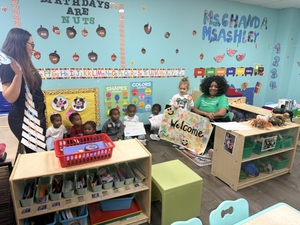
Superintendent Ellen Weaver presents a check for performance-based bonuses to school officials in Darlington County on Thursday, Nov. 19, 2026. (Photo courtesy of SC Department of Education)
More than 750 public school teachers statewide received a combined $5.5 million in bonuses last school year as part of a pilot program the state superintendent hopes to make permanent.
The program, which began in 2024, will continue for a third school year after legislators spent another $5 million on the awards for teachers whose students’ test scores improve. The bonuses are meant to recognize outstanding teachers and encourage professionals to stay in the classroom.
“Great teachers change lives,” state Superintendent Ellen Weaver said in a news release. “South Carolina is working to ensure our compensation system reflects just how much we value them.”
Weaver plans to ask for annual funding this year to make the program permanent beginning next school year, according to the Department of Education.
SC superintendent wants to keep expanding state-funded teacher bonuses
“What began as a pilot has become powerful proof that recognizing excellence matters,” Weaver said.
At least one teacher at each of the 97 participating schools received some amount of money, according to the Department of Education. The average award amount was $8,000.
In the 2024-25 school year, the state gave $2.5 million in bonuses to 400 teachers across 37 participating schools.
Bonuses are calculated based on how much a teacher’s students improve over the course of the year. How that is measured depends on the school.
Participating schools could choose to have their program run through the Excellence in Teaching Awards. The awards began in 2021 in Charleston County’s Meeting Street Schools, a public-private partnership funded by philanthropist Ben Navarro.
That model compares students’ performance on tests at the beginning and end of the school year to judge their progress.
Schools could also opt to use results from SC Ready, the standardized math and reading tests taken by students in third through eighth grades. Or, schools could design their own model, such as using end-of-course tests taken by high school students.
“These results aren’t just about test scores,” said Darlington School District Superintendent Matthew Ferguson in a news release. “They’re about students learning more, becoming stronger readers and problem-solvers and building the skills they’ll need for their future.”
Among schools awarding bonuses based on SC Ready results, those in Darlington County had the highest percentage of teachers receiving bonuses, according to the Department of Education. More than 90% of teachers in the district’s three participating schools received an award, with the average amount exceeding $12,000.
More than 89% of students in the district live in poverty, according to Department of Education data.
As a whole, students’ test scores have improved over the last few school years, according to statewide testing data. Scores on tests taken last spring showed just over 61% of students in third through eighth grades reading on grade level and nearly 48% doing math on grade level.
Both of those scores were improvements from the year before.
The performance bonuses are one way of keeping teachers in classrooms, Weaver said in a news release.
In South Carolina, teachers’ salaries are based on their level of college degree and years of experience in the classroom. The performance bonuses add to what teachers are paid in that so-called salary schedule.
This year’s state budget raised the state-paid minimum salary for first-year teachers to $50,500, up from $48,500 last school year. That represents a 68% increase in the last decade.
State aid to school districts is based on what’s considered an average level of experience: a teacher with 12 years in the classroom and a master’s degree, whose state-paid minimum salary is $60,750 this year, plus about $20,000 for health insurance and pension benefits.
Education leaders have also pushed for laws to improve working environments for teachers, including cutting red tape, ensuring more planning time and making classrooms safer.
“Working with our legislative partners, our goal is to move these promising pilots toward a sustainable, permanent approach that continues professionalizing teacher compensation, attracts the best and brightest into teaching, and keeps our most effective educators in South Carolina classrooms,” Weaver said in a news release.
None of the available models apply to all teachers, which has raised concerns among some teachers’ advocates, who have called for a more equitable way of rewarding teachers.
Some teachers who make a big difference in students’ lives, such as those teaching music and arts, have no standardized tests to measure student progress, advocates have said.
Columbia