Wisconsin sues TikTok as addictive and harmful to its young users
Nov 19, 2026 | 3:06 pm ET
Description
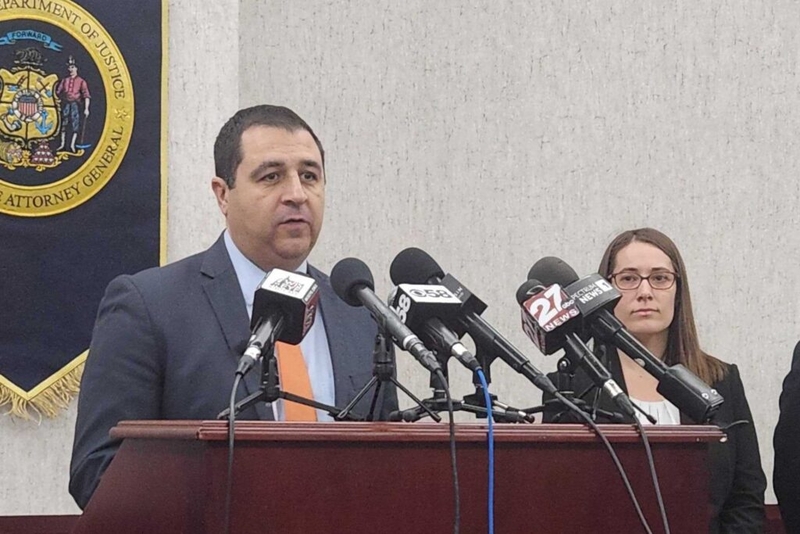
Josh Kaul announces a lawsuit Thursday that Wisconsin has filed against the TikTok social media app. (Photo by Erik Gunn/Wisconsin Examiner)
Wisconsin is suing the social media video platform TikTok, charging that its operators knowingly addict and profit from young people at the expense of their mental health.
The lawsuit charges that TikTok “knowingly deploys features that addict and harm Wisconsin children,” Wisconsin Attorney General Josh Kaul said at a press conference Thursday.
“We’ve alleged that TikTok is doing this while deceiving parents and the public about the dangers of the app, thereby contributing to the children’s mental health crisis that kids in Wisconsin and throughout the country face,” Kaul said. “Our lawsuit alleges that TikTok knowingly uses addictive design features to target kids as intended users and to get them to spend as much time as possible on TikTok.”
The lawsuit, filed in Dane County Circuit Court, charges TikTok has violated Wisconsin’s deceptive trade practices law and created a public nuisance. It asks for a court injunction and payment that would provide restitution; cover civil forfeitures; an amount “to remedy the harmful effects” the suit alleges; abate the nuisance; reimburse the state and cover costs and fees for investigating and prosecuting the company.
The lawsuit doesn’t assign a dollar value to the prospective damages. Kaul said that would be determined in the course of the case against the company.
“Kids, and frankly adults as well, now spend large amounts of time on social media platforms,” Kaul said. “And those platforms have an interest in keeping our kids scrolling — taking away time that kids have to learn and to socialize. It’s critical that we curb the negative impact that social media is having on our kids.”
In a statement, a TikTok spokesperson said the company “will vigorously defend against the State’s claims.”
The suit “relies on misleading and inaccurate claims and ignores the concrete safety measures TikTok has voluntarily implemented to support the well-being of our community,” according to the statement. The statement cited more than 50 “present safety, privacy and security settings” in the app’s teen accounts, and a “Family Pairing” feature that “helps parents and guardians customize the experience for their teens.”
Kaul said the suit follows an investigation conducted by a bipartisan group of states working together. He declined to say how long ago the investigation began. Following the investigation, other states are also suing the company, he said.
“TikTok’s model, like those of other social media companies, is based on the monetization of its users: sell access and information about its users to advertisers and companies so they can sell their product and services,” the 67-page lawsuit states. “In addition to selling targeted ads, TikTok runs an ecommerce platform. Every user, and every minute that user spends on TikTok’s platform, helps generate revenue for TikTok.”
The lawsuit cites documents from TikTok showing that algorithms such as the app’s recommendation engine “are designed to ‘maximize engagement, and can lead users to filter bubbles of harmful content.” The recommendation engine directs users to videos that might interest them.
“TikTok’s business model is predicated on taking advantage of addictive behaviors which children and teenagers are particularly vulnerable to experiencing,” Kaul said. In addition to the recommendation engine, the lawsuit cites the app’s infinite scroll, autoplay and push notification features as well as TikTok LIVE — through which users can broadcast or watch live videos.
Live videos are only available when they are livestreamed, which “encourages users to visit and remain on the platform longer,” the lawsuit charges. A similar feature presents short videos that disappear after 24 hours.
After Meta settlement, Wisconsin lawmakers say there’s still a lot to be done to protect kids online
“By design, this rapidly disappearing content pressures users to check the TikTok platform more frequently,” the suit charges.
The live feature is supposed to prevent users younger than 18 from broadcasting, but the lawsuit charges that “TikTok knows its lax age verification measures allow kids access.” And all TikTok users are able to view the videos using the live channel, the lawsuit states.
The lawsuit cites reports and other documents from TikTok that acknowledge compulsive usage and its negative effects on mental health and emotional skills of young people, contributing to depression, anxiety, dissatisfaction with one’s own body and eating disorders.
“TikTok has been aware of the dangers of its platform to children for years, but has misled the public about its platform’s safety,” Kaul said. The lawsuit also charges that despite TikTok’s advertisement that its content is appropriate for children 13 years and older, “sexual content and drug and alcohol content are frequently encountered by these users,” Kaul said.
Kaul said that any specific changes to how TikTok operates will be up to the court, but the suit seeks “limiting time” on the app as well as limiting the features referred to in the complaint.
“It’s easy to say that you don’t want your kids to be on these apps,” Kaul said. “But when other kids are, it makes it very difficult as a parent. Having universal policies in place that are going to apply to kids throughout the state of Wisconsin is something that we’re looking for as well.”
A settlement in August with Meta, owner of the platforms Facebook and Instagram, illustrates the sort of resolution the state would seek in the case, he said. The Meta lawsuit and settlement involved 47 states, including Wisconsin, and is worth between $219 million and $313 million to the state.
Under the Meta settlement the apps are to block children from accessing the platforms at night, limit push notifications during school hours and limit the total number of hours children can spend on the app in a single day. Kaul said the terms of the settlement are in the process of being implemented.
In addition to the outcome of the lawsuit, Kaul said he would like to see additional state legislation that would “provide stronger guardrails” to protect children.
“I do hope we will see policies in place in the state of Wisconsin that help to keep our kids’ mental health safe from the potential harms of social media,” Kaul said.
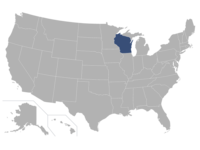
Madison, WI