Panel: Arkansas families receiving subsidized childcare have until July to choose between programs
Nov 17, 2026 | 6:22 pm ET

Description
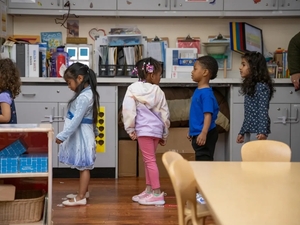
Photo by Rebecca Rivas/Missouri Independent)
Dozens of Arkansas families whose infants and toddlers receive subsidized childcare will have to choose between two programs by July 1, the Early Childhood Commission agreed Tuesday.
Ideally the change will free up funds to allow 243 families from the state’s waitlist of more than 3,500 to receive childcare, said Ashelyn Abney, director of the Office of Early Childhood in the state Education Department’s Division of Elementary and Secondary Education.
Arkansas’ early childhood education challenges were highlighted last year when the state faced pushback over plans to address the waiting list by updating reimbursement rates for the School Readiness Assistance program, which helps low-income Arkansans afford childcare.
The state spends about $3.67 million per year, or $306,000 per month, in grant money from the federal Child Care Development Fund to support families in the Early Head Start program, Abney said. This funding has been “layered” with the School Readiness Assistance program.
Abney said she hopes all 243 families that currently benefit from both programs will continue to receive childcare.
Commissioners expressed concerns during Tuesday’s virtual meeting that families will have to find other sources of childcare during hours of the day that are no longer subsidized. Early Head Start programs usually care for children from the morning to early afternoon, and School Readiness Assistance-funded care covers the later afternoon.
Child care costs preventing Arkansas mothers from seeking or retaining full-time work, report says
The commission, a group of childcare providers and advocates, advises the Office of Early Childhood on how best to support early childhood development in Arkansas. The commission considered asking families to choose a program by Jan. 1, but decided giving them until July was easier on everyone involved.
Democratic state Rep. Denise Garner said she was concerned about the “most vulnerable families that may not be able to work because of childcare.” High costs and a provider shortage prevent Arkansas mothers from seeking and retaining full-time employment, according to a March report from the Women’s Foundation of Arkansas.
Garner, who will be Fayetteville’s state senator in January, also said the changes to the funding streams are likely to foster distrust among childcare providers, just over a year after a task force came to the School Readiness Assistance program’s rescue.
Childcare providers raised the alarm in September 2025 that the Arkansas Department of Education’s plan to change the School Readiness Assistance reimbursement rates and families’ copayments would make childcare unaffordable for families and unsustainable for providers.
The adoption of a plan to keep the program workable for all parties came during a federal government shutdown last November that froze School Readiness Assistance funding and strained childcare centers.
Abney said Tuesday that 20 centers have closed since October 2025, four for financial reasons.
Republican Gov. Sarah Huckabee Sanders proposed directing $20 million annually to early childhood education in her balanced budget for the fiscal year starting July 1. What the Office of Early Childhood does with that new recurring funding source is up to the Legislature, Abney said.
“My dream and my vision is looking at serving the maximum number of children that we possibly can, and so I think that is the first thing that we need to work on, just to see if we’re all in agreement with that,” Abney said.
Republicans control both chambers of the Legislature, but this month’s elections saw Democrats win enough seats to break the GOP’s House supermajority. Most budget bills will now require bipartisan support to pass the House.
Little Rock