New Jersey invests $8M to expand midwife workforce
Nov 17, 2026 | 2:06 pm ET
Description
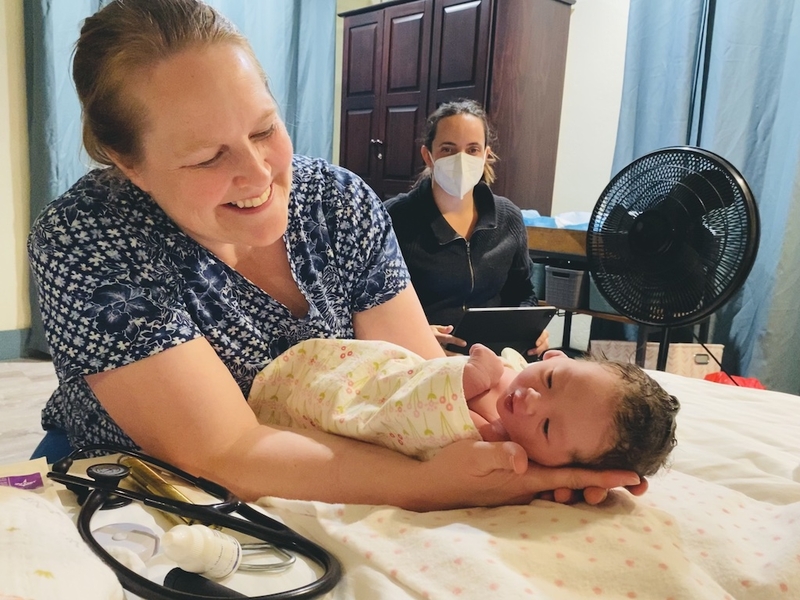
Sarah Simmons, a midwife and co-owner of Maple Street Birth Center in rural Omak, Washington, is pictured holding a newborn. New Jersey announced Monday it will invest $8 million to expand the midwife workforce, something advocates say can help improve health outcomes for moms and babies in a state that still struggles with high maternal deaths and massive racial disparities. (Photo courtesy of Sarah Simmons)
New Jersey will invest $8 million to expand scholarships and provide professional support for midwives as part of its ongoing effort to strengthen the maternal health workforce and improve outcomes for moms and babies.
Gov. Mikie Sherrill announced the commitment late Monday with the Rutgers School of Nursing, which she said will oversee the three-year community workforce pilot program designed to make it easier for people to be trained and thrive as midwives in New Jersey.
“Every New Jersey mother deserves that support, regardless of her ZIP code,” Sherrill said.
While New Jersey has one of the nation’s lowest infant mortality rates and preterm birth rates have also declined, it still has an above-average maternal death rate, and racial disparities that leave Black moms and babies at far higher risk than white women. On average, hundreds of babies and roughly two dozen moms die here every year during pregnancy, childbirth or in the year after, according to state data.
Midwives are clinically trained primary care providers whose involvement in birthing has been shown to reduce the number of maternal and infant deaths and need for surgical intervention, while improving breastfeeding and child immunization rates. Midwives also care for newborns and provide reproductive healthcare for people at any age.
There are about 450 licensed midwives in New Jersey, where they attend to 1 in 10 births, but experts say more are needed to really improve outcomes. Nationwide, midwives participate in about 12% of all births.
“New Jersey needs more midwives, particularly in communities where access to maternity care is limited,” said Angela Starkweather, dean and professor at Rutgers School of Nursing, which started its graduate midwifery program more than 50 years ago.
Dr. Michael Warren, chief medical officer with the March of Dimes, which advocates for healthy moms and babies, agreed that expanding access to midwives could boost outcomes in this country, which seriously lags other developed nations.
“We’ve seen some promising trends in more parts of the United States, with more and more births every year attended by midwives, and those are associated with improvements, like lower rates of C-sections,” Warren told the New Jersey Monitor.
“We need to continue to make this investment,” he said.
New Jersey committed at least $500,000 to midwifery scholarships in the current annual budget. The new money will expand this financial assistance to cover more graduate students, officials said, and enable the state to help midwives establish new practices, particularly in high-needs communities. In return, they would need to agree to work in the Garden State for at least five years.
Funding will also be used to provide grants to recruit and train instructors and support student mentors, officials said, and allow Rutgers to work with community organizations to see if it makes sense to establish an associate degree program at a community college in New Jersey to bolster the midwifery pipeline.
“Investing in midwives is a way to advance equity and improve New Jersey’s health,” said Julie Blumenfeld, director of the school’s nurse-midwifery program.
Work will be guided by an advisory council of midwives, educators and community leaders, officials said, and the Rutgers School of Public Health will oversee research and evaluation.
Trenton, NJ