Lame duck ultimatum: Get kratom off Michigan’s store shelves
Nov 17, 2026 | 8:00 am ET
Description
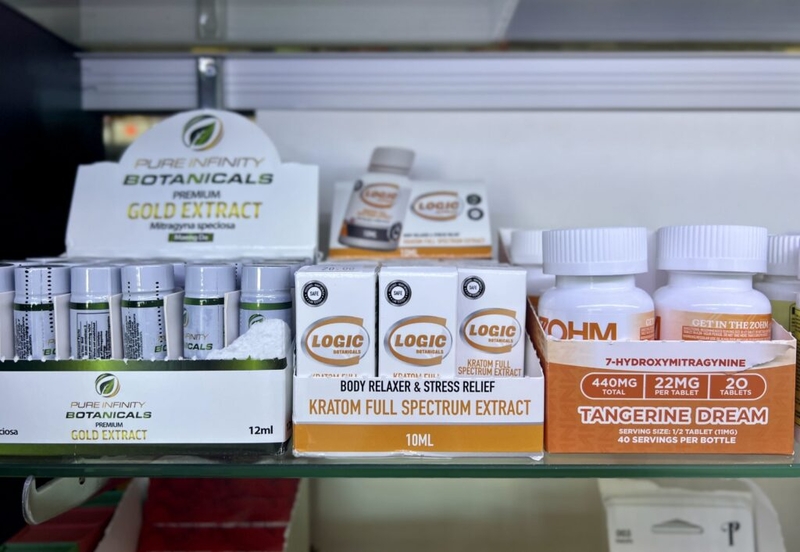
Liquid kratom extracts and capsules containing 7-OH are displayed for sale at a smoke shop in Buffalo, N.Y. A growing market is prompting state lawmakers to reconsider how the substance should be regulated. (Photo by Amanda Watford/Stateline)
There is always a great deal of lip service about protecting our children. But when it comes down to it in Lansing, political clout and profit seems to matter more. Children make up a small percentage of our state’s population, but they are 100 percent of our collective future.
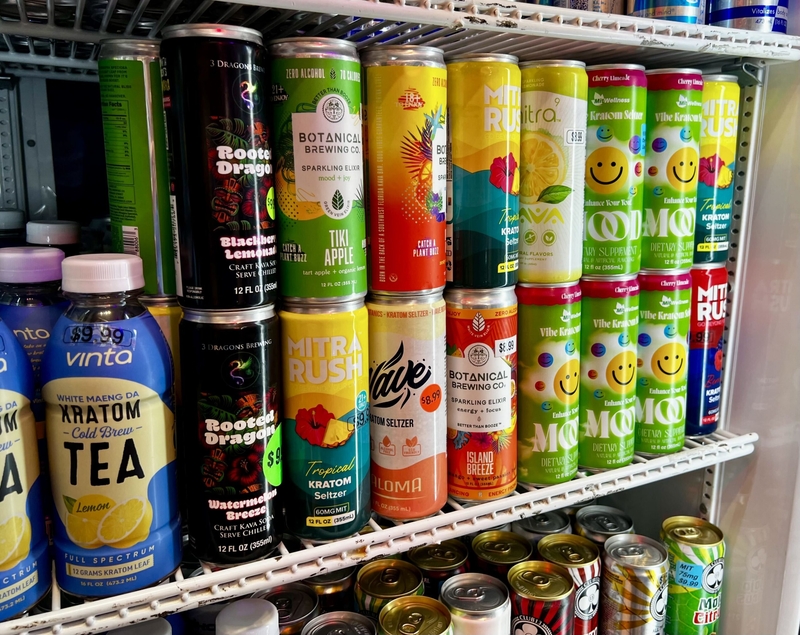
Eight months have passed since the Michigan House of Representatives voted to ban kratom. As the Legislature enters its final lame duck stretch of 2026, an addictive, unregulated substance remains as easy for a teenager to buy as a Snickers bar. Sold in brightly colored packaging — tonics, tablets, powders, gummies, even chocolate bars and honey sticks — at neighborhood gas stations, party stores and smoke shops, kratom and its concentrated cousins, colloquially known as “gas station heroin,” are hiding in plain sight.
Not a harmless herb with a dangerous cousin — one product line, one pathway
The kratom industry wants Michigan to believe there are two separate products: a gentle, centuries-old herbal leaf and a dangerous lab-made outlier. Ban the bad one, they say, and leave the leaf alone.
That is a distinction designed to protect a business model, not our kids.
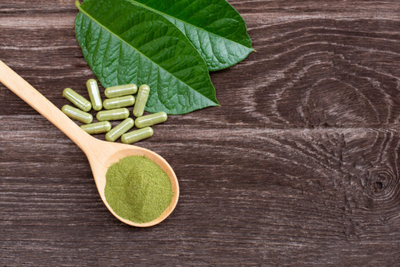
Kratom comes from the Southeast Asian Mitragyna speciosa tree. Its leaf acts on the same brain receptors as opioids, and it is marketed as a pain reliever, an energy and mood booster, and a treatment for anxiety, depression and even withdrawal from heroin and fentanyl. It is habit-forming in its own right.
Manufacturers have also flooded the market with chemically manipulated, concentrated variants such as 7-hydroxymitragynine (7-OH) — a compound present only in trace amounts in the natural leaf but now sold in pills and shots far more potent than morphine. The pharmacological effects of these products, along with their withdrawal symptoms and overdose profiles, closely mirror those of prescription and illicit opioids.
The leaf and the concentrate are not separate worlds. They sit on the same shelves, sold by the same stores, often under the same brand names. The leaf is the on-ramp; the concentrate is where too many people end up. And because there is no state testing or regulatory oversight for any of these products, consumers — especially children — have no way of knowing the potency or chemical makeup of what they are swallowing.
The vulnerability of developing young brains and central nervous systems makes children and teenagers especially susceptible to acute toxicity, severe neurological side effects and rapid dependency.
Today, we are playing Russian roulette with the safety of our children, families and communities.
The data are stark: state lawmakers report that kratom was detected in 995 of nearly 2,000 overdose deaths in Michigan during 2024, alongside a reported 1,200 percent surge in national use driven by accessible, over-the-counter gummies and concentrates.
As a former state superintendent of Michigan’s schools, former state mental health director, and former president and CEO of Detroit Wayne Integrated Health Network (DWIHN), the largest community mental health agency in Michigan, I have had a front-row seat watching children and families devastated by the scourge of addictive drugs.
We are allowing companies to profit off the suffering of children and our fellow citizens.
A Michigan mother’s warning
This past Sunday night, 60 Minutes brought this crisis into living rooms across America, and the human face of the story was one of our own. Correspondent Jon Wertheim profiled Melanie Clark, a Michigan mother of three and trained opera singer. Struggling with postpartum depression and exhaustion, she was drawn in by Instagram ads for a kratom-based “tonic” sold at gas stations near her home.
Notice where her story starts: not with a lab-made 7-OH tablet, but with a kratom drink marketed as a wellness product. Within about three weeks, she felt addicted. After trying to quit, she relapsed and moved on to 7-OH tablets, which landed her in the hospital. Her withdrawal was so severe that her husband had to call the police. Thankfully, she says she is doing much better today.
Melanie’s story should stop every lawmaker in Lansing cold. If kratom can ensnare a grown woman with a supportive family, imagine what it can do to a 15-year-old with a few dollars in their pocket and a gas station on their walk home from school.
Why House Bill 5537 gets it right
In March 2026, the Michigan House passed House Bill 5537 by a vote of 56–48. The bill does what a partial approach cannot: it prohibits growing, synthesizing, distributing and selling kratom in every form — the plant, its leaves, its extracts, and its synthetic and concentrated derivatives — while exempting FDA-approved products. It carries misdemeanor penalties, with stiffer consequences for selling to minors.
Banning only 7-OH would invite a game of chemical whack-a-mole: outlaw one derivative and manufacturers will reformulate the next one, while the leaf products that start people down this road stay on the counter next to the candy.
The bill was quickly sent to the Senate Committee on Government Operations — known around the Capitol as a place for bills to die — and has sat there ever since.
Lansing insiders say there has been heavy pushback from lobbyists for kratom manufacturers and from gas station and party store owners.
Because 2026 marks the end of Michigan’s two-year legislative term, inaction in lame duck is not a harmless pause; it is a fatal reset. If the Senate adjourns without acting, HB 5537 dies, forcing lawmakers to start over in 2027 while another class of middle and high school students is exposed.
Washington is moving backward
Nor can Michigan wait for Washington. As 60 Minutes reported, the federal government announced plans in July to schedule 7-OH as a controlled substance. Then last month, the U.S. Department of Health and Human Services reversed course and raised the amount of 7-OH allowed in products roughly twentyfold. Former FDA Commissioner Dr. Marty Makary and former HHS senior adviser Calley Means both told the program they resigned in part because kratom policy was being shaped by business interests rather than public health.
HHS denies that outside pressure influenced its decision, but 60 Minutes also documented a decade of lobbying money, much of it from the American Kratom Association, aimed at the FDA, HHS, the White House and Congress.
Note what that lobbying protects: the industry’s preferred line is to sacrifice 7-OH and save the leaf. When federal protection is moving backward, states must lead.
A local patchwork is not enough
Communities have stepped up where the state has not. To its credit, Sterling Heights in May became the first city in Michigan to ban the sale and distribution of all kratom products — not just the synthetics — threatening to revoke the licenses of businesses that don’t comply. Plymouth Township has followed with restrictions of its own.
But a municipal ban does little good when a teenager can drive five minutes across a city line to the nearest gas station. Only statewide action can close that loophole and hold predatory distributors accountable.
Michigan is also falling behind. A growing list of states, including Alabama, Arkansas, Indiana, Vermont and Wisconsin, ban kratom outright, and many more restrict sales to minors. Decades ago, Michigan watched the prescription opioid crisis spiral out of control because regulators hesitated while corporations profited from addiction. We cannot afford to repeat that tragedy.
The ask
The American Kratom Association and other opponents argue for age limits and labeling rules instead of prohibition. I understand that some adults say kratom helped them through pain or off other opioids, and their struggles are real. The answer for them is real treatment and FDA-approved medicine — which this bill exempts — not an unregulated product sold beside the Slurpee machine. Labels and age rules on a product no one tests will not keep it out of children’s hands.
Protecting Michigan’s youth is not a Republican or Democratic issue; it is a basic moral obligation.
Gov. Gretchen Whitmer has goodwill to spend and should spend some of it saving children, families and communities. House Speaker Matt Hall (R-Richland Township) and Senate Majority Leader Winnie Brinks (D-Grand Rapids) must rise above partisan gridlock, move HB 5537 across the finish line, and take kratom in all its forms off store shelves before the 2026 session closes.
Our children and families need more than political posturing or infighting. Without action, unnecessary misery, and even death, will be on the hands of our elected officials.
Lansing, MI