Q&A: ‘Funding levels are down, scientific grants have been pulled’ for mental health research
Nov 17, 2026 | 7:00 am ET
Description
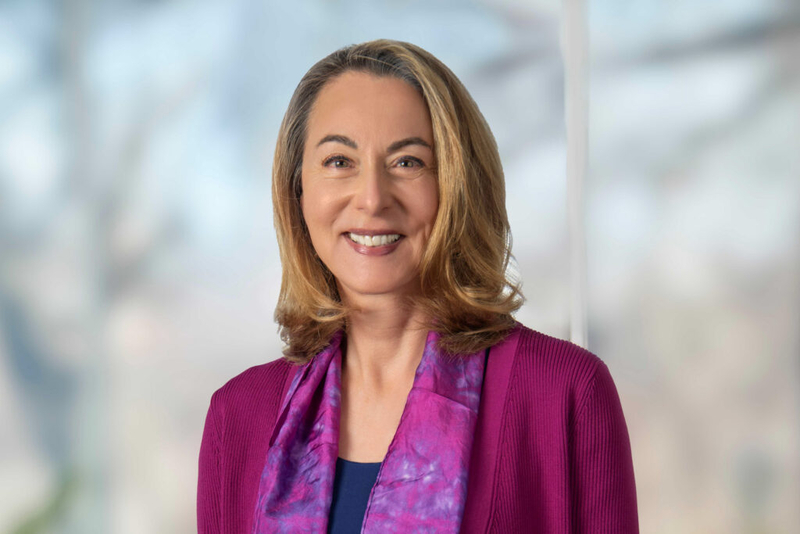
Dr. Sophia Vinogradov poses for a portrait in this courtesy image. (Photo courtesy of Dr. Sophia Vinogradov)
The Nobel Prize for Physiology or Medicine was recently awarded to Drs. Karl Deisseroth, Peter Hegemann and Georg Nagel for their work on optogenetics, a method that has led to better understanding of how brain cells work, which could lead to more effective targeted treatments for people with mental illnesses.
This was remarkable: You can count the Nobel Prizes for research related to mental illnesses on one hand.
The lack of research on mental illnesses is troubling, so I interviewed Dr. Sophia Vinogradov, the department chair of psychiatry and behavioral sciences at the University of Minnesota Medical School, to learn more about the research being conducted in the field.
This interview has been edited for length and clarity.
What research on mental illnesses — including a better understanding of the brain or new treatments — is emerging that will give people hope?
There are two main areas emerging. One is around medications. The “third generation of antipsychotics” focuses on decreasing the side effects and increasing the impact on cognition. There is also more emphasis on precision medicine. For example, some medications “fail” during their controlled clinical trials and never go to market because it only helped a modest percentage of people. Now we are doing research to learn why a medication did or did not help specific individuals and using technology to see how the brain is reacting. Each mental illness plays out differently in different individuals, and researchers now understand that we need to focus on tailoring treatment.
The second exciting area is understanding brain circuitry. The brain is made up of circuits or networks of cells that operate together to enable all of the things that make us human — there are brain circuits for concentrating and remembering, for different emotions, for motivated behavior, for impulse control, for problem solving — and all of them can be impacted by mental illnesses. When we understand how they work, we can study what happens when they malfunction and explore ways to make them work better. It opens a window into addressing the things that are really challenging for people with mental illnesses.
Schizophrenia can be so difficult for both the person and their family and is considered to be one of the most disabling conditions in the world. Are we finding more effective treatments?
The past 15 years of research has demonstrated unequivocally that intervening as early and vigorously as possible is very effective. Programs like Navigate that focus on early intervention for psychosis have been extremely helpful in changing the trajectory of young people’s lives.
We’re now entering a second phase of research, where we are studying how to tailor those programs to help the 20 to 25% of individuals who have a more severe form of the illness and are not responding to the current treatments.
We also need to work on making these programs more accessible in Greater Minnesota. These programs rely heavily on grants, since neither Medicaid nor private insurance pays for all the needed treatment components, which include individual therapy, family therapy and supported education and employment, in addition to medication treatments. So, we need to expand grant funding, require insurance to pay for it and continue to look at collaboration and technology to increase access.
One successful example is a new collaborative program between our team at the U and clinicians at CentraCare in Saint Cloud, which has allowed us to share our expertise with practitioners in central Minnesota.
The mental health community was very concerned that legalizing cannabis would result in more young people experiencing psychosis. What have you seen in Minnesota?
The research clearly shows that cannabis can trigger psychosis symptoms in vulnerable individuals, including those with certain genetic backgrounds. In these people, symptoms don’t go away when they stop using cannabis, and the treatment approach has to be tailored so they can learn to understand the unique effect that cannabis has on their brain. I have also seen individuals with cannabis-induced psychosis where the symptoms disappeared once they stopped using and engaged fully in treatment. In general, such people have insight into their experience, a lot of family support, are willing to take medication for a while and fully commit to leading a healthy lifestyle.
It’s a spectrum, of course, like everything. But I would add that the science shows us that using cannabis before age 26 has important brain effects and is not recommended, especially for people in their early teen years.
The younger the exposure to cannabis, the worse the mental health outcome across the board.
We have seen rising rates of mental illnesses in our children and youth. Do we know why?
It’s a complicated and interesting question. One of our faculty members is looking at how social media use can be toxic to youth mental health. Also, the School of Family and Social Sciences is analyzing data to see how youth and parents are using social media and comparing it to their self-assessments of mental health symptoms, wellbeing and parent interactions. We are trying to pinpoint where it is having a negative impact.
We find that if you are prone to depression, for example, you may be attracted to things that will make your depression worse, versus visiting sites that could help you. We find that youth struggling with social and peer relationships will turn even more to social media, which doesn’t address the problem — and even makes it less likely that they will learn healthy ways to relate to others.
I will note that children and youth in general are leading less healthy lives. They are exercising less, have less unstructured play and physical activity, are bombarded with violent and sexualized imagery in the media, have parents that are more distracted and overwhelmed and are inundated by very unhealthy fast-food choices. Children’s brains and bodies are not meant to be looking at screens, sitting in isolation, remaining physically inactive and eating empty calories.
Increasing access to mental health treatment requires addressing workforce shortages, especially in psychiatry. Who is interested in this field now?
Psychiatry is now one of the most popular residency programs. This didn’t used to be the case. Now, almost 1 in 10 graduating medical students want to be psychiatrists — and yet there are not enough residency slots to meet this demand. We also need to improve our training opportunities for psychiatrists and other mental health workers to serve rural communities. The good news is that the residents I work with are very committed and dedicated and deeply interested in people as individuals.
The number of research grants awarded during fiscal year 2026 by the National Institutes of Health was 12% less than in fiscal year 2024. Has this impacted research in your department?
Major changes at the federal level have had a serious impact on our research. Funding levels are down, scientific grants have been pulled or stopped in the pipeline. Personnel have left the National Institute of Health, and some of our long-standing relationships with dedicated program officers at the National Institute of Mental Health are gone. I am deeply concerned that the U.S. is going to lose its position as the pre-eminent country for cutting edge research.
What changes have you seen recently in support of research into mental illnesses and the brain, and what would you like to see going forward?
Researchers from many different areas of expertise are coming together to focus on mental illnesses. We are seeing teams comprising doctors, engineers, computer scientists and others working together, and consortia of teams across the country — and world — are coming together to share information and findings on specific topics such as schizophrenia and autism.
Lastly, we know we need to involve more people with lived experience in guiding our research. These are complex and nuanced illnesses, and researchers need to understand how they impact people differently and how they impact people’s lives. Research is about finding ways to improve people’s lives, and doing so in the ways that matter most to each individual.

Saint Paul, MN