States have 6 more months to implement Medicaid work requirement, administration says
Nov 13, 2026 | 5:36 pm ET
Description
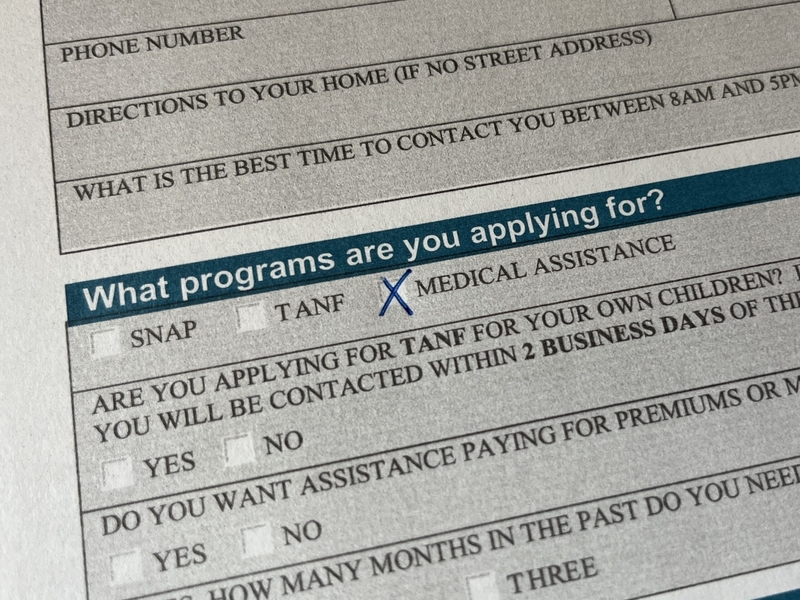
Economic assistance application for the South Dakota Department of Social Services. (Makenzie Huber/South Dakota Searchlight)
WASHINGTON — The Trump administration announced Friday that states can take an additional six months to implement a provision in Republicans’ “big, beautiful” law that requires most people enrolled in Medicaid work, participate in community service, or attend an education program at least 80 hours a month.
The Centers for Medicare & Medicaid Services wrote in a statement that it’s established an “optional hold harmless period” to give state governments more time to update their systems and improve the processes they have in place.
“States have made real progress, and they’ve been clear with us about what it takes to get this right for beneficiaries—at scale and for the long term,” Director of the Center for Medicaid and CHIP Services Dan Brillman wrote in the statement.
“If the state can use data to show that someone is working or qualifies for an exclusion, that person should not have to track down paperwork to prove it. And when someone needs support, they should know exactly what to do, when to do it, and where to go. That’s how we build a Medicaid program that works better for people, connects them to work, education, and training opportunities, and supports paths to prosperity.”
Democrats in Congress raised concerns as recently as this week that states hadn’t had enough time to prepare for the new 80-hours-a-month requirement.
House Energy and Commerce Committee ranking member Frank Pallone Jr., of New Jersey, and Senate Finance Committee ranking member Ron Wyden, of Oregon, wrote in a letter dated Wednesday that administration officials use their “discretion to give states additional time to implement work reporting requirements and protect eligible beneficiaries from losing coverage.”
The provision in the law requires Medicaid enrollees between the ages of 19 and 65 to work, participate in community service, or attend an education program for at least 80 hours a month.
The law detailed several exceptions, including for pregnant people, parents of dependent children, people who have complex medical conditions, tribal community members, those in the foster care system, people who were in foster care who are below the age of 26 and individuals released from incarceration in the last 90 days, among others.
All States Newsroom content is free to republish. Read our republishing policy for more information.