Byron Donalds says he’ll address death penalty on ‘case-by-case’ basis
Nov 13, 2026 | 2:48 pm ET
Description
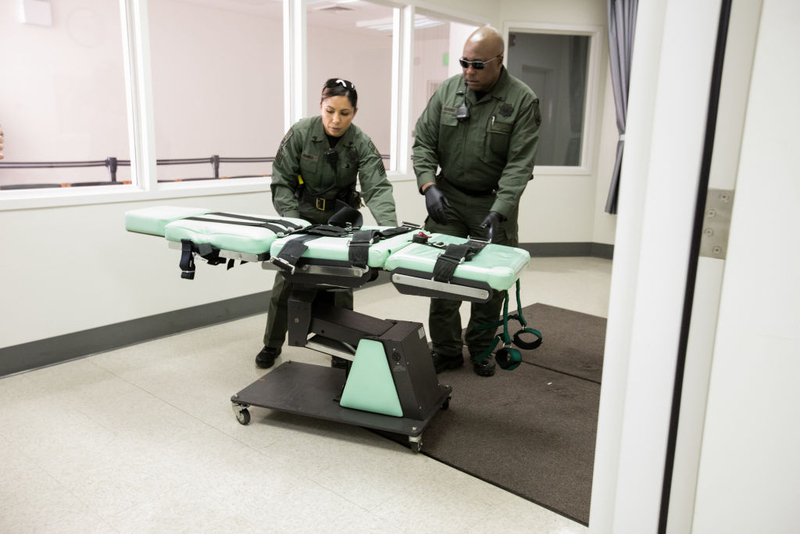
Corrections staff dismantle the death row lethal injection facility at San Quentin State Prison in San Quentin, Calif., in 2019. Democratic Gov. Gavin Newsom this week announced a moratorium on the state’s death penalty. California is one of four states with moratoriums in place. (Photo by California Department of Corrections and Rehabilitation via Getty Images)
Among the more formidable responsibilities Byron Donalds will inherit upon being sworn in as governor of Florida in January is signing execution warrants once death-row inmates’ appeals and executive clemency processes have concluded.
Florida and Pennsylvania are the only states giving their governors sole power to sign death warrants. And no governor has been more prolific in signing death warrants over the past two years than Florida Gov. Ron DeSantis. He signed 19 in 2025 and 22 so far this year.
Of the 37 executions that have taken place in the United States this year, more than half (19) have been in Florida, according to the Death Penalty Information Center. Three more are scheduled within the next month.
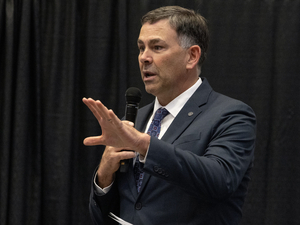
During a news conference in Hollywood Friday morning before he appeared at an education technology summit, Donalds was asked by a Phoenix reporter whether he would continue that pace of signing death warrants.
“For us, we’re just going to evaluate each case as it comes,” Donalds said. “I’m not trying to set a quota, or anything like that. We’re going to evaluate them on an individual basis, because you are talking about following through on a court decision for somebody who’s on death row. And so, we’ll just do that on a case-by-case basis. That’s the way that I’m going to proceed with that topic.”
Donalds’ comments came after he was asked to consider halting executions after he takes office.
Requests came from three exonerated death row inmates who during a press conference in Tallahassee Thursday called on the governor-elect to halt executions and review the state’s death penalty laws. Those three men are among 30 condemned prisoners exonerated in Florida since the death penalty was reintroduced in 1976.
Also, on Wednesday, the Rev. Dr. Jeff Hood, spiritual adviser to two of the death row inmates in Florida scheduled for execution in the next month, urged Donalds to commit to a six-month moratorium on executions.
“We’re asking for this to be a moment in which the state takes the opportunity to investigate what 40 executions in multiple years has cost,” Hood said during a remote press conference. “We are asking the governor to lead the way in taking the opportunity to see what pieces are not in place to support those who are being pushed and forced to carry these executions out. We should be knowledgeable about how much these executions are costing.”
Public approval for the death penalty for convicted murders in the United States has now dropped to 49%, the first time support has been below the majority level since 1971, according to a recent Gallup Poll. Gallup conducted the survey Oct. 1 -19, beginning the day after the failed execution attempt of Tennessee death row inmate Christa Pike.
Twenty-seven states still enforce the death penalty. However, four of them (Ohio, Oregon, Pennsylvania, and California), have executive holds on executions.
Jay Waagmeester contributed to this story.
Tallahassee, FL