Ohio Republican lawmaker wants to make it easier for legislature to override the governor’s veto
Nov 13, 2026 | 4:00 am ET

Description
The Ohio Statehouse. (Photo by Megan Henry/ Ohio Capital Journal)
An Ohio Republican lawmaker is trying to change the state’s constitution to make it easier for the legislature to override the governor’s veto.
State Rep. Ron Ferguson, R-Wintersville, recently introduced House Joint Resolution 11, which would decrease the number of votes required to override the governor’s veto. This comes less than a week after Democrat Amy Acton was elected governor, the Ohio Democrats broke the Republican supermajority in the Ohio House for the next General Assembly, and a Democrats were elected to the seats of secretary of state, treasurer, and attorney general.
Currently, a three-fifths majority vote from the members of the House and Senate is necessary to override the governor’s veto.
H.J.R. 11 would change it to a simple majority.
If both the Ohio House and the Ohio Senate pass the resolution, the issue would go before voters as a constitutional amendment in a special election on May 4.
Unlike a bill, this would not require Ohio Gov. Mike DeWine’s signature. DeWine said last week he does not support any attempt by lame-duck Republican supermajority lawmakers to dramatically change the powers of governor before January.
Ohio House Speaker Matt Huffman, R-Lima, did not sound optimistic this would pass.
“To be able to put together a campaign by next May, I think would be almost impossible,” he said.
But Huffman did not rule out other potential reforms coming forward during lame duck.
“We’re sort of gathering those and deciding what is constitutional, what practically makes a difference to make sure that the legislature — which is the representatives of the people — still has the appropriate authority, and the executive branch has the appropriate authority too,” Huffman said.
When asked if the Ohio House is looking at trying to change the authority in other executive offices, Huffman said he told his Republican caucus to write up specific proposals if they have things they want to see change.
“There are a lot of people who’ve called up and said, ‘Oh, we should do this or we should do that,’” he said. “Great, let’s see a specific proposal.”
Ohio Senate President Rob McColley, R-Napoleon, does not think the house resolution will pass.
“I don’t know that they would have the support, quite frankly,” he said. “So I can tell you on that, probably not going to happen.”
Ohio House Minority Leader Dani Isaacsohn, D-Cincinnati, called attempts to limit the governor’s authority anti-democratic and said it was “the worst possible time to ignore the will of the voters.”
“Anything that would overturn the will of the voters is an insult to the people of Ohio and a detriment to the state, and I think that is certainly how Governor-elect Acton feels, and we share that sentiment,” Isaacsohn said.
Ohio Senate Minority Leader Nickie Antonio, D-Lakewood, agreed with Isaacsohn.
“I think to game the governor’s powers at this point would be a slap in the face to the voters,” she said. “Whatever you do right now, there are ramifications and consequences for next year. So I think everybody needs to keep that in mind as well.”
University of Cincinnati political science professor David Niven doesn’t think the proposed constitutional amendment would pass if it was on the ballot.
“The voters have shown they are skeptical about Republican power-grabs,” he said. “It makes (Ohio Republicans) feel good to think they can take away the power of the governor as soon as a Democrat is in office.”
Professor David Cohen, a political science professor with the University of Akron, said the constitutional amendment would be “a really dark stain on the Republican party.”
“A real tone-deafness as to what the election results mean,” he said.
In 2023, Ohio Republicans tried unsuccessfully to make it harder to amend the Ohio Constitution by requiring future amendments to be approved by 60% of voters instead of the simple majority. Ohio voters rejected the proposal by 57%.
Reporter Susan Tebben contributed to this report.
Follow Ohio Capital Journal Reporter Megan Henry on X, Bluesky, or Instagram.
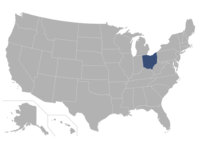
Columbus, OH