‘Tragic case’ of deported mother, child to Guatemala continues to wind through courts
Nov 12, 2026 | 5:30 am ET

Description
Caleb Yeske holding the Guatemalan baby shortly after she was born. Yeske was the baby's foster father. (Photo provided)
The Kentucky Attorney General and the Kentucky Press Association are asking the state’s highest court to unseal confidential files involving a controversial family court case in which a Louisville judge ordered a toddler returned to her mother just before she was deported to Guatemala.
The 15-month-old girl, a U.S. citizen, was born in Louisville though her mother was undocumented and targeted for deportation by U.S. Immigration and Customs Enforcement (ICE). Both mother, 20, and child were sent by ICE to Guatemala in September over objections of the foster family that had cared for the child since birth.
Meanwhile, reunification of the child and mother in Guatemala has faltered, according to the Louisville foster father, Caleb Yeske, who visited them in Guatemala in October at the mother’s request. Guatemalan child welfare officials took custody of the child while he was there and hospitalized her over concerns about her health.
Yeske said he knows little about the girl’s status or plans for her care except that she remains in custody of the child welfare agency. He continues to try to monitor the case and offer any help he can.
“I want to be sure this child is safe and well-cared for,” he said.
Yeske said he faults the hasty reunification of the child with the mother as she was about to be deported. Typically, reunification occurs under the supervision of state social workers to ensure it goes smoothly and a parent is capable of taking over custody.
In this case, the mother—who had been in jail for the past year—and her child, were reunited just hours before ICE deported the mother, he said.
He also wonders if ICE’s current drive to deport immigrants worsened matters. Had the mother been allowed to remain in the United States at least long enough to get to know her child and learn parenting skills, the outcome might have been different, Yeske said.
“She was robbed of that,” he said.
In separate motions with the state Supreme Court, lawyers for Attorney General Russell Coleman and lawyer Michael Abate, representing the press association, argue that state law permits opening confidential child welfare files when warranted. They also argue the public has an interest in determining whether the case—which drew extensive media attention – was handled properly.
“The public has a substantial interest in this case,” said the attorney general’s motion. “The child at the heart of this case was born in Kentucky, and she spent the first year of her life here, cared for by foster parents. The child is every bit a Kentuckian.”
Abate’s motion said the case raises “substantial questions about how public officials — including judges — carried out their duties when ordering that an infant be hurriedly reunited with its mother . . . so the child could be deported with a mother it never knew.”
‘She was born here’
Yeske, the foster father who cared for the girl from birth, said the child’s mother began trying to arrange her return to his care in the United States soon after she was deported, and he was willing to do so.
“This is a 15-month-old American citizen,” Yeske said. “She was born here, raised here and spent almost her entire life in Kentucky custody.”
Yeske said that in late October, the child’s mother contacted him and asked if he could resume caring for the girl and take her back to the United States to live. She told him she wasn’t ready to raise a child and also needed to work, but lacked child care.
So he flew to Guatemala to meet with her and to try to make legal arrangements. Yeske, who speaks Spanish, said he was able to communicate with the mother and locate a local lawyer to help.
The mother traveled with the child from a remote village where she lives to meet Yeske in Guatemala City, he said.
She executed legal documents to authorize the arrangement and Yeske was trying to obtain a U.S. passport for the girl through the U.S. Embassy when Guatemalan child welfare officials intervened and took custody of the child. She was hospitalized for a health evaluation and remains in the hospital as far as he knows, said Yeske, who had returned to the United States at that point.
Yeske said the U.S. embassy in Guatemala has thus far not intervened in the case and is leaving it to the discretion of the Procuraduria General de la Nacion, the child welfare agency.
An embassy spokesperson did not immediately respond to a request for comment emailed to the press office.
Lawyers for the child’s mother and with the Jefferson County Attorney’s office, which represents the state in family court, have filed motions objecting to unsealing the records in the Kentucky case.
The mother’s lawyers, John H. Helmers Jr. and Melina Hettiaratchi objected largely on technical grounds, saying there was no pending case before the Supreme Court and therefore the motions to unseal should be dismissed.
Lawyers for Jefferson County Attorney Michael O’Connell agreed the case should be dismissed on those grounds. But it added that “privacy interests” of the mother and child should be considered and that should the case be unsealed, personal or sensitive information should be redacted.
A ‘tragic’ case
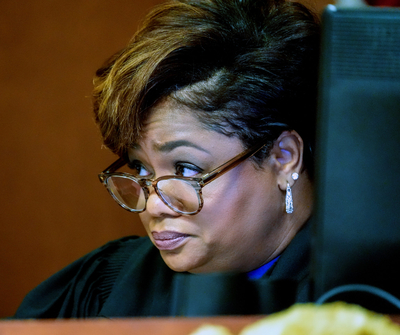
The case first attracted public attention in September when the foster parents spoke out in opposition to a decision by Jefferson Family Court Judge Angela Johnson to reunite the child with the mother, who was in ICE custody and about to be deported.
Coleman’s motion to unseal the file acknowledges the case has a sad and complicated history.
“The facts in this matter are tragic all the way through,” it said.
The child was born in August 2025 and taken to the hospital by the mother, who spoke no English and reported giving birth alone at home, according to public court records. Court records say the pregnancy was the result of a sexual assault.
The infant had several lacerations and, suspecting abuse, child welfare officials, placed her in the custody of the state Cabinet for Health and Family Services, which then placed her in foster care.
The mother was initially charged with attempted murder and assault and remained in jail. In July she pleaded guilty to a reduced charge of wanton endangerment, was sentenced to time served and released from jail. But she was detained by ICE, which planned to deport her, according to court records.
In August, Johnson, the family court judge, agreed to proceed with plans to reunify the mother and child prior to deportation, prompting the foster parents to object and Jen Mortenson, an advocate on their behalf, to speak publicly about the case.
Mortenson told the Kentucky Lantern that Johnson at a hearing reminded those involved in the case that family court matters are confidential and that spreading “false information” about the case could result in jail time.
The foster parents attempted to appeal the judge’s decision to return the child to the mother.
But Appeals Court Judge Sara Walter Combs ruled against them, finding the law does not give foster parents standing, or legal grounds to pursue such a challenge. The state Supreme Court declined to overrule Combs.
A ‘gag order?’
Combs also said in her order that the facts in the confidential case “have been misrepresented by unwarranted publication in social media or otherwise.” The order said anyone who violates the confidentiality order “may be subject to sanctions or contempt proceedings.”
Abate, in the motion to open the case, compared any effort to silence those who wish to speak about it to a “gag order.”
While court records are confidential in child abuse and neglect cases, that doesn’t mean parties are forbidden from commenting on a case, his motion said.
“That is not the law,” his motion said. “This court has long recognized that a statute or order sealing a case file does not mean that parties are prohibited from discussing the subject matter of a case.”
Unsealing the files should answer questions about how the case was handled, it said.
“Only by bringing full transparency to this situation can this court ensure the public’s confidence in the judiciary—and particularly, the workings of its notoriously secretive family law system.”
Frankfort