Moore talks military service, staffs up; poll is good news for city hall, in political notes
Nov 12, 2026 | 12:01 am ET
Description
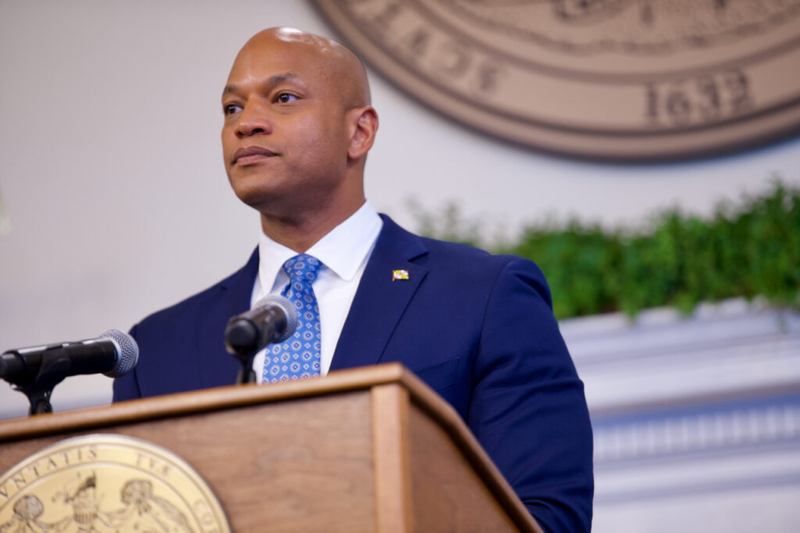
Maryland Gov. Wes Moore (D) faces continued questions about his military service in a new interview with Chuck Todd that will run online Sunday. (File photo Bryan P. Sears/Maryland Matters)
Gov. Wes Moore continues to face scrutiny over his service record and a Bronze Star.
The latest round comes from Chuck Todd in an interview that will air on Noosphere on Sunday.
In that interview, Todd asks Moore about a recent report by Fox 45 with Moore’s former commanding officer, retired Lt. Col. James A. “Jamie” Gottschling.
Gottschling told the station that Moore’s service in Afghanistan is service “he can be proud of.” But he also characterized some of Moore’s own descriptions of his service as an “embellishment.” Gottschling said he would not have signed off awarding Moore a Bronze Star, instead saying the Army Commendation Medal was Moore’s award for his service.
Maryland Gov. Wes Moore responds to claims from his former Army supervisor, retired Lt. Col. James Gottschling, that he never led soldiers in combat in Afghanistan.
@iamwesmoore: “I pray for him and his family. … I think his OER of me and what he wrote about me before that speaks for itself.”
His full conversation with @chucktodd releases this Sunday at 6PM, only on Noosphere
https://t.co/9Qgo6jFxUk— Noosphere (@noosphereapp) November 11, 2026
Moore declined to respond to Fox 45, owned by Sinclair Broadcast Group. David Smith, owner of the Baltimore Sun and chairman of Sinclair Broadcast Group, has sued Moore for defamation.
In an interview with Todd, Moore was asked about the report and Gottschling’s comments.
“I’d say, you know, I pray for him and his family,” Moore tells Todd in the clip released on social media. “I know mental health and the challenges that people have to go through are real, and so I just will choose to remember the the good times that I had with him when he gave me a top ranking on my OER [officer evaluation report], and I’m proud of the service I did. Proud of service I did with him.”
During the interview, Moore tells Todd his service in Afghanistan is documented.
Todd asked Moore if he was implying that “somebody’s taking advantage” of Gottschling to score political points on Moore, a prospective candidate for president in 2028. Moore responds by suggesting that Gottschling may be politically motivated, calling it the “nastiness” of politics.
“He said to me directly, he said we just have different political … we just you know come from different political positions,” Moore said.
Todd follows up by asking if this is all about a potential bid for president.
“I just really, I want to always remember the times that we had when we served together in Afghanistan, and you know I think his OER of me and what he wrote about me before that speaks for itself,” Moore said.
Moore beefs up lobby shop
Shuffling in the Moore administration continues as the governor prepares to start his second term and fifth legislative session.
To that end, Moore is bringing on Angela Bailey Thupari as deputy legislative officer starting Nov. 25, the administration confirmed to Maryland Matters.
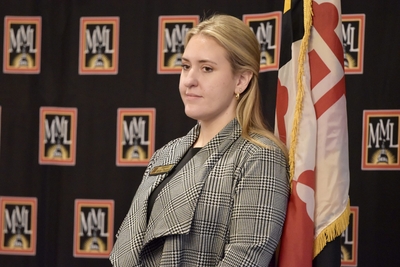
Bailey Thupari has experience in the State House. She spent the last six years as the director of advocacy and public policy at the Maryland Municipal League. Prior to that, she spent three years with the Maryland Building Industry Association, including a year as its vice president of government affairs. She holds a bachelor’s degree in political science from American University and a law degree from the University of Baltimore School of Law.
Since easily winning re-election to a second term on Nov. 3, Moore has announced a new chief of staff as well as changes to his Cabinet. Additional changes are expected before the General Assembly reconvenes and Moore is sworn in for a second term in January.
Hometown heroes
Everybody wants government services; nobody’s really crazy about paying for them.
That would be our smart-aleck and decidedly nonacademic summary of the findings of a poll released Thursday by the University of Maryland, Baltimore County, Institute of Politics for the Maryland Municipal League. The survey asked 710 Maryland voters, from Nov. 5-9, for their feelings about their local communities and the services they want, their trust in different levels of government and their feelings about taxes from various governments.
(There was also a series of questions on news consumption, but since Maryland Matters was not offered as an option for respondents, we kind of lost interest.)
The good news, if you’re the Maryland Municipal League, is that people liked their hometowns and were more inclined to favor the government closest to them. The poll found that 67% of respondents rated their community — defined as their neighborhood or the area right around their home — as excellent or good, while just 23% called it fair or poor.
When asked what services or amenities were important to have in those communities — whether they had them, or just wanted them — the wish list was pretty meat and potatoes. The share of respondents who said these items were “very important” was:
• Services such as trash removal, law enforcement, or a water system: 86%
• Dedicated police or fire departments: 80%
• A good place to raise children: 67%
• Access to recreational parks and trails: 63%
• Sidewalks: 56%
• Events such as farmers’ markets, parades, arts and music, and a vibrant downtown: 51%
• A strong sense of community pride: 47%
Somehow, multimillion-dollar sports palaces and championship-caliber golf courses were overlooked. Going to have to check the methodology.
Majorities felt they were taxed too much, and most didn’t have a lot of faith in the decision-making of government. But chalk another one up for the municipal league — local government did best in both areas. On taxes, 61% said they pay “too much” in federal and state taxes, compared to 57% on local taxes. When asked about their level of trust in government, 57% said they trust their city, town or county government; 18% trust state government; and just 6% trust Washington.
“This poll reinforces something we see every day: Trust begins closest to home,” said Maryland Municipal League CEO Theresa Kuhns in a statement with the poll. “It is a powerful reminder of the importance of preserving local decision-making and ensuring our communities have the tools and resources to shape their own futures.”
The poll was conducted by live interviewers and text-to-web utilizing a dualframe (landline and cell phone) random sample stratified by county. The data was weighted by gender, age, race, geography, and educational attainment and has a margin of error of plus or minus 3.5 percentage points.
Annapolis, MD