Tennessee gets $210M in second year of federal Rural Health Transformation grant
Nov 11, 2026 | 6:00 am ET
Description
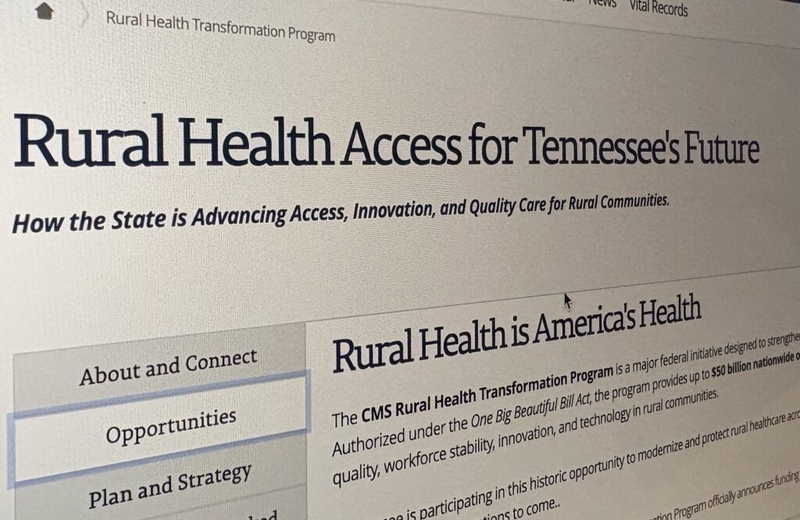
Tennessee received received $210.3 million for the second year of the federal Rural Health Transformation Program. (Photo: Tennessee Department of Health)
Tennessee received $210.3 million for the second year of the federal Rural Health Transformation Program, the U.S. Department of Health and Human Services announced Monday.
The state could receive up to $1 billion over the program’s 5-year duration, with year-to-year grant amounts decided based on Tennessee’s progress toward implementing its federally approved plans. Tennessee received $206.9 million in the program’s first year.
The Rural Health Transformation Program is a $50 billion federal initiative part of Trump’s One Big Beautiful Bill Act passed in 2025. The program was created to fund rural healthcare and partially offset the more than $900 billion in Medicaid cuts over the next decade to pay for the tax cuts in the One Big Beautiful Bill. The health care research group KFF estimated that Tennessee will lose about $6 billion in federal Medicaid funding over the decade under the legislation.
Tennessee legislators expressed skepticism earlier this year about state policy changes required to receive full funding from the program. Lawmakers questioned whether the state should commit to spending on projects when federal grant funds could potentially be clawed back if the desired policy changes don’t pass.
Under the program, each state is guaranteed to receive $100 million in baseline funds. Additional funding is awarded competitively based on the state’s rural population characteristics, promised policy changes and how well each state performs on its promises.
Tennessee lawmakers skeptical over strings attached to Trump rural health grant program
Federal funds from the program cannot be used for construction, clinician salaries, loan repayment, hospital operating deficits, historical debt or higher reimbursement rates. The program also restricts payments to providers.
Progress on Tennessee’s plan
Tennessee’s plan includes five focus areas:
- Improving access to healthcare
- Maternal and child health
- Technology infrastructure
- Preventative health and wellness
- Workforce development
Initiatives proposed in the application include several competitive grants within each category, a Last Mile Initiative for emergency medical services, expanding Tennessee’s Safety Net program, creating a Memory Care Assessment Network, a dental pilot extension, technical assistance investments and a $100 million expansion of value-based payments led by TennCare for hospitals as well as maternity and dental care in rural areas.
Progress is tracked by the Centers for Medicare & Medicaid Services. Tennessee has completed planning and project preparation for five of its 17 initiatives. The remaining initiatives are still in progress on the project preparation stage.
As of July 31, Tennessee spent $31.3 million of its first-year funds, including $20.7 million to design and implement value-based payment programs intended to focus on overall patient health across practices and doctors in hopes of avoiding trips to emergency departments and hospital stays. The total also includes $3.3 million for perinatal center trainings, emergency medical services supplies and care, according to a report filed by the state.
The state’s application for the Rural Health Transformation Program committed to passing several policy changes, including:
- Eliminating Tennessee’s certificate of need law, a move that the Tennessee Hospital Association has resisted for years. (Tennessee enacted a partial certificate of need reform law removing restrictions for satellite emergency rooms in 2024).
- Enabling “full scope of practice” for nurse practitioners, physicians’ assistants, pharmacists and dental hygienists
- Reestablishing the Presidential Fitness Test in schools
- Requiring physicians’ continuing medical education to include nutrition
- Submitting a waiver to the U.S. Department of Agriculture to prohibit the purchase of “non-nutritious items” using SNAP dollars
A “state snapshot” published by CMS showed Tennessee received $6.36 million in year one of the program as part of its effort to restrict the use of SNAP dollars for Tennessee recipients. A federal judge blocked several states, including Tennessee, from implementing those restrictions in June.
The snapshot also shows $2.19 million associated with Tennessee’s efforts to ease certificate of need laws, and $2.04 million tied to expanding practice scopes.
Tennessee must spend its first tranche of funds by Sept. 30, 2027.
Nashville, TN