Feds consider next steps after losing challenge to Montgomery County gun law
Nov 10, 2026 | 9:26 pm ET
Description
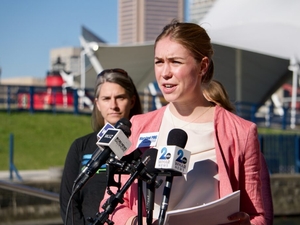
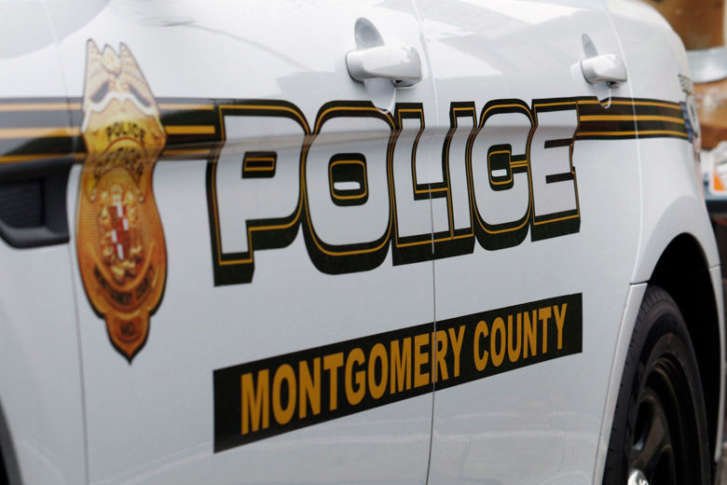
Montgomery County police were named as defendants in an unsuccessful U.S. Justice Department against a Montgomery County restriction on firearms in public places. A court Monday dismissed the suit. (Photo by WTOP)
The U.S. Department of Justice will contemplate how to proceed after a federal judge this week dismissed its challenge of a Montgomery County restriction on firearms in public places that the administration claims is unconstitutional.
“The Department is assessing the decision and next steps, but remains committed to protecting the Second Amendment rights of law abiding citizens in Maryland,” Justice Department spokesperson Kiersten Pels said in email Tuesday.
Judge Theodore Chuang of the U.S. District Court for Maryland wrote in a 33-page opinion Monday that the federal government was not likely to prevail in its challenge of the law, which was passed as an emergency measure in July.
That law prohibits firearms within 100 yards of public locations like government buildings, parks and schools. It actually narrows the scope of prohibited areas, removing hospitals, healthcare and childcare facilities and others, to comply with a separate court ruling, Chuang wrote.
County Executive Marc Elrich (D) released a statement on welcoming Chuang’s ruling on the law that was approved July 27.
“I am pleased that this legal challenge has been resolved in the County’s favor,” Elrich wrote
“We will continue to stand by our responsibility to keep Montgomery County safe and to ensure that our public spaces remain places where residents can gather with confidence,” his statement said. “Our commitment remains unchanged: protecting our residents, supporting our communities, and using every lawful tool available to promote public safety.”
The federal government filed suit Aug. 3, a week after Elrich signed the bill into law, challenging the law and naming, the county, the coulnty police department and Sheriff Maxwell Cornelius Uy as defendants.
The Justice Department charged that the law violated the Second Amendment right to bear arms as well as the Violent Crime Control and Law Enforcement Act of 1994. That law allows the attorney general to file civil action to “obtain appropriate equitable and declaratory relief to eliminate the pattern or practice” that “deprives persons of rights, privileges, or immunities” protected in this country. It came into place after the police beating of Rodney King in Los Angeles in 1991.
The county argued that Justice had not provided any evidence that county police were engaged in a “pattern or practice” of prohibited behavior over the week-old law. Chuang agreed, writing that the suit was “devoid of any allegations of any actual conduct by law enforcement officers relating in any way” to the new law.
In fact, he wrote, there was “no claim or record of actual enforcement actions taken by Montgomery County law enforcement officers” not only on the new law, but on its predecessor or any “earlier Montgomery County laws relating to possession or transportation of firearms in or near places of public assembly.”
Appeals court upholds most of Maryland ban on weapons in schools, parks, other public places
Chuang, who held a hearing on the case Oct. 1, ruled that the Justice Department had never used the law enforcement act to “challenge solely to invalidate a state or local law absent any police misconduct.”
That left the government challenging the constitutionality of the law on its face, and not on any action of officer, which Chuang said would be a “breathtakingly broad expansion of federal power in advancing civil enforcement actions by the federal government against state and local governments.”
“The federal government should not have unfettered authority to intrude on the actions of state and local governments,” Chuang wrote. “And Congress, not the Executive Branch, must decide on when such intrusions are warranted by the need to protect individual rights.”
The county’s law is similar to a state law approved more than three years ago, that was immediately challenged in separate suits: One by Susannah Warner Kipke, the wife of Del. Nic Kipke (R-Anne Arundel), and the Maryland State Rifle and Pistol Association, on First, Second and 14th amendment grounds; and another by Katherine Novotny and Maryland Shall Issue, along with the Second Amendment Foundation.
U.S. District Judge George L. Russell III combined the complaints into one case, before ruling in August 2024 to uphold most of the Gun Safety Act of 2023.
A federal appeals court in January upheld most of that law that bans guns within 1,000 feet of a public demonstration or at places such as parks, sports venues and schools. The court said an exception to “sensitive places” did not apply on “private property held open to the public,” where the law prohibits guns without specific permission from the property owner.
Annapolis, MD