Dwindling margins: Can Tennessee Democrats build on an encouraging election?
Nov 10, 2026 | 2:16 pm ET
Description
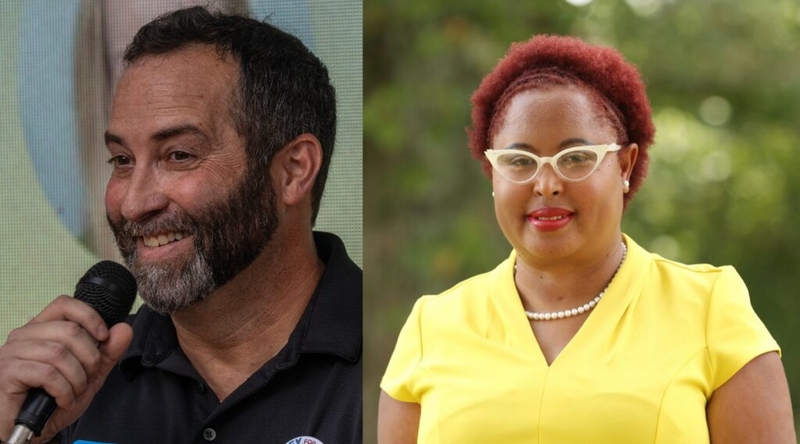
Also-rans who almost won: In Tennessee's 6th Congressional District, Democrat Mike Cooley, left, raised $117,000 but almost beat state Rep. Johnny Garrett, who raised more than $3 million. Marquita Bradshaw, right, came within 12 percentage points of beating incumbent U.S. Sen. Bill Hagerty, to whom she lost by 27 percentage points in 2020. (Photos by John Partipilo of Mike Cooley and Karen Pulfer Focht of Marquita Bradshaw/Tennessee Lookout)
The blue paint that Jackson Pollacked the canvas of American politics last week didn’t miss Tennessee, but there’s a case to be made that it landed with more of a sprinkle than a splash.
Gazing longingly at the midterm miracles that stunningly remade the political landscapes of Texas, Kansas, Iowa, South Carolina, and perhaps Mississippi, Volunteer State Democrats are left to ponder: is Tennessee on the same path, or is it just too stubbornly red to join the fun?
If you glance at a national map showing Republican-to-Democrat voting shifts by county comparing 2026 to 2024, it sure looks like Tennessee with its dense cluster of blue arrows was right there in the middle of the wave last week. But the actual results for Dems here were more about dwindling margins than electoral wins.
There were, of course, some blue successes. At the legislative level a surprising six state House seats flipped red to blue . In the race for governor Democrats won a half dozen counties they lost in 2022, including Hamilton, Knox, Montgomery and Rutherford. And the capper no one saw coming was Victoria Broderick’s astonishing win over 8-term GOP U.S. Rep. Scott DesJarlais in the 4th Congressional District.
The collapse of GOP voters for Blackburn in TN. Two years later, and 1M fewer votes.
But the math on the ground remains grim. With those legislative flips the Republican edge in the state House drops from 75% to 69%, and the state Senate didn’t change. And Broderick’s signature win notwithstanding, the split in Tennessee’s nine-member congressional delegation remains the same it was before last Tuesday.
Republicans survived a close call at the top of the ticket. Gov. Bill Lee won his first term in 2018 by 21 points and his second term in 2022 by 32 points. Gov.-elect Marsha Blackburn’s feeble 2.5% win last week over the energetic but underfunded Democrat Jerri Green speaks not just to Blackburn’s singular unpopularity even in her own party but also tells us this was a winnable contest for Dems given more resources and a better campaign. In other words, a missed opportunity.
Congressional races beyond just the astounding 4th District outcome also showcased blue incursions into the minds and hearts of Tennessee voters. Amply funded Democrats Chaz Molder in the 5th District, Darden Copeland in the 7th District) and Rep. Justin J. Pearson in the (9th District all ran aggressive races, losing only by low single digits — much closer than Republicans thought possible when they drew the lines to make them safe red seats.
A fascinating thing in the U.S. House races was that these well-financed, well-staffed Democrats fared no better than a couple of barely funded candidates who ran minimalist campaigns. The $90K that Broderick raised is peanuts for a congressional race, and she had only about $40K to work with in the general election, yet she won.
Less noticed but just as stupefying is the 6th District, where unknown Democrat Mike Croley lost this supposedly safe GOP seat to Republican Rep. Johnny Garrett by just three points. Garrett spent over half a million dollars on the general election (after blowing through more than two million to win his primary), while Croley came out of his primary with less than $5,000 in his campaign account and rustled up only about $70K to spend on the general election. I’m a voter in the 6th and never once heard a peep from Croley’s campaign.
What should we make of the fact that unknown Democrats with little money drawing zero outside attention running muted campaigns in districts nobody regarded as remotely competitive did just as well or better than the higher-profile Democratic contenders who enjoyed money, attention, and optimistic vibes?
Victoria Broderick claims victory over U.S. Rep. Scott DesJarlais in 4th Congressional District
The simple explanation is that big political waves powered by broad dissatisfaction with the party in power will naturally pull some small fish from the other party into the incoming tide. Last week saw a number of so-called accidental wins in several states that likely surprised the victors themselves as much as anyone else. It’s also the case that unsung, underfunded Democrats like Broderick and Croley were largely ignored by GOP campaigns. With no flurry of media defining the turf, voters would see them merely as the “D” option on a ballot, free of the woke-radical-lefty-commie-socialist labels that Republicans in competitive races spent every last dime this cycle slapping on their opponents.
The wave dynamic also explains how the Democrat running for U.S. Senate, Marquita Bradshaw, managed to come within 12 points of the GOP incumbent Sen. Bill Hagerty, despite the fact that she raised virtually no money, ran virtually no campaign, and lost to Hagerty by 27 points when he first won the seat in 2020.
For years the working assumption has been that Democrats are structurally uncompetitive in much of the South, including Tennessee. Last Tuesday makes it clear that the footprint of Republican dominance has lost a few shoe sizes. So can Tennessee Democrats turn this new jolt of optimism into something more than just a mostly close-but-no-cigar outlier election that entices but doesn’t fulfill? Is there a path to membership in the newly growing club of Southern and Midwestern red states moving past the tyranny of one-party control?
One thing that would help Tennessee look like other red states turning purple is loosening the stranglehold Republicans have had on voters in growing suburban counties. Last week’s election teased us big time here. Two years ago in her U.S. Senate reelection,Blackburn waxed state Rep. Gloria Johnson by 20 points in each of the key high-growth suburban and exurban counties of Rutherford and Montgomery. In last Tuesday’s contest for governor Blackburn lost to Green in Rutherford by almost 9,000 votes and in Montgomery by over 3,500 votes. Even Bradshaw won the U.S. Senate race in both counties.
Going forward, turning this into something lasting for Democrats means throwing significant money and serious talent at every crucial race and doing so early. One of Blackburn’s first acts as governor in January will be to appoint someone to fill her Senate seat until it’s on the ballot in 2028. A serious Democrat who has the chops and wants that seat should be in the fray raising money and running hard by Valentine’s Day. Others who want to give congressional seats a go should also get started without delay, publicly and aggressively watchdogging these House Republicans from the minute they take the oath at the start of the new Congress in January.
Perhaps 2028 will be another big blue election year, but even if it is it probably won’t have coattails like this one. Tsunamis just don’t happen that often. To build on 2026 Tennessee Democrats need to find candidates, write checks, and open the throttle, but quick.
Nashville, TN