Winter is coming. Can Democrats succeed in chilling soaring energy prices?
Nov 10, 2026 | 12:19 pm ET
Description
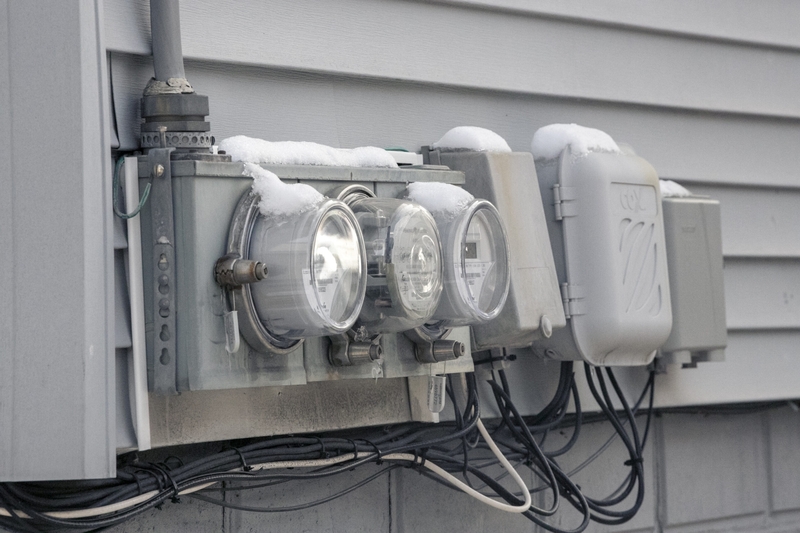
Democrats who won control of Congress are likely to find that bringing down gasoline and other energy prices in time for winter is largely a process out of their control. (Photo by Alexander Castro/Rhode Island Current)
WASHINGTON — Democrats during the midterm election campaign promised bold steps to make life more affordable if voters elected them to control Congress next year.
They won, in a historic blue wave that’s already given them comfortable majorities in both the House and Senate. But Democrats likely will find that bringing down gasoline and other energy prices as winter arrives will take more than an act or two of Congress. And it’s largely a process out of their control.
“You can’t legislate your way out of high gasoline prices,” said Patrick De Haan, head of petroleum analysis at GasBuddy, which tracks prices.
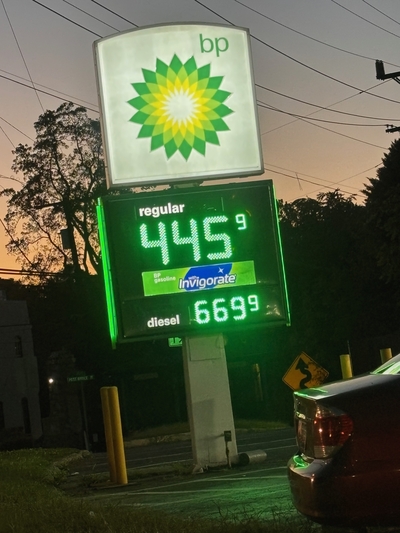
Since the United States attacked Iran on Feb. 28, fuel prices have soared. A gallon of regular gasoline averaged $3.98 Tuesday, AAA reported. While that’s down from recent weeks, it’s still well above the $3.07 of a year ago. Diesel prices Tuesday averaged $6.16 a gallon, ballooning from $3.73 a year ago.
Home heating oil averaged a staggering $6.14 a gallon last week, up from $3.62 a year ago, according to the U.S. Energy Information Administration. Electricity costs were up 3.8% and natural gas was up 4.4% over the 12 months ending in September, said the federal Bureau of Labor Statistics.
Republicans will control Congress during the rest of this year’s session, and Democrats will be in charge beginning in January. Regardless of who has the majority, the government’s ability to bring consumer energy prices down over the short term is limited.
Some Democrats are already blunt about what they can do about prices.
“I’m not telling people I’m going to be able to lower X by X number of cents, but I’m telling them they’re going to have somebody who’s going to fight like hell for them,” Sen. Ron Wyden, an Oregon Democrat, who’s in line to chair the tax-writing Senate Finance Committee next year, told reporters at the Capitol Monday.
There are quick fixes. They can involve suspending fuel taxes, drawing from petroleum reserves and easing restrictions on certain products. Most of those strategies have been tried this year, and have had minimal if any impact.
Lowering fuel taxes
“The most obvious quick fix would be to eliminate the federal gas tax,” said Jeff Lenard, a vice president of the National Association of Convenience Stores, a trade group.
He saw little else Congress could do quickly but added “if the federal tax is eliminated, that would create a budget hole elsewhere for the federal government,” and ending the gas tax would address only about 5% of the current cost of fuel.
Proposals to suspend the 18.4-cents-a-gallon federal gasoline tax and the 24.4-cents-a-gallon tax on diesel fuel have been a popular, easily understandable way of trying to get prices down quickly.
Members of Congress from both parties have been trying this year to push the legislation. Sen. Josh Hawley, R-Mo., wants a 90-day suspension. Rep. Jeff Van Drew, R-N.J., wants an 18-month tax holiday and a phase-in of the full tax when that period ends. Rep. Brendan Boyle, D-Pa., has called for suspending the tax when the national average price of gasoline tops $4 a gallon.
But, said the nonpartisan Congressional Research Service last month, suspension of the federal tax “may not reduce consumer prices at all. Gasoline suppliers, distributors, refiners, and blenders could choose to reduce prices by more or less than 18.4 cents per gallon or, in theory, not reduce prices at all.”
While no legislation to curb federal taxes has been approved, fuel tax holidays have been tried in different states. Georgia, Illinois, Indiana, Kentucky, North Carolina, Ohio, and Utah are suspending gas taxes or delaying increases this year.
Washington’s Tax Foundation found California’s taxes and fees are the nation’s highest at 73.6 cents a gallon, followed by Illinois at 70.4 cents. The lowest taxes and fees are in Alaska at 9 cents a gallon.
The emergency supply
One big strategy for keeping price and supply stable was supposed to be the nation’s Strategic Petroleum Reserve.
Created in 1975 after the price and supply shocks of the previous two years, the oil filled underground salt caverns along the Gulf Coast in Texas and Louisiana.
Fifteen years ago, the reserve had about 726 million barrels. At the end of October, the supply was down to 282 million barrels, its lowest level in 44 years. President Donald Trump authorized the release of millions of barrels of oil during the Iran war, and President Joe Biden ordered major drawdowns to counter supply disruptions after Russia invaded Ukraine in 2022.
This year, the supply from the U.S. and other nations, as well as lower consumer demand because of higher prices, helped ease the economic pain, said an analysis from Washington’s Bipartisan Policy Center.
But, it added, “The events of the last few months have also demonstrated the limitations of the SPR. The reserve’s lower stock levels in the run-up to the Iran conflict limited the volumes available for release.”
What can the government do?
Trump last month eased restrictions on dyed diesel, often called red diesel, widely used in agriculture, and made a deal to bring more diesel from Russia into world markets.
None of these strategies, though, is likely to make a lot of difference to consumers. “You can pull small levers, but the president has pulled most of those levers,” said De Haan.
The most powerful players in regulating electricity rates and home heating oil are largely state and local agencies.
But, said Charles Hua, founder and executive director of PowerLines, a nonpartisan consumer education organization, “federal policymakers including Congress and the president can still have an impact over utility bills.”
He cited the ability to pass “policies that can modernize grid planning and utility business models, using their platform to elevate these issues, and engaging with state and regional actors on grid decisions that can impact utility bills.”
The Iran war
Trump could take what’s arguably the fastest way to provide relief to consumers from the high oil prices this winter by reaching an agreement to end the war with Iran.
Prior to the war, roughly 20% of the world’s oil passed through the Strait of Hormuz, a narrow passageway between Oman and Iran. The strait has been closed, or the site of attacks, since the war began.
Here’s where the new Democratic-run Congress could have influence: It can pressure the administration to end the war.
Serious talks are underway among Democratic leaders as to whether, or when, to cut off or at least severely limit war funding, perhaps during the lame-duck session now underway.
“Will everything pass? Will Trump sign all of it into law? Knowing Trump’s and Republicans’ intransigence, of course not,” Senate Democratic Leader Chuck Schumer of New York told a forum at the progressive Center for American Progress last week.
“And let’s not forget one of our most powerful tools: Democrats have power on spending bills that require our votes, and we should use it. No more funding for a forever war with Iran,” Sen. Elizabeth Warren, a Massachusetts Democrat, told the 2026 Popular Mandate conference on Tuesday, a gathering of progressives.
Even an end to the war is no guarantee of sharply lower prices. Oil is a globally traded commodity, its supply and price affected by all sorts of developments.
In 2022, prices spiked to levels similar to and even higher than the current costs after the Russian invasion of Ukraine disrupted world markets that were concerned about losing Russian oil.
That war continues, meaning tensions in the Middle East are likely to go on, raising questions about the security of Saudi Arabia’s oil fields.
De Haan, like most analysts, is wary of any fast solution. Oil prices are affected by too many different developments.
“There’s a lot of different things going on at the same time,” he said. “There is no magic wand.”
All States Newsroom content is free to republish. Read our republishing policy for more information.