Blue wave boosts Democratic hold on Nevada Legislature but falls short of Senate supermajority
Nov 10, 2026 | 8:04 am ET
Description
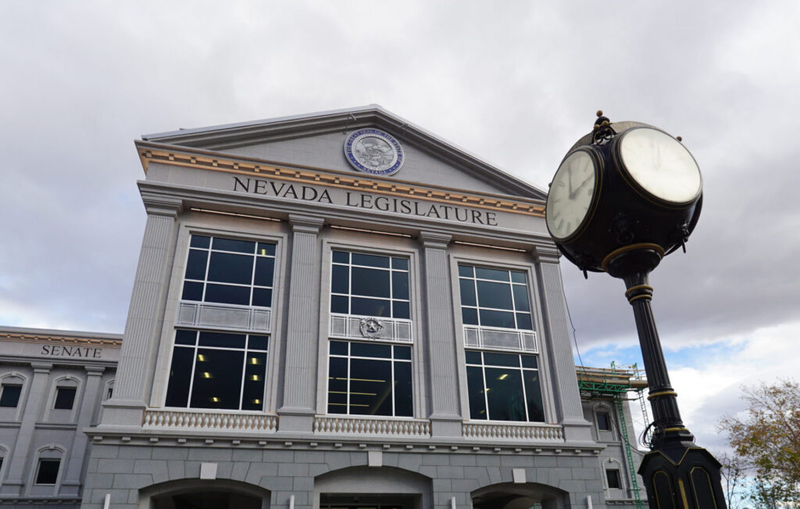
(Photo: Jeniffer Solis/Nevada Current)
Nevada Democrats won big this Election Day, flipping several state legislative seats and unseating an incumbent Republican governor. But they don’t have carte blanche to do everything unilaterally next year when they meet for the 2027 Legislative Session.
That’s because the party did not secure a two-thirds supermajority in the Nevada State Senate. That means Democrats will need the support of at least one Senate Republican to pass any bill that raises state revenue. And that threshold doesn’t just apply to attempted tax increases, which Governor-elect Aaron Ford has suggested he isn’t open to anyway. If a bill sets a new $5 fee for applicants of a new type of occupational license, that requires two-thirds support. So too does 1 of the 5 biennial budget bills that must be passed each legislative session.
So why didn’t an unprecedented national blue wave make it down to the Nevada State Senate?
In Nevada, state senators serve staggered 4-year terms, so only half of the chamber is up each election cycle. This year, 11 of 21 seats were up, and only 4 of those 11 seats were held by Republicans. All four districts are considered solidly red, meaning there was little opportunity left for Democrats.
Republican state Sen. Ira Hansen ran uncontested in his District 14 while Senate Minority Leader Robin Titus, state Sen. Lisa Krasner, and Assemblymember Danielle Gallant easily dispatched Democrats in their races for Districts 17, 16, and 20, respectively.
That leaves the makeup of the Senate exactly where it was before — 13 of 21, one seat short of a supermajority.
The Nevada State Assembly, where all 42 seats are up every two years, provided much more opportunity for Democratic gains.
Going into this year’s Election Day, Democrats controlled 27 seats, one shy of a supermajority. Results as of Monday night show they will now control at least 31. That’s their largest caucus for at least three decades.
As of Monday night, one race remained too close for the Associated Press to call. Republican Assemblymember Melissa Hardy trailed Democrat Shenea Booth, a world champion athlete and circus artist, by less than one quarter of 1 percentage point, or 77 votes.
If those results hold, Hardy will be unseated and Democrats will hold 32 of the 42 Assembly seats.
Republican Assemblymember Rebecca Edgeworth was ousted by Democrat Joe Spica, a Culinary union member in District 35. It was an outcome not wholly unexpected because the district is competitive.
More surprising to observers was District 13 where Republican Assemblymember Brian Hibbetts was taken out by Democrat Daniel Andrews, a retired Clark County School District teacher.
The blue wave also brought to victory two progressive Democrats that Republicans in campaign ads had decried as “too extreme” for Nevada because of their association with the Las Vegas branch of the Democratic Socialists of America. Vinny Spotleson and Alex Pereszlenyi both acknowledged joining the organization, though both have characterized it as not being a central tenet of their campaigns and neither was endorsed by the organization.
Also among the Democratic newcomers are Kamilah Bywaters and Eileen Eady — former public school teachers who two years ago ran for Clark County School Board but lost to conservative Moms for Liberty candidates. This year, Bywaters flipped Assembly District 2, an open seat vacated by Assemblymember Heidi Kasama, who unsuccessfully ran for Clark County Commission. Eady unseated Republican incumbent Lisa Cole in Assembly District 4.
Also joining the state Assembly as Democrats are recovery advocate Ryan Hampton, SEIU Local 1107 steward Alexis Esparza, and urban planner Miguel Davila.
Across the aisle, the Republican Assembly Caucus will welcome two newcomers: Denise Daniels Fanning, a former television commercial producer, and Julie Butler, who spent three decades working for the state’s budget division. Both newcomers ran in open seats.
The newly shaped Nevada State Legislature may revisit some of the dozens of bills vetoed by Lombardo over the past four years. They may also grapple with the continued fallout from President Trump’s Big Beautiful Bill, data center regulations, education, and affordability at large.
Ford and the Legislature will soon know how much money they’ll have at their disposal over the next biennium. The Nevada Economic Forum is scheduled to meet Monday, Nov. 16 to approve the state’s official revenue forecast, which is used as the base for the state budget.
The 2027 Legislative Session is set to begin on Feb. 1.
Las Vegas, NV