‘Somebody stepped in and helped’: Advocates press to keep Oklahoma’s mental healthcare ‘safety net’
Nov 10, 2026 | 6:30 am ET
Description
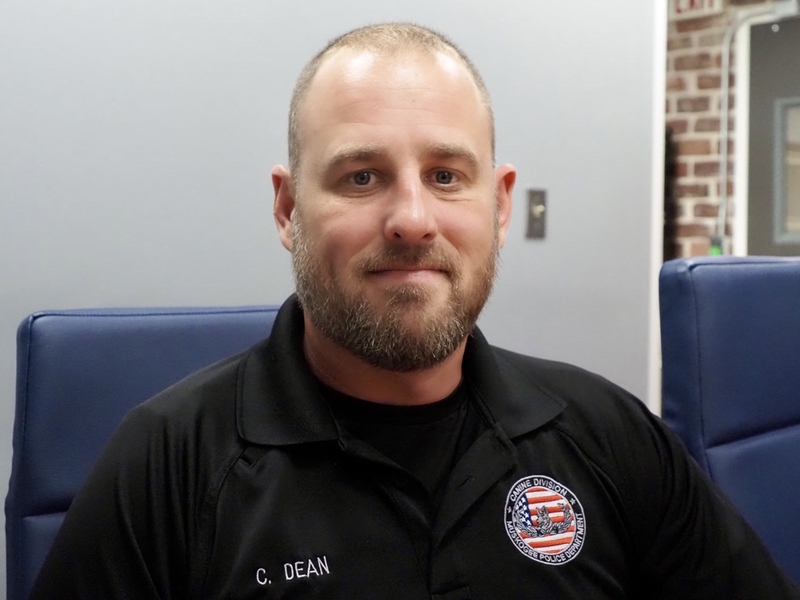
Christopher Dean, captain of the night shift for the Muskogee Police, is pictured July 23, 2026 at Green Country after speaking about his time receiving mental health-related services at the clinic. (Photo by Emma Murphy/Oklahoma Voice)
Editor’s note: This story discusses suicide and mental health crises. If you or someone you know needs help, call or text 988, the U.S. suicide and crisis lifeline, or access online chat at 988lifeline.org.
MUSKOGEE, Okla. — Christopher Dean feels he has debt to repay by reducing the stigma surrounding mental health treatment.
The Muskogee Police night shift captain spent a week at a local inpatient facility being treated for suicidal thoughts about four years ago.
Then for a year and a half, he received therapy from Green Country Behavioral Health Services, a certified community behavioral health clinic, and one of its subsidiaries. At first, the services were just “checking a box,” but Dean said working on his mental health gave him a desire to figure out where the “wrong turn” happened in his life.
“I survived something that many times people don’t survive due to those that were willing to reach out and provide that help,” Dean said. “Whether it be, you know, a mental health facility or an individual or a really good boss, somebody stepped in and helped.”
For nearly a decade, certified community behavioral health clinics like Green Country have served as a lifeline for hundreds of thousands of Oklahomans who need access to mental health or substance use treatment, regardless of their ability to pay or insurance status. But now, the cash-strapped state Legislature and the clinics have both found themselves burdened with soaring costs, creating uncertainty over the long-term survival of these clinics.
What is a certified community behavioral health clinic?
Since launching about 10 years ago, certified community behavioral health clinics have become an integral part of the Oklahoma mental health continuum.
Initially approved by Congress in 2014, supporters hoped the Certified Community Behavioral Health Clinic Medicaid Demonstration Program would help address unmet mental and behavioral health needs, and that in turn would lead to reductions in incarceration rates, hospitalizations and emergency room visits while improving school attendance and employment rates.
The federally designed model, which operates in 46 states, focuses on tailoring care to the specific needs of a community and the individual. All clinics are required to provide nine core services: crisis intervention, assessment and diagnosis, physical health screenings and monitoring, comprehensive care planning, mental health and substance use outpatient services, case management, psychiatric rehabilitation, peer support and veterans services.
Oklahoma was among the first eight states selected to pilot the program in 2017, with the federal government offering to pay about 90% of costs. The initial pilot was supposed to last two years, but was extended repeatedly by Congress.
Over the years, Oklahoma’s participation grew to nine private providers serving various parts of the state.
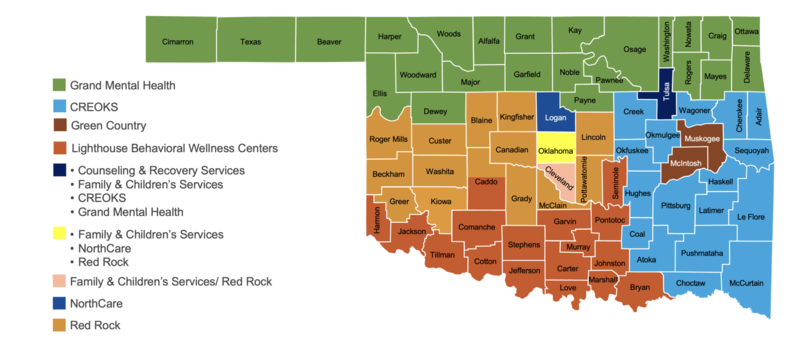
Supporters said the model seemed like an ideal fit for a state that has long struggled with high rates of mental illness, substance misuse and suicide, a shortage of providers, and high Medicaid enrollment and poverty rates.
“We’re the safety net for people who cannot go other places and get services,” said Joy Sloan, chief executive officer of Green Country in Muskogee and head of the Alliance of Mental Health Providers of Oklahoma, a group advocating for several certified community behavioral health clinics.
Estimates provided by the group show that six of its providers reported serving about 150,000 Oklahomans combined across the state in each of the last two fiscal years. More than 96,000 Medicaid participants were served between July 2025 and June, according to the Oklahoma Health Care Authority.
Despite Congress warning the state’s pilot period would not be extended again and the federal match would drop to about 67%, it’s not clear if Oklahoma lawmakers were prepared for the coming financial cliff, which would increase the state’s share by tens of millions of dollars each budget year.
Amid a budget shortfall at the mental health department in 2025, lawmakers held a series of fiery budget hearings that ultimately culminated with them firing the state’s mental health director, who had struggled to explain the agency’s funding issues.
In the 2025 budget year, Oklahoma received more than $164 million in reimbursements from the federal government, leaving the state responsible to pay over $41 million, according to data provided by the Oklahoma Health Care Authority upon request by Oklahoma Voice.
Though the number does not yet reflect the full change in costs, the state saw a decrease of more than $74 million in federal funding.
An uncertain future
Despite the loss of some federal funding, the state Mental Health Department closed the funding gap with dollars appropriated by the Oklahoma Legislature in this year’s session outside of its annual budget, an agency spokesperson said.
The agency received $98 million in supplemental funds from the Legislature to cover Medicaid costs for the past two budget years. Despite repeated requests made over months, an agency spokesperson could not detail how much of that was directed toward the certified community behavioral health clinics.
The agency also did not answer questions about how it planned to pay for the behavioral health clinic model in future budget years. Earlier this year, the agency announced it would no longer run its state clinics, and instead contracted with existing private providers to operate them.
The Mental Health Department decided to privatize those operations as part of an ongoing focus on strengthening its financial position and aligning its budget with actual expenditures to establish a more accurate picture of agency spending, said Maria Chaverri, an agency spokesperson, in a statement.
The cost and use of services from these community clinics will help inform the agency’s future funding decisions, she said.
Sloan, who heads the Oklahoma group that advocates for community behavioral health providers, said the Mental Health Department has been behind on some payments or not provided some reimbursements that were historically made.
“We do everything that we can, and we’re doing it in the hole,” she said. “It doesn’t take a CPA or an actuary or anyone — that is simple math.”
Certified community behavioral health clinics are paid using a prospective payment system that estimates a monthly average, fixed and per-patient cost to provide services. The rate is unique to each provider based on its submitted cost reports. Other quarterly, supplemental payments are also provided based on a provider’s outcomes.
Because these clinics are required to provide care regardless of a patient’s ability to pay, they rack up high bills for uncompensated care, which are services delivered but not paid for through Medicaid, private insurance or other payment methods.
While these Oklahoma providers have never been reimbursed for 100% of this care and don’t expect to be, they were historically reimbursed for part of it, Sloan said. In recent years, the reimbursements for uncompensated care stopped without warning, she said, yet many providers’ funding models depend on these payments are made.
“It’s not sustainable,” Sloan said.
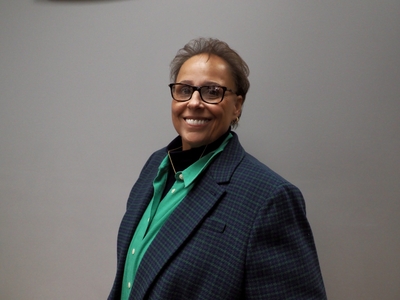
In budget year 2025, for instance, certified community behavioral health clinics provided $87.6 million in uncompensated care yet, for the first time, received no reimbursement for it from the Legislature, providers in Sloan’s group, the Alliance, said.
House budget chair Rep. Trey Caldwell, R-Faxon, said he wasn’t sure if the end of the enhanced federal support contributed to the increased lack of payments for uncompensated care or the Mental Health Department’s budget problems.
He said he doesn’t remember the agency’s leadership discussing the end of the health clinic’s pilot period during their budget requests, but said lawmakers were more concerned that budget requests at the time were “falsified” and inaccurate.
“We needed a real number, and that was one of the biggest issues that we had over there where the Department of Mental Health was essentially trying to pay last year’s bills on next year’s money, and that caused all kinds of issues,” Caldwell said.
Caldwell said it’s his understanding that the Mental Health Department believes it will be able to internalize the cost of losing enhanced federal funding through projected cost savings from privatizing the four state-run service areas.
“If you look at the quality of care that they’re providing versus what the last four traditional state ones were doing, it’s night and day on the quality of care and how many more people they’re helping,” he said.
Lawmakers value mental health and have increased resources and met needs when they’ve come up and would like to continue to see problems with care fixed, Caldwell said.
‘Oklahoma is unique’
Rebecca Farley David, a principal adviser overseeing behavioral health clinic-focused work for the National Council for Mental Wellbeing, said all eight original states that piloted the program, including Oklahoma, have either amended their state Medicaid plan to establish these clinics as a permanent provider option or are in the process of doing so.
Oklahoma is the only one of those states struggling to continue to cover the costs of uncompensated care, she said. Farley’s group represents and advocates for community-based providers of mental health and substance use treatment services.
“Other states are making the payments for uncompensated care,” David said. “It’s not always enough to cover costs, but Oklahoma is unique, unfortunately, in the fact that the payments have just not been paid.”
But she said savings aren’t always quantifiable on a Medicaid balance sheet.
“It definitely is not a matter of waving a magic wand when that enhanced federal match goes away and making yourself whole,” she said. “States have had to kind of struggle to find how to put up that money, but they have chosen to prioritize finding those dollars.”
Cost savings are found in areas such as incarceration, emergency room visits and hospitalizations, David said. Oklahoma’s clinics have become a national leader in improving employment opportunities both by helping their clients find jobs and by being major employers in their local communities, she said.
If the state were to stop prioritizing funding for the model, they would be less able to provide high-cost services such as psychiatric care or crisis intervention, David said, and more people would fall through the cracks and end up in hospitals, jails or homeless.
“If the certification standards remain in place without the money to pay for the clinics to do all the things they’re supposed to do, I think, bluntly, you see clinics failing and having to close and not being able to serve their communities at all anymore,” she said.
Dean, the Muskogee police captain, said it would be “devastating” if the services provided by Green Country were cut or if the clinic were ever forced to close.
These providers are often the only place some people have as an option to turn to for help, he said.
“It took an outside influence or an outside support to help me, and truthfully, literally save my life,” Dean said. “That’s not the same for everybody else. You know, I am unique in that I’m fortunate enough that I work for an agency that has these services. Not everybody else has that.”
Oklahoma Voice is part of the Mental Health Parity Collaborative, a group of newsrooms that are covering stories on mental health care access and inequities in the U.S. The partners on this project include The Carter Center and newsrooms in select states across the country.
Oklahoma City, OK