Maryland already pays for climate change; the question is whether polluters ever will
Nov 09, 2026 | 7:37 pm ET
Description
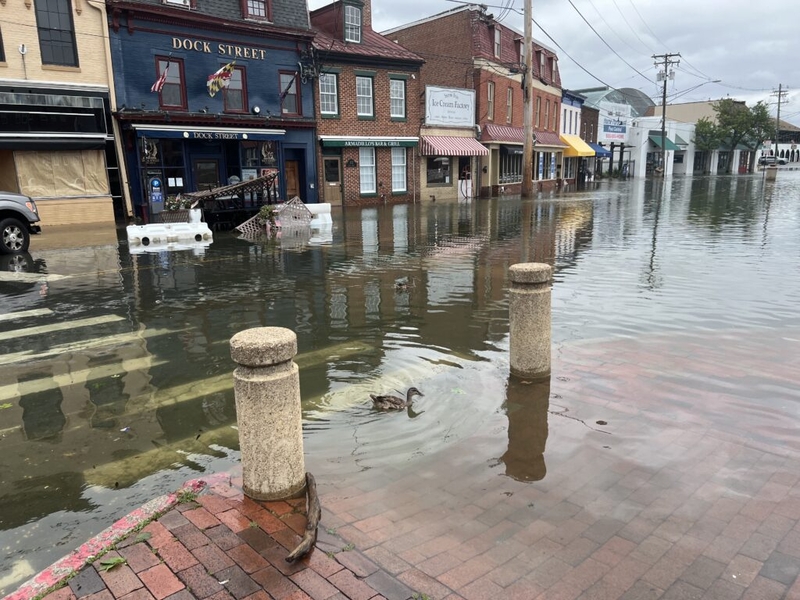
A duck paddles down what had been a street on the Annapolis City Dock during flooding on Aug. 9, 2024. (File photo by Steve Crane/Maryland Matters)
Mary D. Kane, president of the Maryland Chamber of Commerce, declared in her recent Maryland Matters commentary that “Maryland must confront the costs of climate change and prepare for future resilience needs.”
So far, so good. Climate change is happening, she concedes, and it is costly. But then she throws up her hands by asking, “And who will ultimately bear the cost?”
It’s a good question, and Marylanders already know the answer, because they’ve been paying for climate disasters for years and years.
But there’s a better way. A proposed “climate superfund” bill in Maryland would take its blueprint from the federal Superfund law, which since 1980 has made polluters pay to clean up the toxic sites they left behind. Maryland’s climate version, the RENEW Act, would ask the largest fossil fuel companies to help cover what extreme weather is costing the state, and lawmakers took the first step in 2025 by ordering a study of those costs, due this December.
The state’s comptroller estimates that 85 extreme weather events since the 1980s have cost Maryland $10 billion to $20 billion, money that came out of county road budgets, school repair funds, family savings and small business bank accounts. A Johns Hopkins poll found that about 70% of Baltimore-area residents expect climate change to raise costs for homeowners and businesses in the next five years.
The Maryland Chamber of Commerce says it speaks for employers, so I’d invite its leadership to spend a morning at City Dock in Annapolis. The city declared two flood emergencies in 2024 alone, and Tropical Storm Debby’s flooding that August cost 19 downtown businesses and organizations an estimated $162,000. Some Dock Street shops have had to close well over 100 times because of flooding.
Annapolis is now spending roughly $90 million to raise and armor its waterfront, and right now it’s local taxpayers and shop owners covering those costs, not the companies that caused the problem.
The best part is that the oil companies and their shareholders will be forced to pay for climate damages and they won’t be able to pass those costs onto consumers. That’s the finding of an in-depth economic analysis of the policy and its impacts in New York. Oil is priced on a global market. Nothing Maryland does could affect the price of international benchmarks like the cost of Brent Crude or the West Texas Intermediary. If you own a gas station in Maryland, you buy oil at the price of the West Texas Intermediary, then sell it at the highest price the market will bear. Unless that gas station owner reads about this policy in the newspaper, they won’t even know it exists. The cost of the RENEW Act will be paid for by the shareholders of international fossil fuel companies, no one else.
Of course the richest industry on Earth will fight this in court, and it has plenty of help. The U.S. Chamber and the American Petroleum Institute sue the states that pass these laws, the Trump Justice Department has joined in, and Republicans in Congress want to wipe the laws out entirely.
ProPublica traced the related push for an oil industry “immunity waiver” to a coordinated campaign run through groups bankrolled by Leonard Leo, the activist who helped build today’s Supreme Court majority. An industry that needs that much help to dodge its financial obligation on climate change is telling you how big that obligation is, and three in four voters oppose giving oil companies immunity, including two-thirds of Republicans.
What the chamber leaves out entirely is that Washington isn’t coming to help. When floods tore through Allegany and Garrett counties in May 2025, FEMA itself validated more than $33 million in damage, and the Trump administration still said no, twice. And just this week, FEMA’s administrator told state officials to build up their own reserves and expect to handle most disasters without federal help, with changes starting in as little as six months.
The next flood or heat wave is coming whether or not Annapolis passes a superfund, and Maryland will be paying for it largely on its own.
So the choice for lawmakers is simple enough. Either Maryland families and small businesses keep covering these bills, or the massive oil companies – who knew for decades what their products would do – start paying their share. The U.S. Chamber’s own research found that every dollar spent on resilience saves $13 in damage and recovery, and we couldn’t agree more. Real leadership means standing up to that industry for the people stuck with its bill, which is passage of the RENEW Act would do.
Annapolis, MD