Kansas lawmakers plunge ahead with unproven IT system despite huge risks
Nov 09, 2026 | 6:05 pm ET
Description
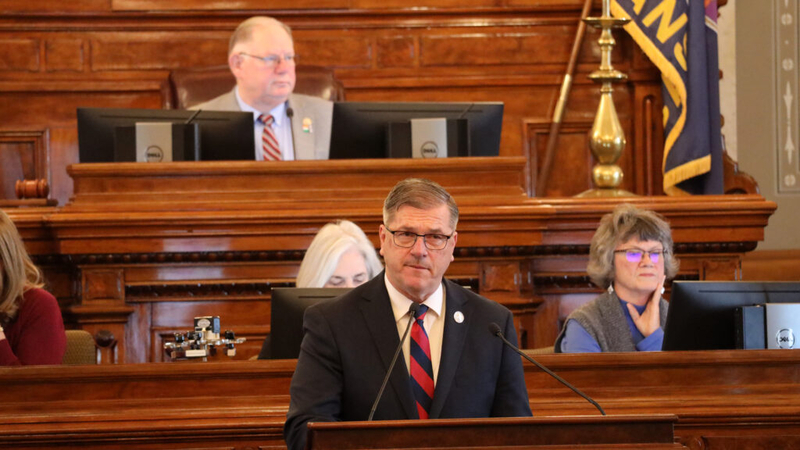
House Majority Leader Chris Croft speaks on March 24, 2025, while House Speaker Dan Hawkins sits behind him. (Grace Hills/Kansas Reflector)
TOPEKA — The Kansas Legislature’s bipartisan leadership committed to implement an unproven bill-writing software system despite skepticism the private contractor might not deliver a workable platform for start of the 2027 session.
The contractor hired four years ago to replace the state’s antiquated system for drafting, proofing and publishing bills was showered with criticism from the Legislative Coordinating Council long before missing the revised January 2026 deadline for completion. The LCC’s frustration continued to mount this year, but Senate and House leaders sensed they were in too deep to refuse the go-live order sought by Propylon.
Altaf Uddin, chief information technology officer for the Legislature, recommended lawmakers move ahead despite risks of a meltdown. He emphasized it was a “hard decision for all of us.”
“There is no option here,” said House Majority Leader Chris Croft, an Overland Park Republican. “We spent a ton of money on this thing, waited a long time and you’re telling us to leap. You’re pushing us off at the same time. It’s just disappointing that this is where it’s come.”
The Republican-dominated LCC gave its approval on condition the existing bill-drafting system was ready if Propylon didn’t meet the objective. The LCC also approved a request to hire a business system analyst to work with Propylon on behalf of the Legislature so attorneys responsible for crafting bills no longer had to devote so much time to troubleshooting with Propylon.
Overall, the Legislature has spent approximately $8 million on development of the bill-writing system. The original completion date was June 2025, but that slipped six months to January. During 2026, testing revealed defects in the new Computer Assisted Legislative Information System, otherwise known as CALIS.
Uddin promised Propylon would deliver the minimum functionality required to process bills by the end of November.
“While operationally viable,” Uddin said, “this is really not the polished product.”
Gordon Self, who manages the Legislature’s bill-writing office, said everyone at the Capitol should appreciate the complexity of adopting a new system. He requested patience with legislative staff when problems emerged. He insisted the old system remain available as a backup because of the potential of system failure.
Rep. Blake Carpenter, the Derby Republican likely to seek appointment as House speaker, said there was no going back on this IT project.
“I don’t have a whole lot of faith right now,” he said. “Only in government can we spend millions and millions of dollars — I can see why the taxpayers are frustrated, right? In business, if you do that, you’re out of business. We can’t really go backwards, but we’re taking a massive risk going forward. We’re left with an impossible choice at this point.”
Senate Majority Leader Chase Blasi, R-Wichita, said he was disturbed neither bill writing system would be available for use by legislators until early December. The old system can’t be rebooted until approximately Dec. 2, while the new system wouldn’t be online until Dec. 7.
That would leave one month for Kansas lawmakers to get professional assistance on drafting and tweaking bills ahead of the Jan. 11 launch of the 2027 session.
“People are very upset,” Blasi said. “I think that’s incredibly undemocratic, frankly. People have been robbed of the opportunity to draft legislation.”
Meanwhile, the LCC put off until December the selection of a contractor to deliver to the Legislature a system for tracking the evolution of bills in the House and Senate. Five companies were chosen as finalists, but realignment of House leadership prompted a decision to postpone awarding of the contract.
While leadership of the Kansas Senate could remain as it was in 2026, the election of House Speaker Dan Hawkins, R-Wichita, to the job of state insurance commissioner and the reelection defeat of Croft meant the newly elected 125 members of the House would be responsible for selecting new leadership. LCC agreed not to make a contract decision before gathering feedback on bidders from new Republican leaders in the House.
Topeka, KS