Fishermen protect salmon habitat. The Bonneville Power Administration should too.
Nov 09, 2026 | 12:58 pm ET
Description
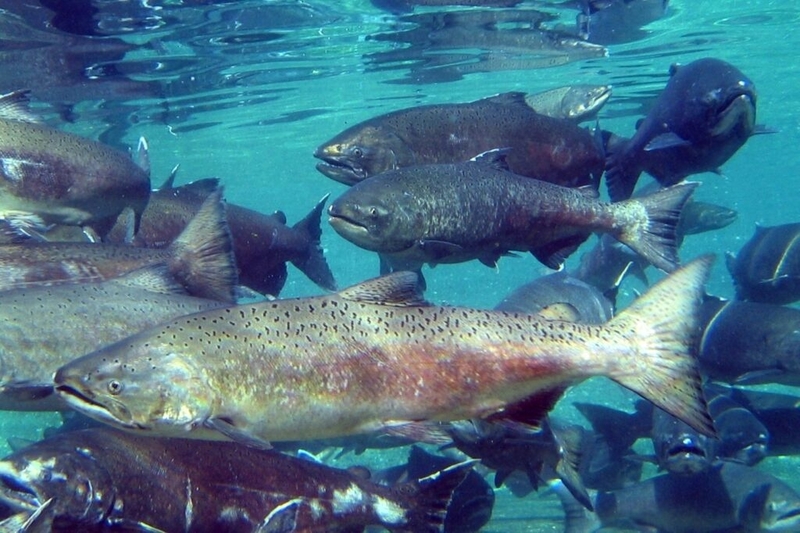
Chinook salmon, pictured here, is Oregon’s official state fish and is of high cultural value to Northwest tribes and high economic value to Oregon’s coastal economies. (Photo courtesy of Pacific Northwest National Laboratory/Flickr)
I’ve worked in the fishing industry for 30 years and have fished my own salmon troller for the past 15 years. I’ve been fishing now for half my life and have seen how devastating the decline in salmon populations has been for both commercial fishermen and coastal communities in the Pacific Northwest.
As a commercial fisherman, my livelihood depends on healthy habitat for the salmon that need it. When I’m not on the boat, I do what I can to protect and restore wild salmon, such as serving on the board of Save Our Wild Salmon to advocate for clean water and other habitat protections necessary for a sustainable salmon population.
I’m sharing my story because I’m hoping that Bonneville Power Administration can adopt the same approach to protecting our natural resources while making much needed investments in its infrastructure to make it more reliable and less damaging to the environment.
It’s not acceptable to be told that we need to reduce investments in protecting salmon so that our energy and economy can be more affordable. For so many like me, healthy rivers and salmon are the economy.
State and federal fisheries management systems exist to help sustain salmon populations and restore the habitat that fishermen and coastal communities rely on. Fishing numbers are declining, and most fishermen have second jobs in the winter because we can’t support ourselves just on fishing.
The economic hit isn’t contained just to the commercial fishing industry. Sport fishing is a strong draw for tourism and if the fish disappear, so will the visitors who come here to fish.
Like commercial fishermen, visitors also rent slips, buy groceries, fuel locally and buy meals at local restaurants. Often, those restaurants have locally caught fish on the menu. If you order salmon, your plate will include some vegetables and bread. Maybe you’ll have a glass of wine or a beer with dinner.
All of that abundance is grown and produced by farmers, many of whom have multigeneration family farms here in the Pacific Northwest. Just as salmon need cool, clean water in our rivers to survive, agriculture needs healthy rivers to irrigate their fields. To me, the plate you receive at a local restaurant is a better measure of the health of our economy than balance sheets produced by energy companies.
Before owning and operating my own fishing boat with my husband, Greg, I worked as a deckhand on Alaska salmon tenders, boats that meet commercial fishing vessels at sea to pick up their salmon and take them back to seafood processors on the shore. Commercial fishing may be a centuries old trade, but the technology used to keep us safe at sea and on the fish is state-of-the-art.
I rely on radar, GPS plotter, and other investments in technology to help me keep my vessel and crew safe. I know that we need reliable, affordable energy not just to keep the lights on when we are back at home, but for our entire economy to function.
Protecting the local businesses that comprise the agricultural and outdoor economies in Oregon must be a priority. As a recent analysis illustrates, about 225,000 indirect and adjacent jobs, along with about 70,000 direct jobs, rely on outdoor activities, including commercial and recreational fishing.
Together, this part of Oregon’s economy accounts for nearly $10 billion annually. If the Bonneville Power Administration falls behind in protecting salmon, a major part of Oregon’s economy will suffer.
The numbers that represent our economy can feel abstract. When I see kayakers, sport fishermen, farmers, and others like myself who live and work in salmon country, I know how real those numbers are.
Bonneville Power Administration and utility lobbyists should put aside attempts to pit people against each other. Investing in healthy rivers and salmon habitat is synonymous in investing in an inclusive, affordable economy for communities across Oregon.
I am responsible for the maintenance of my vessel for the safety of my crew and to keep my boat fishing, in the most affordable and reliable way. We should expect the same from those who manage our energy system, instead of just sending us a bigger and bigger bill every year.
Salem, OR