For runoffs, Louisiana voters selected Democrats with conservative records on social issues
Nov 09, 2026 | 5:00 am ET
Description
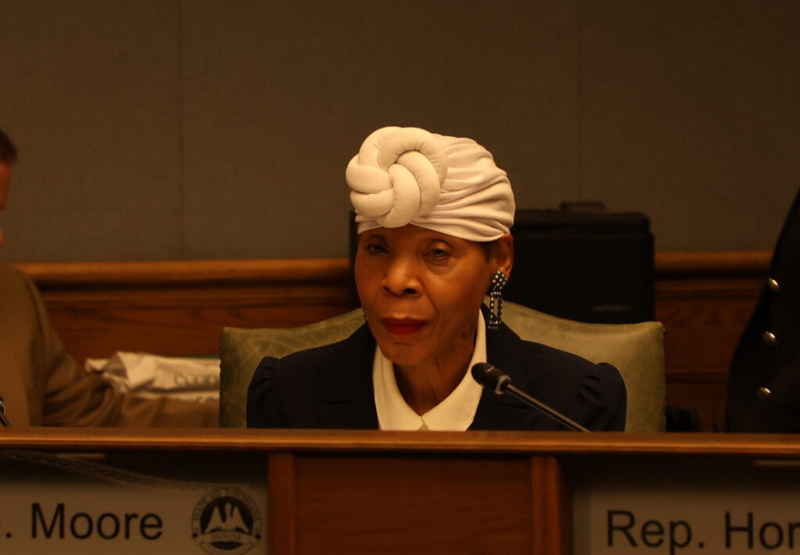
The two Democrats, state Rep. Pat Moore, of Monroe, and former Baton Rouge Metro Council member Chauna Banks, who have advanced to the runoff election on Dec. 12, 2026 (Photo by John Gray/Verite News)
Louisiana Democrats have promised to capitalize on the surprisingly strong showing for their candidate, Jamie Davis, in the U.S. Senate election during the governor’s race in 2027. But the party still has two Congressional races left to run this year, with Democratic candidates advancing to the Dec. 12 runoffs for the 5th and 6th U.S. House districts.
The country is in the midst of a “blue tsunami” election cycle where Democrats have won House seats in unlikely places across the nation. Leveraging that enthusiasm for these two remaining races could be complicated, however, since the remaining Democratic candidates’ views on abortion and LGBTQ+ rights are out of step with those of most of the party’s activists and donors.
State Rep. Pat Moore, D-Monroe, and state Rep. Gabe Firment, R-Pollock, will face each other in the 5th district runoff after receiving 18% and 17% of the vote respectively Tuesday. Former Baton Rouge Metro Council member Chauna Banks, a Democrat, and state Sen. Blake Miguez, R-New Iberia, will see each other in the 6th district race, after receiving 19% each of the vote.
Moore and Banks, both Black women, are antiabortion and have opposed measures to provide protections to LGBTQ+ people. Neither received the state Democratic Party’s endorsement in the primary election, in part because they had views that contradicted those of many Louisiana Democratic State Central Committee members.
“I think it makes it harder for them to raise money from traditional Democratic sources of fundraising,” said Mary Patricia Wray, a political consultant who ran Democratic campaigns for former Gov. John Bel Edwards, Public Service Commissioner Foster Campbell and U.S. House Rep. Cleo Fields, D-Baton Rouge.
“A lot of out-of-state donor networks are not going to want to participate,” she said.
In Louisiana, Democratic candidates are typically dependent on out-of-state donation to run competitive campaigns.
Almost 86% of Davis’ Senate race campaign donations came from outside Louisiana, according to an analysis by Open Secrets, a nonpartisan organization that tracks political spending nationally. His top donor state was California, which had contributed $478,000 compared to $400,000 from Louisiana donors as of Oct. 15, according to the analysis.
Both races would be uphill battles for any Democratic candidate regardless of their views. While Moore and Banks finished first in their respective primary elections, that’s mostly because the Republican vote was split among more candidates than the Democrats had in each race.
In the 5th district, six Republican candidates, including Firment, collectively received 62% of the vote over three Democrats, including Moore. In the 6th district, six Republicans, including Miguez, collectively received 57% of the vote over three Democrats, including Banks, and a Libertarian.
Controversial votes
Since joining the Louisiana House in 2019, Moore has favored legislation that places restrictions on abortion access. In an interview this week, she said she considered herself to be an antiabortion legislator.
Moore said her family history has shaped her opposition to abortion. Her own mother gave birth to her at the age of 14 after being raped, she said.
“[My mother] could not have a relationship with me. She couldn’t love me, touch me or name me, but she gave me life,” she said.
In 2019, Moore voted with the majority of the Louisiana House to pass an earlier version of Louisiana’s current abortion ban that would have prohibited the procedure if a fetal heartbeat was detected. Abortion rights advocates had opposed the legislation, saying it could effectively ban all abortions, since most people don’t discover a pregnancy until after a heartbeat can be identified.
During debate over the bill that year, Moore spoke about her mother on the House floor while advocating against an amendment, which failed, that would have eased abortions restrictions in cases where a pregnancy resulted from rape or incest.
Louisiana’s current abortion ban law passed in 2022, a few weeks before the U.S. Supreme Court overturned Roe v. Wade and allowed states to outlaw the procedure. Moore was absent for the vote on that legislation.
On LGBTQ+ legislation, Moore voted in favor of a state ban on gender-affirming care for minors and a prohibition on K-12 school employees using transgender and nonbinary students’ preferred pronouns without parental permission in 2023.
She was absent for the vote on Louisiana’s transgender sports ban in 2022 and split her votes on “Don’t Say Gay” legislation, which restricts public school employees’ from discussing LGBTQ+ issues with students. In 2023, Moore supported such a bill that was vetoed, but then she voted against similar legislation in 2024, which passed into law.
Moore said her approach to a few social issues might not align with the national Democratic party, but most of her stances, such as reversing cuts to the Medicaid program and reinstating food assistance funding, line up with the party’s platform overall.
“The reason I’m a Democrat is because this is a party that’s inclusive, even if we don’t agree,” Moore said.
As a Baton Rouge Metro Council member from 2013 to 2024, Banks was not faced with votes on abortion like Moore. But in an interview Thursday, Banks said she believes “life begins at conception” and considers herself pro-life.
“I have the same views on abortion that I have on the death penalty,” Banks said.
While Banks generally opposes abortion, she said there are circumstances in which an abortion should be allowed. For example, she said a person should be allowed to terminate a pregnancy if it is going to threaten their life.
Banks challenged the notion that Democrats generally favor abortion rights.
“I don’t know what the Democratic view on abortion is,” she said this week.
In 2014, Banks voted against a so-called “fairness ordinance” that came before the Baton Rouge Metro Council to prohibit discrimination against people based on sexual orientation or gender identity in areas of housing, employment and public accommodations. The measure failed 8-4, with Banks voting in the majority.
In an interview this week, Banks said she doesn’t personally categorize people based on their sexuality and has never seen an LGBTQ+ person suffering discrimination. She said she would like to see data and evidence of discriminatory practices against LGBTQ+ people.
Louisiana has a history of conservative Democrats
Moore and Banks are not alone among Louisiana Democrats in terms of having more conservative views on social issues. John Bel Edwards, the only Democrat to win a statewide office since 2008, also opposed abortion and signed the state’s strict abortion ban into law in 2022.
Yet the state Democratic party went so far as to rescind its initial endorsement of Moore in September on a technicality, in part because members were uncomfortable with her views on abortion, Democratic Chairman Randal Gaines said last month. They decided to back Antonio Wilson, who favored abortion rights, instead.
On Wednesday, Gaines said he expects the party will endorse both Moore and Banks in the runoff election, since they are the only Democrats running. For that to happen, the Democratic State Central Committee will have to take an endorsement vote some time in the few weeks.
While Democratic committee members may have more progressive views on social issues, Gaines said party voters in the 5th and 6th districts don’t necessarily share those views.
“Pat Moore is a conservative Democrat whose platform is perfect for that district,” he said. “A lot of our Democratic voters have more conservative views.”
Public Service Commissioner Davante Lewis, a Black Democrat who is the only openly gay person serving in elected office state government, agreed. Democrats in Louisiana should lean toward being more inclusive, he said.
“When you have a big tent, there are people that aren’t going to agree with all portions of the tent,” said Lewis, who is considering a run for governor next year.
Baton Rouge, LA