Florida’s statewide seats remain red. How?
Nov 09, 2026 | 5:00 am ET
Description
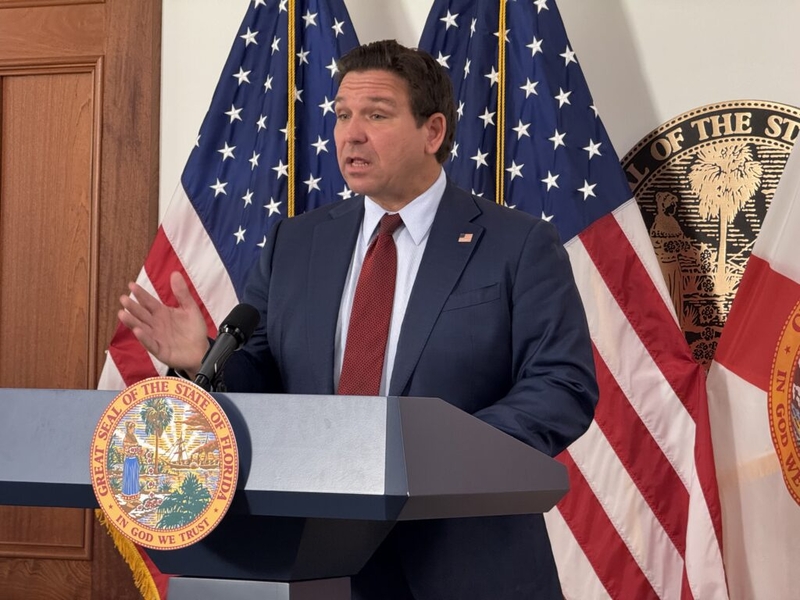
Gov. Ron DeSantis hosted a news conference on Wednesday, Nov. 4, 2026, at the Florida Capitol following the midterm elections. (Photo by Jay Waagmeester/Florida Phoenix)
Republicans mostly staved off what Gov. Ron DeSantis called a “meteor strike” of national Democratic success last week.
During what the governor called “probably the most difficult electoral environment that Republicans will face in quite some time,” he praised Florida as the only large state with a conservative tilt to “hold the line.”
DeSantis didn’t accept the title of Republican “savior” when asked the next morning whether the word applied, but he launched a national press tour to share his opinions about Florida’s still-red status and the state of the national GOP.
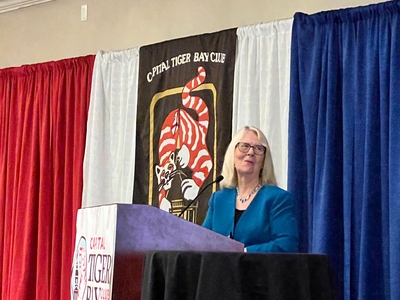
Regarding the return to office of Florida’s red statewide officials, Susan MacManus, political science professor emerita at the University of South Florida, pointed first to the 1.5 million more registered Republicans in the state.
“There’s a lot to be said about why that was the case,” MacManus said, although their wins were narrower compared to four years ago.
“When you have a 1.5 million edge, even though you have a plummeting turnout rate, which Republicans did, you could still lose a lot but still win,” MacManus said.
Florida Republicans turned out 62.6% of their registered voters, while Florida Democrats turned out at a rate of 68.4%, according to Fresh Take Florida. Just shy of 50% of the rest of registered voters turned out, compiling an overall 60.8% turnout rate.
In 2022, the state reported that 54% of eligible voters cast ballots in the General Election. In 2018, 63% voted, and in 2014, 51%.
Why did Florida’s red-tint shine different from the rest of the country, DeSantis asked himself.
“I think the answer is, is that we built up a record of achievement, we’ve earned trust from a number of our voters, that even in the worst situation that you can imagine politically, we were able to hold the line and prevent the worst from happening here,” DeSantis said.
MacManus pointed to the “major spurt” in voter registration for Republicans that came with the COVID-19 pandemic, crediting it in part to the governor as “more and more people” were moving to Florida and “liked what the governor here was doing in terms of public policies and parental rights and some of those other things.”
When DeSantis took office in 2019, Democrats had more than a quarter of a million more registered voters than Republicans. The most recent data, now with two months left for the DeSantis administration, show a GOP advantage of 1.55 million.
“The governor’s popularity has always exceeded that of [President Donald] Trump in Florida, and him entering and finally endorsing the statewide candidates tapped into that feeling of comfort in him saying that these are good people,” MacManus said.
The result of statewide GOP control remained the same, but the margins shrank. In 2022, DeSantis won his reelection by more than 19 points. Then-Attorney General Ashley Moody won by more than 20% and the GOP candidates for chief financial officer and commissioner of agriculture won by nearly 20%, too.
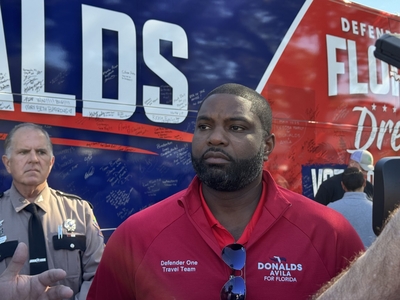
Last week, Republican Byron Donalds won by about 1.3% to become governor-elect, while GOP candidates for attorney general, chief financial officer, and commissioner of agriculture won by 2.2% or less. Attorney General James Uthmeier and Chief Financial Officer Blaise Ingoglia were in that cohort, both DeSantis appointees who faced their first election for their posts.
The strong Democratic voter turnout, paired with no-party-affiliated voters who cast votes for Democrats, helped shrink the gap.
“We don’t have facts yet, but we think a lot of that NPA vote came from both young people and Latinos,” MacManus said of those voters who went with the Democrats, “because we know, registration-wise, those groups have sizable portions of NPAs.”
During DeSantis’ media appearances last week, he criticized congressional Republicans for insider trading, votes against releasing the Epstein files, and overall productivity. Democratic turnout, he said, was not a mandate for progressive policies but rather a rebuke of the sitting administration.
“My whole characterization of this election comes down to one phrase,” MacManus said. “A lot of people wanted new faces in high places, pure and simple.”
Florida House
The Florida House remains under GOP control, but the party no longer holds a supermajority. Democrats increased their share of the 120-member body to 50. Before the election, they held 34 seats. In the 40-member Florida Senate, Democrats flipped one seat, sending them into the 2027 session with 13 Democratic senators. There is one vacant seat with a special election still to be called.
DeSantis, noted Dan Weldon, a GOP candidate for Florida House who lost, “was nowhere to be seen on the campaign trail” for “countless down ballot races.”
This should not be treated as a victory lap for Gov. DeSantis. This was the worst election cycle in Florida in decades. He could’ve saved countless down ballot races by helping boost GOP turnout.
We’re a team & our captain was nowhere to be seen on the campaign trail. https://t.co/9SAdZsUTkc
— Tampa Dan (@TampaDan) November 4, 2026
Outgoing Florida House Speaker Daniel Perez, a Republican, and DeSantis sparred for the past two years over priorities. Following Tuesday’s election results, DeSantis called Perez “a rotten speaker.”
“I didn’t get involved with the Florida House races. You know, we’ve just had differences of opinion over the last two years. It is what it is,” DeSantis said the day after the election. “They had a little bit harder time on it, but those are just choices people make.”
Amendment 3
The day after the election, DeSantis credited his party’s voter registration margin and Amendment 3’s placement on on the ballot for GOP victories in Florida.
Despite earlier hesitation to campaign, DeSantis hosts event supporting Amendment 3
Amendment 3, which passed, will dramatically reduce taxes homesteaded property owners pay, reducing revenue collected by local governments.
DeSantis initially claimed he would sit out campaigning in support of Amendment 3, although he said he’d vote for it. Eventually, though, he hosted events to vocalize his support for the amendment.
On Amendment 3, DeSantis “had some influence, of course,” MacManus said. “But I think the major influence was the personal calculations of voters that, look, here’s a chance for me to make a little bit of a dent in my sorry budget at the moment.”
Tallahassee, FL