A vote for civility
Nov 06, 2026 | 2:32 pm ET

Description
Pastor Anna Rieke of Christ the Lord Lutheran Church in Carefree speaks to a crowd of about 500 people at St. Francis Xavier’s Anderson Hall on Oct. 8, 2026. (Photo by James E. Garcia/For the Arizona Mirror)
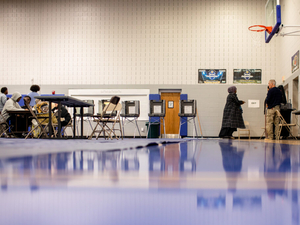
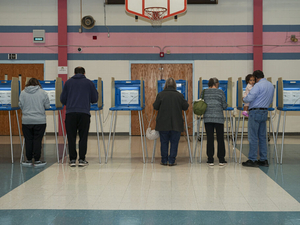
It wasn’t on the ballot, but I can’t help thinking it must have been on the minds of so many of us who voted in this election.
I’m not talking about healthcare, reproductive rights, immigration, voting rights, tariffs or even the price of a gallon of gasoline.
Oh, all of that has certainly been top of mind for most of us. I’m talking about something much more fundamental to a thriving democracy: civility.
I haven’t seen a lot of it lately, and I miss it.
Of course, nasty political campaigning has been around as long as our democracy.
In the 1800 race for the presidency, Thomas Jefferson’s backers called his opponent and fellow founding father John Adams a hermaphrodite and monarchist, while a Jefferson critic called him an atheist who would usher in an era of “murder, robbery, rape, adultery and incest.”
In 1964, incumbent President Lyndon Johnson detonated a political bomb when he aired the now infamous “Daisy” campaign TV ad, showing a little girl picking daisies as an ominous voice counted down from 10 to a nuclear explosion, insinuating that electing his Republican opponent, Arizona’s Barry Goldwater, would lead to global extermination.
But distasteful campaign tactics like that used to be the exception. They’re now the rule. There used to be a line most candidates wouldn’t cross, things they wouldn’t dare say — at least not publicly. Today, we’re bombarded nonstop with negative messaging.
Remember when elected officials made us chuckle (or at least roll our eyes) when they’d talk about “my good friends across the aisle”? Truth is that partisan adversaries really did get together for drinks and dinner after spending the day fervently arguing for their respective pet causes.
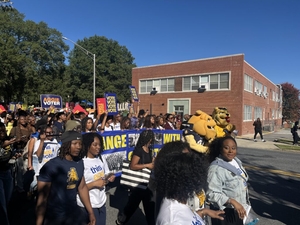
All of this has been on my mind since I attended a gathering last month of more than 500 Valley faith and civic leaders with the organizers’ stated goal, according to their press release, “to unite behind the shared stories of people from across Maricopa County and build a voice that spans race, party and religion to put the everyday issues affecting our communities front and center ahead of midterm elections.”
A lofty aim. Did they pull it off?
Yes.
The event was put together by Valley Interfaith Project, an affiliate of the famously progressive national Industrial Areas Foundation founded in 1940.
If you care about democracy, the scene at St. Francis Xavier’s Anderson Hall in was inspiring. The room was packed with an array of everyday voters and community leaders who had traveled from across the Valley to hear elected and appointed officials publicly commit to Valley Interfaith’s nonpartisan agenda.
No one was ambushed. They all knew in advance why they were invited and what questions would be asked by faith and civic leaders, which included the likes of Bishop John P. Dolan, who leads Phoenix’s Catholic Diocese.
In response, police chiefs from Phoenix and Glendale pledged to the crowd that they would resist federal pressure to help in detaining undocumented immigrants. City council members and legislative candidates promised to work to address violent crime in central Phoenix, the lack of affordable housing and healthcare, and the rising cost of living.
I first crossed paths with an IAF-affiliated group more than 30 years ago in San Antonio, Texas. There, the group had organized a successful grassroots campaign to convince city officials to repair the streets and drainage system to prevent flooding in the community’s low-income neighborhoods.
For the Phoenix event, invitations went out to Republicans, Democrats and independents alike. Campaign speeches were prohibited. The audience came to hear direct answers to their concerns, and that’s what they got.
Pastor Anna Rieke of Christ the Lord Lutheran Church in Carefree told 12 News that public safety and economic stability in Maricopa County were the top concerns.
“The hot (issues) right now are around neighborhood safety, things like shootings in neighborhoods around the 27th- and 19th Avenue corridors,” Rieke said. “Economic investment, so opportunities for people to make a wage and support their families.”
To drive home Valley Interfaith’s message, the audience got to hear stories from ordinary people about the challenges they face every day. One man talked about undocumented immigrants victimized by crime in his neighborhood who worried that, if they called police, they’d be handed over to federal authorities. A single mom, with help from the community scholarship, described how she worked her way through college to earn a nursing degree and better her life.
As I listened that night, I was reminded that most voters are far less interested in political labels and campaign rhetoric than in finding leaders who can and want to solve our problems.
The event also reminded me that “democracy neither begins nor ends at the ballot box,” as Valley Interfaith said in its press release, and that civil political debate is not only still possible but needed now more than ever.
Phoenix, AZ