Dumping trash in Virginia or Pennsylvania is not the answer for Montgomery County
Nov 06, 2026 | 5:12 am ET
Description
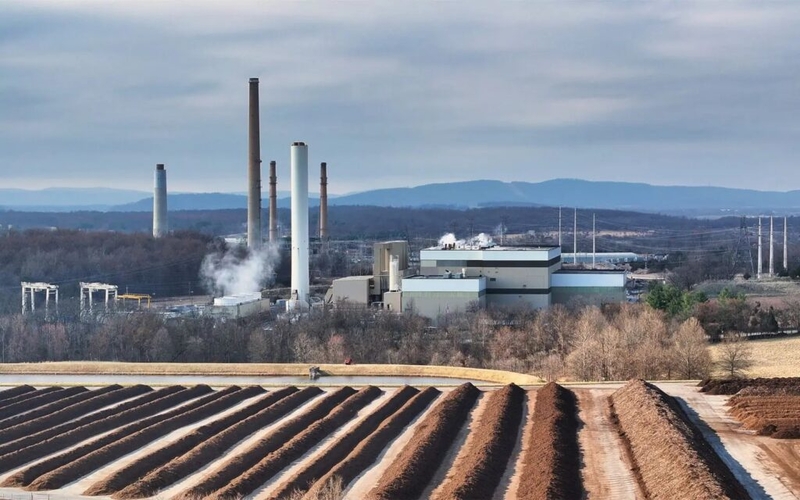
Closing Montgomery County's resource recovery facility and sending county trash to an out-of-state landfill may seem attractive, write Kit Gage, Virginia Thomson and Dani Wilches Venegasclos, but it has higher costs, health and environmental justice impacts. (Photo courtesy Montgomery County Department of Environmental Protection)
Montgomery County Council members face a momentous trash management decision. They will soon vote on County Executive Marc Elrich’s push to close the county’s resource recovery facility (RRF) and export 600,000 tons a year of trash to an out-of-state landfill.
But landfilling our waste would have worse environmental, public health, cost, and environmental justice impacts than operating the RRF, according to Nature Forward, the League of Women Voters of Montgomery County, and the City of Gaithersburg.
Waste hierarchies in the U.S. and in the European Union rank landfilling as the worst option. Arlington County and the City of Alexandria in Virginia say their RRF is the “most environmentally sustainable means of disposing of waste … after reduction, reuse and recycling.” Following EU rules, green countries like Denmark, Sweden and Germany have rejected landfilling and use RRFs.
Montgomery County’s most recent greenhouse gas (GHG) inventory shows that landfilling county waste produces almost twice as much GHG per ton as using the RRF. That result is consistent with many scientific studies. Fairfax County, Virginia, found that landfilling its trash would produce six times more greenhouse gases than using Fairfax’s RRF. If the Montgomery RRF closes, its electricity generation would be replaced with fossil fuel-powered electricity.
Landfills produce methane, an especially potent GHG that is also explosive and contributes to ambient ozone, which harms public health and causes crop losses. Reducing methane emissions is the most effective and timely action we can take to reduce global warming.
Landfill gas collection systems are leaky and are inefficient at capturing methane and other toxic air pollutants. The US EPA says many landfill operators are violating their landfill gas collection requirements.
Montgomery County’s studies show that the RRF has no measurable influence on local air quality. New research indicates that RRFs may destroy PFAS, or “forever chemicals.”
When the RRF’s air emissions exceeded allowable limits in 2025, the incidents were identified, disclosed publicly, and resolved. A county analysis shows that those exceedances posed very low health risks, 20 to 300 times below target levels.
Landfills emit toxic gases, including carcinogens like benzene and vinyl chloride. Landfills can produce hundreds of thousands of gallons of polluted liquid a week. One Virginia landfill mentioned as a possible place for Montgomery County’s trash has closed, is bankrupt, and will require an estimated $173 million to clean up.
Virginia and Pennsylvania are among the states with the highest number of landfills violating federal environmental standards, according to the Environmental Defense Fund. Montgomery County could not require clean-up at an out-of-state landfill.
Trucking produces carcinogenic diesel exhaust. A 2025 county study says the Derwood trash transfer station already suffers from elevated levels of diesel fumes.
Updating the RRF will require significant investment, especially since, according to council members, the county executive has deferred needed upgrades. But the county says using the RRF is either far cheaper than landfilling or roughly the same cost. The RRF’s costs are predictable and are somewhat offset by the sale of electricity and valuable recyclable metals. Arlington County and the City of Alexandria lease their RRF to Reworld in a financially advantageous arrangement.
In contrast, landfilling means losing control of costs. Those charges are unpredictable and would naturally rise because of inflation and predicted waste stream increases.
To reduce landfilling costs, the county executive advocates an “advanced waste processing” facility. But we don’t have details on the cost, feasibility, location, or benefits of that facility. No such facility exists at the scale needed for Montgomery County.
Guiding principles in the EU and in Japan say waste should be disposed of close to its point of origin. Exporting our trash would violate this proximity principle and would shift our pollution to more vulnerable communities. The RRF is in an affluent, disproportionately white part of Montgomery County. All landfills examined in the county’s 2025 study have environmental justice strikes against them.
We must find another solution for the RRF’s 150,000 tons/year of ash, which goes to a mixed waste landfill near a low-income, minority community in Henrico County, Virginia. An ash monofill in Fairfax County shows lower environmental justice vulnerability and would better protect against soil and groundwater contamination than the Henrico landfill. Perhaps the ash could be reused.
Montgomery County can upgrade its RRF, find a better ash treatment option and expand waste reduction and recycling efforts. In so doing, the county will make fairness, accountability, and greenhouse gas reductions the pillars of its waste management strategy.
Annapolis, MD