Lawsuit challenges newly passed initiative to limit corporations’ political spending
Nov 05, 2026 | 7:12 pm ET

Description
Voter booths at the Helena Civic Center are pictured on Tuesday, Nov. 3, 2026 in Helena, MT. (Jordan Hansen / Daily Montanan)
Fewer than 48 hours after Montanans passed a ballot initiative to ban corporations, organizations and “artificial entities” from contributing to candidates, a lawsuit was filed in federal court alleging it violates the First Amendment of the U.S. Constitution.
The Frontier Institute and the Montana Family Foundation, joined by the Montana Republican State Central Committee, filed suit Wednesday against the state over the law. The new law utilizes a state’s ability to regulate businesses and nonprofits to prevent them from donating to political campaigns.
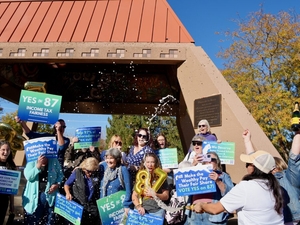
The group behind Initiative 194, Transparent Election Initiative, said a lawsuit being filed over the bill was expected. I-194 passed with 65% of voters in support and will go into effect on Jan. 1, 2027.
TEI said in a press release the groups bringing the lawsuit were “turning to the courts to protect the political spending powers of corporations and other special interests over the will of Montana voters.”
The Frontier Institute is a public policy think tank that often pushes for conservative causes. The Montana Family Foundation is a conservative nonprofit organization focusing on traditional definitions of family and marriage, and lobbies for related bills.
The legal effort is also being supported by the Institute for Free Speech, an organization that has pushed for reducing limits on political spending, saying it’s an infringement of the First Amendment.
The lawsuit was filed in Federal District Court in Helena, and Frontier Institute President Kendall Cotton said he hopes the suit over what’s also known as the “Montana Plan” will move quickly.
Attorneys for the plaintiffs filed in federal court over state district court because they felt it dealt with the First Amendment, the U.S. Constitution and had “federal implications,” Cotton said.
“This is a case that potentially could go to the U.S. Supreme Court,” he added.
He also said he too thinks there’s an issue with political spending in Montana, but the new law is too broad. Cotton said opposition to the Montana Plan has been painted unfairly.
“We think this infringes on our rights to operate as an organization to advance our mission to be able to educate people about the merits of major policy proposals that are impacting the state,” Cotton said.
There’s worry, Cotton said, that a company or nonprofit could “completely lose our legal status for simply posting a normal opinion about a local property tax levy or a ballot measure on our Facebook. We think that’s wrong.”
In a press release, Matthew Cochenour, an attorney for TEI and a former Montana acting solicitor general, said they were “confident” in their legal theory.
“This lawsuit is part of a much larger legal campaign to try and silence the will of the people,” said Jeff Mangan, founder of TEI, in a press release. “There will be hearings, decisions and appeals along the way, but no single ruling will determine the future of this movement. Every state that adopts this approach creates another opportunity to make the case.”
The Montana Republican State Central Committee also is one of the plaintiffs in the lawsuit and said a newsletter the organization sends out could be banned under the new state law.
The groups challenging the new law say its reach could go far beyond political advertisements and into publishing research and communicating with voters. A release from the Institute of Free Speech, the legal organization that wrote the suit, says the consequences from the law could threaten the organizations’ ability to exist in the state.
“Montana cannot require people to surrender their First Amendment rights simply because they join together to make their voices heard,” said Owen Yeates, an attorney with the free speech organization, in a press release. “This law attempts to accomplish indirectly what the Constitution expressly forbids: Silencing organizations that engage in political advocacy. Calling censorship a restriction on corporate privileges doesn’t make it constitutional.”
Helena, MT