Iowa public universities report $9.5B in revenues, identify future fiscal challenges
Nov 04, 2026 | 4:02 pm ET

Description
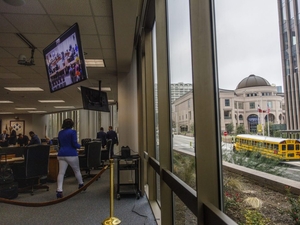
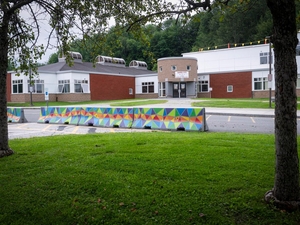
Two of Iowa's public universities saw revenue increases in fiscal year 2026, which helped offset costs in other areas. (Photos by Brooklyn Draisey/Iowa Capital Dispatch. Logo via Iowa Board of Regents)
Iowa’s public university system saw a combined total of $9.52 billion in actual revenues for fiscal year 2026, according to a report the Iowa Board of Regents will receive next week.
The board released its fiscal year 2026 comprehensive fiscal report, detailing revenues and expenditures for Iowa’s public universities and their units, ahead of its Nov. 11-12 meeting at Iowa State University. It also lists “headwinds impacting higher education” and how state universities are preparing.
Tuition continues to make up the majority of operating revenues across the University of Iowa, Iowa State University and University of Northern Iowa, making up 63.1% where state appropriations accounted for 30.5% and indirect cost reimbursements making up 5%. Total operating revenues for fiscal year 2026, excepting University of Iowa Hospitals and Clinics, reached $1.937 billion.
When compared to the board-approved fiscal year 2026 budget from July 2025, the report stated revenues were 1% over budget and expenses were 0.6% under budget.
“Overall, strong enrollment growth drove increases in tuition and fee revenue,” the fiscal report stated. “The Universities also realized indirect cost recovery and investment income that exceeded budgeted expectations.”
Challenges in higher education
The report identified both state and federal policy changes that could potentially impact Iowa’s public universities, including the passage of the Income Tax Rate Reduction and Exemptions Act and the Individual Income Tax Rate Act by the Iowa Legislature.
These changes to tax policies have “resulted in reduced state general fund receipts,” the report stated, and they could hurt funding of public higher education and other services while lowering taxes for Iowans.
“Without the identification of alternative revenue sources, the decline in state tax revenues increases uncertainty regarding future state support for Iowa’s Regent universities,” the report stated.
Changes to student financial aid options will impact low-income students and those in high-cost programs, the report stated, potentially leading to students deciding to not enroll or drop out. The federal government is contemplating changes to the Pell Grant program for low-income students. Iowa’s universities enroll around 13,715 students who receive grant funding.
The Grad PLUS loan was also eliminated and borrowing caps implemented, which the report stated “disproportionately affects students in high-cost programs” like law, medicine and dentistry. More than 6,250 graduate and professional students enrolled in Iowa’s public institutions who have federal student loans.
Fewer students graduating high school in the next few years could also pose a problem for universities, the report stated. The enrollment cliff won’t impact Iowa so much but it will hit other states from which Iowa universities draw students, like Wisconsin and Illinois.
Inflation and federal research spending shifts are also ongoing issues and ones the board has addressed in previous discussions.
“Revenue diversification across tuition, research funding, philanthropic support and private partnerships provides a buffer against volatility in any single area,” the report stated.
University of Iowa
The UI saw both tuition and fee revenues exceed their budgets by 0.5% in fiscal year 2026 due to higher enrollment than what was projected, totaling more than $3 million. Other increased revenue came from indirect cost reimbursement and interest.
Expenses were also 0.2% over budget, driven by “higher-than-expected building repair costs” reaching nearly $20 million more than expected. Salaries made up 65% of expenditures but were 0.7% below budget. More than 20% of tuition revenue went to financial aid provided by the university, totaling $122.7 million.
UI Athletics saw ticket sales exceed budgets across all sports as well as conference revenue and “novelty revenue,” due to College Football Playoff and royalty income.
Iowa State University
ISU’s operating budget also exceeded its budget, by 1.6% totaling $13.2 million, driven by tuition revenue from 285 extra students who weren’t expected. “Conservative budgeting amid the dynamic federal funding environment” led to indirect cost reimbursement revenues being 12.4% higher than budgeted, the report stated, and differences in the fiscal years for ISU and the federal government led to 9.9% more federal funding for the Agricultural Experiment Station and Coop Extension.
Conversely, general fund operating expenses for the Ames university were down by 1.3% in fiscal year 2026, with big variances between expected and actual costs.
“Professional and scientific supplies, building repairs, and rental expenses were under budget by 24.7%, 23.5%, and 10.1%, respectively, reflecting cost efficiencies and expenditure management efforts,” the report stated. “State auditor expenses were under budget by 6.9% due to the timing of ongoing audit work.”
Expenses for utilities and equipment, however, were higher than projected by 24.5% and 18.2%, caused and offset by shifts in funding between restricted funds and the general fund. Student financial aid expenditures also exceeded the budget by 5%, alongside increased enrollment and shifts in student residency.
ISU Athletics revenues and expenditures both exceeded the budget by $4.4 million, the report stated, while fiscal 2026 revenues and expenses totaled $145.6 million. Less cash reserves were used for athletics than originally planned due to the revenue increases.
“Strong competitive performance drove significant gains across several revenue categories, including football, men’s basketball and women’s basketball ticket sales, as well as fundraising, premium seating and postseason revenues,” the report stated. “Additional positive variances were realized through increased multimedia rights revenue, higher licensing income, and stronger auxiliary revenues.”
Personnel costs and additional capital renewal investments drove increased expenses, the report stated, though the athletics department enacted “targeted cost-saving measures” to offset them.
University of Northern Iowa
UNI was the only state university to see revenues come in under budget targets in fiscal year 2026 — a $1.1 million shortfall the report stated “was covered by the enrollment contingency budget.” While the Cedar Falls university’s investment income budget was unchanged, it ended up exceeding the budget due to strong performances in the equities market, the report stated.
Other budget variances for the university included higher supply costs from changes in the UNI Foundation, decreased utility costs due to good weather and a $2.3 million increase in building repairs for deferred maintenance, paid for with surplus utility funds.
UNI Athletics planned out its fiscal year 2026 budget in response to a board audit and with the goal of balancing the budget by fiscal year 2028, the report stated. Revenues came in at $2.76 million below the board-approved budget due to shortfalls in support from the Missouri Valley Conference and NCAA, athletic marketing, football and support from alumni and the UNI Foundation.
Expenses also came in at $2.56 million over the budgeted amount, driven by administration bonuses and increased costs in men’s basketball and event operations.
To balance the budget, the report stated UNI is “pursuing new revenue and cost-management opportunities” through new group ticket sales and licensing vendors, updating donor giving levels for annual funds, new partnerships and contracts and right-sizing scholarship budgets.
“These efforts are intended to improve financial predictability and position athletics to achieve the internal audit target of a balanced budget by FY 2028,” the report stated.
Des Moines, IA