Virginians protect gay marriage, voting rights and reproductive rights in state Constitution
Nov 03, 2026 | 10:21 pm ET
Description
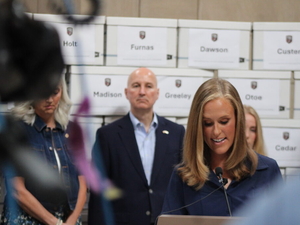
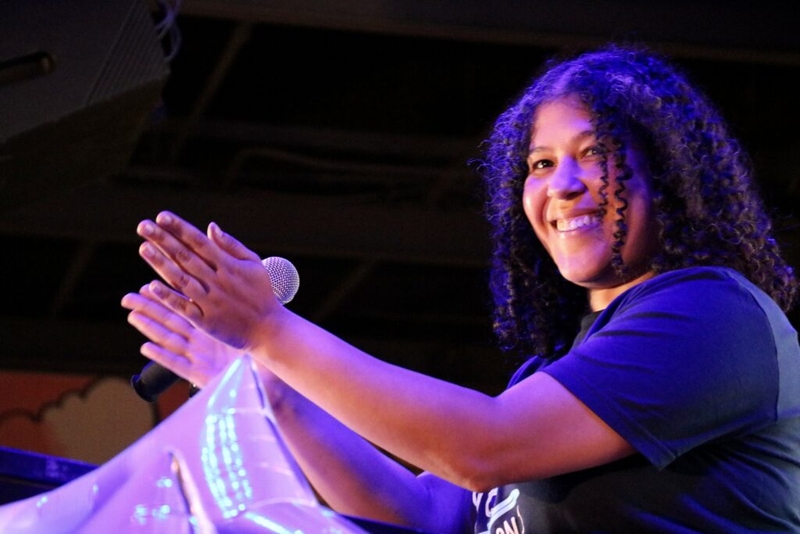
Virginians For Reproductive Freedom campaign director Han Jones gives a victory speech and cheers on supporters after Virginia voter opted to enshrine reproductive rights into the state Constitution on Nov. 3, 2026. (Photo by Charlotte Rene Woods/Virginia Mercury)
On Election Day, Virginians approved three amendments to enshrine reproductive, marriage and voting rights for former felons into the state’s constitution, the culmination of a multi-year journey through the state legislature galvanized by lawmakers, advocates and major federal shifts.
Over 61% of voters answered yes to Ballot Question 1 as of 10 p.m. Tuesday, according to unofficial results from the Virginia Department of Elections. It asked if access to contraception, fertility treatment and abortions should be protected.
On Ballot Question 2, which asked if a defunct ban on same-sex marriage should be removed from the constitution, 56% of voters replied affirmatively.
The third ballot question asked whether the voting rights restoration process for formerly incarcerated people should become automatic or remain petition-based. 55% of voters said yes.
The mood was optimistic and festive throughout the night at a watch party in Richmond hosted by Virginians For Reproductive Freedom, the coalition of advocacy groups that spearheaded outreach about the first of the three amendments. By the time results were called just past 9 p.m. for the referendum, glasses were raised, excited screams were made, and then dancing continued.
Reproductive rights amendment
The first amendment drew the most debate from lawmakers, healthcare professionals, advocates and the public — with tears, shouting, and a call of “out of order” on the day it first cleared the legislature in 2025 and increasingly intense campaigns for and against it this year.
“Never again will our reproductive rights be a political football in Virginia,” said Han Jones, campaign manager for Virginians For Reproductive Freedom said Tuesday shortly after victory was declared. “It takes multi-year concerted work, but as you can see in Virginia, it’s paying off.”
Constitutional amendments have to pass the General Assembly two years in a row before making it to ballots. The reproductive rights amendment received pushback each step of the way and opposition from every Republican member of the General Assembly while the two other amendments saw slim bipartisanship.
Proponents had sought the measure because Virginia is the only southern state without deep restrictions or bans on abortion.
After federal protections were overturned by the U.S. Supreme Court in 2022, Justice Clarence Thomas suggested reviewing contraception next.
That, paired with state-level cases challenging in vitro fertilization, prompted Virginia lawmakers’ holistic approach to protecting reproductive rights.
It is now Virginians’ right to obtain birth control medication or devices as well as fertility treatments.
People can also get abortions for any reason through their second trimester and a single physician — instead of three, as in previous years — will need to approve late-term abortions.
Same-sex marriages protected
The second amendment voters approved will lift a technical ban on gay marriage and affirm “that two adults may marry regardless of sex, gender, or race.” These unions must receive equal protection under the law.
Since 2006, Virginia has technically banned gay marriage.
The prohibition has been rendered moot since the Supreme Court ruled on Obergefell v. Hodges, which has upheld such unions nationally since 2015.
But after federal abortion protections were removed by the Supreme Court, Virginia lawmakers set to work enshrining state-level protections moving forward.
“Tonight’s victory belongs to generations of Virginians who organized, advocated and fought for equality, often without knowing whether they would live to see this day,” said Narissa Rahaman, Executive Director at Equality Virginia.
Voting rights will be restored to former felons
Virginians also approved the amendment granting automatic voter rights restorations to people with felony convictions who have completed their sentences.
Historically, the state has disenfranchised people convicted of felony crimes unless they are pardoned by a governor or successfully petition one for restoration.
The subjective process has not always been clear and restorations have ebbed and flowed across gubernatorial administrations.
Numbers of grantees dropped under former Gov. Glenn Youngkin’s administration and applicants noted lack of clarity or guidance on the process.
Gov. Abigail Spanberger has restored more than 60,000 people this year.
Proponents of the measure argued that taking it out of the hands of governors will ensure clarity and that people who want to participate in democracy can do so.
Though a largely Democrat-led initiative, Del. Mike Cherry, R-Colonial Heights, had carried a past version of the bill and voted with his Democratic colleagues to get it to ballots.
“If a judge didn’t give you a life sentence, we shouldn’t give you a life sentence as a society,” he said in a recent call with The Mercury. “Once you’ve been adjudicated for your crime and you’ve served your time, then your right should be restored.”
Reproductive, marriage amendments face legal challenges
A circuit court judge has set a hearing date for Nov. 13 in a case that seeks to strike the reproductive rights amendment down.
Filed by the Founding Freedoms Law Center, the legal arm of conservative advocacy group the Family Foundation, the case argues the ballot language was “misleading” and that proper procedure for amending the constitution was not followed.
Founding Freedoms Law Center also recently filed a case on behalf of a pastor in Prince William County challenging the marriage amendment.
“This fight is not over. It moves today to the courtroom and the Capitol,” Family Foundation president Victoria Cobb said in a statement. “When the blue wave that swept up these amendments recede, voters will see what’s been left in our Constitution.”
Richmond, VA