It’s Election Day: Here’s why 12 election monitors are in Utah
Nov 03, 2026 | 7:01 am ET
Description
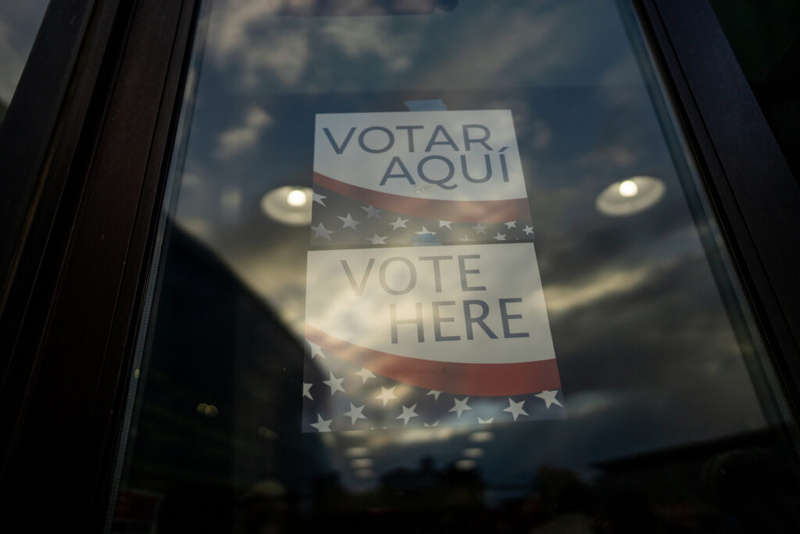
Signs direct people to a voting location at the Main Library in Salt Lake City on Election Day, Tuesday, Nov. 5, 2024. (Photo by Spenser Heaps for Utah News Dispatch)
As 1,000 federal election monitors fan out across the country, 12 of them are assigned to Utah — and all within Salt Lake County, according to the county’s top elections official.
Many of her fellow Democrats, some Republicans and voting rights groups see cause for alarm with the Department of Justice sending more monitors to the states than ever before. But Salt Lake County Clerk Lannie Chapman summed up her take in two words: “No concerns.”
“I don’t want our voters to feel concerned about their right to casting their vote,” Chapman said in an interview last week. She’s assuring them that everyone who’s eligible will have a chance to cast a ballot in the midterm elections.
DOJ is sending election monitors to Utah polls this November
Chapman said she didn’t know which of the county’s 40 voting centers the monitors will go to. Their presence was expected only for Election Day, she said, and not during early voting.
Election monitors have long kept an eye on compliance with federal voting rights laws, but not in every state at once. Critics of the plan point out it follows recent moves by the Trump administration to claim federal authority over state-run elections.
The Justice Department sued Utah and more than two dozen other states in an attempt to obtain voter lists with sensitive data like driver’s license and Social Security numbers. The Utah case is one of at least 20 that have been dismissed.
A Justice Department spokesperson told Stateline that “every monitor will merely observe and report any potential violations of federal law to the Department, which will be reviewed after Election Day.”
Voting rights advocates in Utah are raising concerns the program could intimidate voters just the same and say its specific objective isn’t clear.
“We don’t believe it’s needed,” said Helen Moser, director of voter services for the Utah League of Women Voters. She noted the effort comes on the heels of the Trump administration’s unsuccessful legal fight for access to Utah’s unredacted voter rolls.
“And so it seemed really very arbitrary and kind of capricious,” Moser said.
Her organization was working with the ACLU and other groups to recruit poll watchers before the announcement that federal monitors were coming, and now plans for those volunteers to also keep an eye on the monitors through Election Day, she said. So far, the coalition’s organizers have trained roughly 150 observers.
The mandate for the federal election monitors is to watch and take notes, while not intruding or interfering with voting, a DOJ attorney informed Utah’s top elections officer, Lt. Gov. Deidre Henderson, in a letter last week. They’ll also introduce themselves to the poll manager, present ID, dress in business casual attire, and won’t carry guns or wear pins or uniforms identifying them as Justice Department employees.
“Generally, we are monitoring for compliance with the federal voting rights statutes that fall within the jurisdiction of the Civil Rights Division,” the letter states.
Alison Griffith, director of community engagement for the ACLU of Utah, said she doesn’t expect monitors to break the rules, but says the anticipation of their presence could be enough to make voters uneasy.
“But they haven’t given any specificity about what they’re doing in Utah and why. And I think it’s the unknown that creates confusion. It creates concern. It creates anxiety,” Griffith said. “That lack of knowledge about why they’re here and what they’re doing lends itself to potential for intimidation, so we’re hoping that having poll watchers out there as well can balance that out.”
Chapman, the Salt Lake County clerk, said she feels confident after speaking with Justice Department representatives that the agency won’t overstep in her county — heavily Democratic and the state’s most populous.
“However, they will be held strictly to what our law allows,” Chapman said. “And if anything goes above or beyond that, we will take care of it very quickly.”
And she notes they won’t be traveling very far to do the job.
“While they do work for the federal government, these are our neighbors by and large, so they’re Utah residents that will be here monitoring,” Chapman said.
She said the federal monitors are expected to look at whether election workers are following federal law requiring Spanish language voting materials and compliance with the Americans with Disabilities Act.
State officials in California and Minnesota are assigning their own observers in response, but Utah is not planning to do the same, Henderson, Utah’s Republican lieutenant governor, has said.
Her office is working with elections officials in Utah’s 29 counties to develop “contingency plans” for if issues arise, she said late last month.
“I’m always worried about people feeling intimidated about voting,” Henderson told reporters. “I don’t want that to be the case, so I’m trying to help the public understand that while the scope and scale of this is maybe not normal, the fact that election monitors from the Department of Justice go to states every election year is normal.”
She does not expect the 12 in Utah, which she told KUER will work in pairs at six or seven voting locations, to alter the environment as voters come and go.
“I think that they probably won’t notice,” Henderson said.
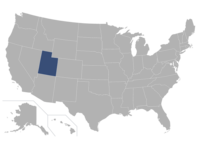
Salt Lake City, UT