It’s Election Day. Here’s what you need to know.
Nov 03, 2026 | 7:00 am ET
Description
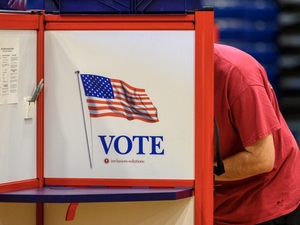
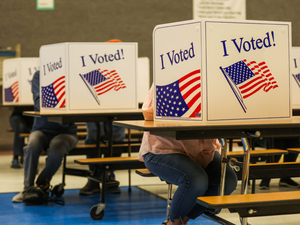
Voters cast their ballots at Lyndale Community School in south Minneapolis during the primary election Tuesday, August 11 2026. (Photo by Nicole Neri/Minnesota Reformer)
Finally, it’s arrived. Some common questions, answered.
How much time do I have?
Polls open at 7 a.m. and close at 8 p.m. If you’re in line by 8, you can vote.
Where do I vote?
You can type your address in here and get your answer.
What if I forget my ID?
You don’t need to show ID, but don’t try voter fraud, as it can result in a felony conviction.
Can I register to vote today?
Yes! You can show up at your polling station and register. Here’s how to register on Election Day.
How can I be sure my absentee ballot is being counted?
You can track it here.
What if I have an absentee ballot but never sent it in?
Per the secretary of state: You may drop off your ballot no later than 5 p.m. on Election Day; just return it to the office that sent the ballot during office hours.
Or just throw away the ballot and go vote at your precinct.
Who is on the ballot?
The constitutional offices — governor and lieutenant governor, who run as a ticket; attorney general; secretary of state; state auditor.
In the governor’s race, U.S. Sen. Amy Klobuchar of the Democratic-Farmer-Labor Party is running against Republican House Speaker Lisa Demuth. What’s certain is that Minnesota will have its first female governor.
In the U.S. Senate race, Lt. Gov. Peggy Flanagan is running against Republican Michele Tafoya to replace U.S. Sen. Tina Smith, who is retiring at the end of the year.
DFL Attorney General Keith Ellison is running for a third term against Ron Schutz, a patent lawyer and conservative activist. The attorney general is the state’s chief legal officer and protects Minnesotans against consumer fraud, among other duties.
Also on the ballot are U.S. House seats and all 201 legislative seats.
Just as important for setting Minnesota’s course during the next two years will be control of the Legislature. The House has been tied 67-67 during the 2025-26 sessions, while the DFL has controlled the Senate 34-33. The Legislature writes the two-year state budget, which will come in around $60 billion and determine how much the state spends on schools, roads, parks, health care and social services. Republicans want to cut taxes and spending, while Democrats will push to support education and health care.
Here are some key state House and Senate districts that will determine control of the two chambers.
There is also a statewide ballot measure as well as some local races.
Check out your sample ballot.
Our voter guide has info and will point you to Reformer coverage.
Seems like a lot of people voted early.
Yes, Secretary of State Steve Simon reports that as of 9 a.m. Monday, local election officials have accepted 886,427 absentee and mail ballots.
How many people voted in 2022?
2,525,873, or about 61% of eligible voters, which was fewer than the 2018 high but still among the highest in the nation. That’s typical for Minnesota. Lots of room to grow, however: More than 3.2 million Minnesotans cast ballots in the presidential election of 2024.
When do we find out who won?
Results will start to trickle in after 8 p.m. We often know who won within a couple hours, and typically it’s all done by early Wednesday. In 2024, control of the Minnesota House took weeks to sort out, and the chamber wound up in a 67-67 tie.
Nationwide, you can get a decent idea of how things are going with chart No. 6 compiled by Washington insider Bruce Mehlman.
Can I trust the results?
Yes. Post-election audits, which are available to the public, entail a hand count in at least two precincts in every county and 3% of the total precincts in the biggest counties. Historically, the results are nearly identical to the machine results. Minnesota also has the top-ranked election administration system, according to MIT’s Elections Performance Index.
What about recounts?
The state will pay for a recount if the difference between the candidates is less than 0.25% in a federal or statewide race.
If it’s a legislative race, the state pays if the difference is less than 0.5%. But given how accurate the machine tallies are relative to hand counts, recounts rarely change an outcome.
When does the new governor take office?
The inauguration is on the first Monday in January. (Jan. 4, 2027)
If Klobuchar wins, what happens to her Senate seat?
If she resigns before her inauguration, then Gov. Tim Walz would appoint her successor, but Walz can and most likely would defer to Klobuchar, who would appoint her own successor. Some potential appointees include Secretary of State Steve Simon and U.S. Rep. Kelly Morrison, though the subject tends to spark lively debate.

Saint Paul, MN