It’s Election Day in Iowa: What to know as you go to vote
Nov 03, 2026 | 6:30 am ET
Description
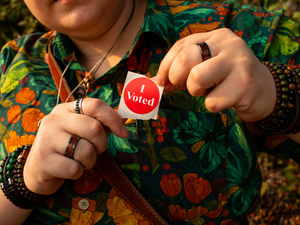
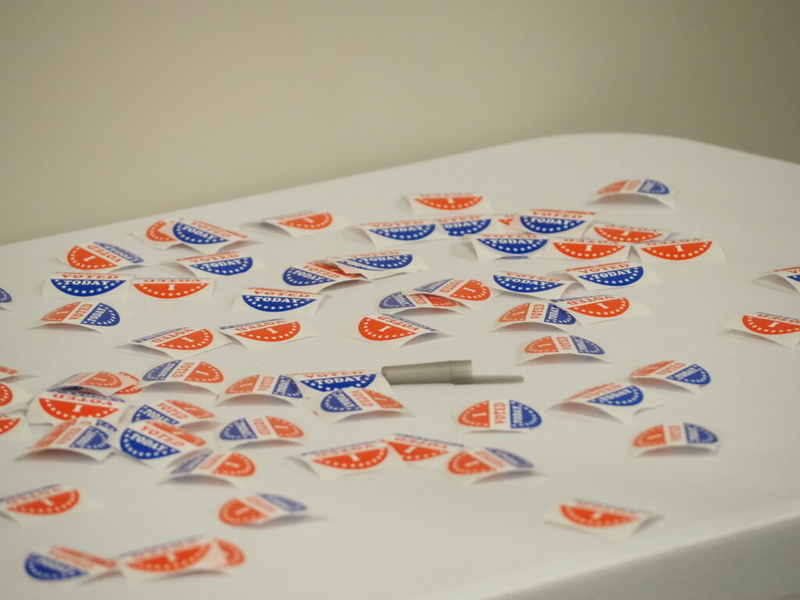
A table hosted "I voted" stickers for voters to pick up after casting their ballots at the Polk County Election Office in Des Moines on the first day of early voting, Oct. 14, 2026. (Photo by Robin Opsahl/Iowa Capital Dispatch)
After a competitive and expense election cycle, it’s finally Election Day in Iowa.
Voters in Iowa will get to cast their ballots Tuesday for statewide and federal offices, as well as having the chance to weigh in on a proposed amendment to the state constitution and whether to retain certain judges.
Iowa is expected to host several of the most competitive races in the country, according to election forecasters, that could be pivotal in determining which party controls the U.S. House and Senate. This year, Iowans are also voting in more races with open seats than in previous recent elections — both Iowa Gov. Kim Reynolds and U.S. Sen. Joni Ernst, two Republicans, are not seeking reelection, leaving the top-of-ticket races for U.S. Senate and governor without an incumbent.
Additionally, two of the state’s four U.S. House seats have no incumbent, as U.S. Rep. Ashley Hinson, currently representing the 2nd District, runs to replace Ernst in the Senate, and U.S. Rep. Randy Feenstra in the 4th District made an unsuccessful bid to become the GOP gubernatorial nominee.
Early voting participation has been high, with 464,216 absentee ballots received and counted by the Iowa Secretary of State’s office as of Monday morning. This represents a roughly 36% increase as of 341,237 absentee ballots received as reported by the secretary of state the day before the election by Nov. 7, 2022 — but it’s below the 497,085 ballots received by secretary of state in the 2018 midterms reported Nov. 5, 2018 — the midterm election cycle during President Donald Trump’s first term in office.
More Iowans are expected to vote Tuesday, when polls will be open from 7 a.m. to 8 p.m. across the state.
If you haven’t voted yet — or if you’ve requested an absentee ballot but have not yet returned it — there’s still time to cast your ballot. Here’s what you need to know:
Where do I vote?
Voters can find their precinct polling locations using the Iowa Secretary of State’s website. Polling locations are open from 7 a.m. to 8 p.m. Tuesday. Voters who are in line at their polling place at 8 p.m. must be allowed to vote.
Who can vote in Iowa?
In order to participate in Iowa elections, people must register to vote. A qualified voter in Iowa must be:
- An Iowa resident.
- A U.S. citizen.
- 18 years old by Election Day.
There are also restrictions on voting for certain individuals in Iowa. Voters cannot be:
- A convicted felon, unless their voting rights have been restored.
- Judged mentally incompetent to vote by a court.
- Claiming the right to vote in any other place.
A person who is eligible to vote but is not yet a registered voter has the option to register on Election Day at their precinct voting location. In order to register, a qualified voter must provide proof of identity using ID like an Iowa driver’s license, non-operator’s ID or U.S. passport, as well as proof of residence using documents like a residential lease, paycheck or utility bill listing their current address.
Check your voter registration status online here.
I’m registered to vote. What do I need to bring to the polls?
Voters who are already registered to vote still need to bring a form of identification with them to their polling place in order to participate. Accepted forms of identification include:
- Iowa driver’s license
- Iowa non-operator ID
- Out-of-state driver’s license or non-operator ID
- U.S. passport
- U.S. military or veteran ID
- ID card issued by employer
- Student ID issued by Iowa high school or college
- Tribal ID card/document
If a person does not have a valid ID when they go to vote, they are still allowed to cast a ballot if another registered voter at the precinct attests for their identity. Voters can also bring Election Day registration documents to confirm their identity.
People who do not have accepted IDs or a person willing to attest for them can cast a provisional ballot. People who cast provisional ballots will have their voter registration record and related evidence reviewed by the absentee and special voters’ precinct board. Individuals casting provisional ballots can provide proof of ID or other confirmation of their eligibility to the board up until the time of county canvass of votes, which this year is Nov. 12.
I have an absentee ballot that I haven’t returned. What should I do?
Iowans who have sent in their absentee ballots can track the ballot’s status on the Secretary of State’s website. But for people who have not yet returned their ballot, there’s still time to participate in this year’s election.
Absentee ballots can be returned to a voter’s local county auditor’s office by 8 p.m. on Election Day to be valid. These ballots cannot be delivered to precinct polling locations on Election Day.
If a voter cannot go themselves to return the ballot, Iowa has some restrictions on who can return it in their stead — voters can designate another person to return their absentee ballot if they are an immediate family member or member of the household. Voters with disabilities can also designate someone outside of these categories to return their ballot.
There’s also options available for people who have requested — but not returned — absentee ballots to vote in-person on Election Day. Voters can cast regular ballots if they bring in their absentee ballot to the precinct polling place and surrender it. If a person requested an absentee ballot but cannot return it, they are allowed to cast a provisional ballot.
What’s on the ballot?
In addition to the races for U.S. Senate and House members, Iowans will weigh in on their choices for statewide elected officials. This includes the Iowa gubernatorial election, as well as races for state auditor, attorney general, secretary of agriculture, secretary of state and treasurer. Learn more about the candidates running for these offices through Iowa Capital Dispatch’s 2026 voter guide.
There are also numerous races for the Iowa Legislature and for local elected office on the ballot.
On the back of the ballot, voters will also be able to choose whether to retain certain judges in Iowa. You can learn more about the judges on the retention ballot by reading the 2026 Judicial Performance Review, a report prepared by the Iowa State Bar Association. Voters will also choose whether or not to add language to the Iowa Constitution that would require two-thirds majority approval of the Iowa Legislature to raise personal or corporate income taxes in Iowa.
Des Moines, IA