First MOScholars performance report exposes gaps in state oversight
Oct 30, 2026 | 2:20 pm ET
Description
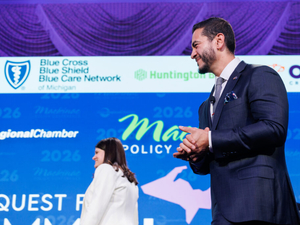
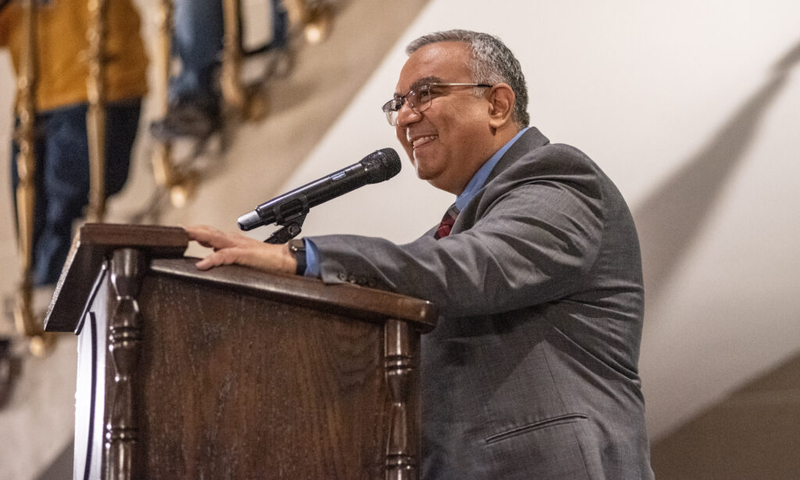
State Treasurer Vivek Malek, pictured speaking in the Missouri State Capitol rotunda in 2025, shared the first annual performance report for the MOScholars voucher program Wednesday (Annelise Hanshaw/Missouri Independent).
Missouri’s first report on the academic performance of students in its MOScholars voucher program found encouraging test scores but also exposed gaps in how the state collected the data, including information required by law that remains unavailable.
The report, released Wednesday by the Missouri Treasurer’s Office, found that students scored near the national average in reading and math during the program’s first three years. But researchers could validate test results for only 77% of students in testing grades, and the report lacked information about family income that state law requires.
The findings offer a baseline for measuring student performance but do not establish whether the program has improved academic outcomes or whether its students outperform those in public schools.
Researchers contracted to compile the report say they have an encouraging baseline to build on in future years. But the findings fall short of what some lawmakers expected from a program that has been operating for four years.
The law passed in 2021 that created the MOScholars program requires the state treasurer to “provide the test results and associated learning gains to the public via a state website after the third year of test and test-related data collection.”
Many expected this report last summer, immediately after the program’s third school year. When The Independent asked about the timing in April, the treasurer’s former chief of staff, Jackson Bailey, said the 2025-26 school year was “the fourth year of the MOScholars program, but is the third year of test and test-related data collection.” He said data for each school year is not collected until the following year.
But this was not always the office’s message.
When lawmakers were considering the expansion of the program in 2024, Senate Minority Leader Doug Beck asked State Treasurer Vivek Malek about the performance report during a Senate committee hearing.
“When I think of education, I think of accountability, and that is what I am curious about here,” Beck, a Democrat from Affton, said. “Do we know any of the educational outcomes of these students?”
Malek said his office “will have to produce a report after the third academic year, which will be ending in the academic year of 2024-25.”
“We are still getting all those scores and will be hiring a person who will be assessing all these scores and then analyzing and putting them together in report form,” he said.
Malek said this process would begin in the fall of 2024. The office, which has experienced considerable turnover since MOScholars’ creation, ultimately outsourced the report to the Saint Louis University PRiME Center, which conducts education policy research.
The PRiME Center was not hired until June 2025, according to the contract on the Missouri Office of Administration’s website.
Missing and inconsistent test results
When the treasurer’s office sought a contractor in April 2025 to compile the report, it indicated that the existing data was disjointed and incomplete.
The request for proposals states there was “no standard format” for the test results.
“The current state of the data is that there are nine different tests being taken by thousands of different students… Right now, in its current state it is useless to measure anything,” it says.
By the time PRiME completed its report, researchers had identified 27 different test types students submitted — eight of which were not nationally norm-referenced assessments. By state law, MOScholars students in grades 3-10 should take “nationally norm-referenced tests that measure learning gains in math and English language arts” or the Missouri Assessment Program, commonly known as the MAP test.
Some students did not submit a score at all.
The statute puts the responsibility on the educational assistance organizations, which serve as intermediaries between voucher recipients and the treasurer’s office, to ensure students take a valid test. The organizations varied in compliance over the first three years of the program, although the share of students with valid results improved over time, the report notes.
On average, 77% of students required to take an assessment submitted valid results.
The Today and Tomorrow Educational Foundation, which is connected to the Archdiocese of St. Louis, had the worst response rate. In the 2024-25 school year, 14% of its students’ declined to submit scores, and 13% of scores were unable to be validated.
The PRiME Center expects better data collection going forward now that it has systems in place to guide the organizations and make the process easier.
“We have been able to construct a longitudinal data system that will serve the program forever,” PRiME Executive Director Collin Hitt told The Independent. “Now any student that is in the program we can track for as long as they are in the program and compare and look at their results over time.”
“Building these things takes time, but they are built now,” he said.
The office has also switched the software provider it uses to collect student data and help administer the program.
“The process in which these scores are collected and aggregated is complex,” MOScholars program specialist Meghan Rackers said in an emailed statement. “The program now has the proper policies, procedures and partners in place to work with educational assistance organizations to collect the assessment scores in a timely and accurate manner.”
Income data remains unavailable
One piece of information required by state law is notably missing — family income level — and the office does not have a plan to address it.
State law requires that MOScholars reports aggregate data by “students’ grade level, gender, family income level, number of years of participation in the scholarship program and race.”
The PRiME Center report notes that “insufficient data were collected to accurately report this information.”
There are two ways families become eligible for MOScholars: either their income is below 300% of the federal poverty line or they have a child with an individualized education plan, which provides accommodations for students with disabilities. Those who qualify through having an IEP do not have to provide income information.
For those who meet income requirements, the data collection changed over time.
“This resulted in incomplete and inconsistent data that was therefore unable to be analyzed,” PRiME’s researchers wrote.
When asked whether this issue would be addressed, the treasurer’s office said “doing so would violate the common standard of only collecting information required to qualify for the program.”
“A common standard for privacy protections is that programs collect the least amount of information required to determine eligibility,” Rackers wrote.
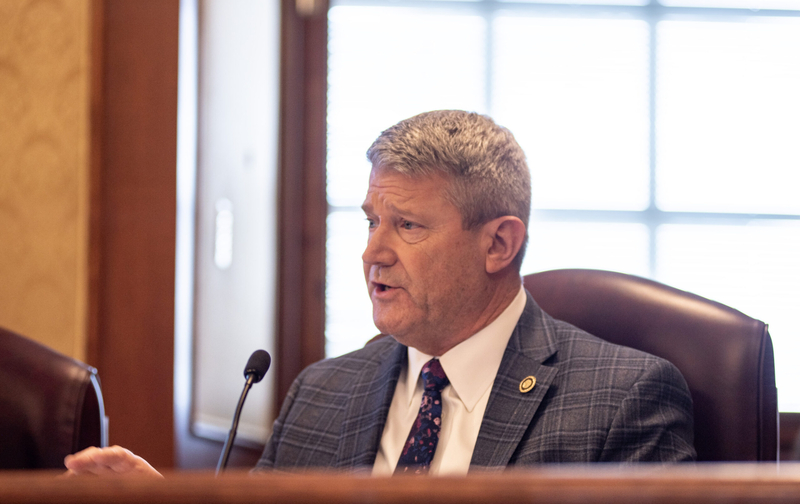
The privacy of MOScholars students was called into question earlier this year when The Independent reported that students’ names and email addresses were inadvertently posted in a spreadsheet on the treasurer’s website.
The issue is one of several concerns state lawmakers have raised as they assess the administration of the program. Late in the legislative session, the Senate voted to move the program out of the treasurer’s office and into the hands of education officials. The proposal did not come up for a final vote, however, after pressure from a St. Louis archbishop to keep the program as-is.
Beck, who has been a vocal critic of the voucher program and its administration by the treasurer’s office, said the performance report only amplified his disappointment with MOScholars.
“This report is incomplete, admits the Treasurer isn’t following the law, was outsourced to a third party and doesn’t answer key questions,” he told The Independent in a statement. “We are used to the Treasurer being incompetent, but this is starting to feel like a coverup. Something is going on with these vouchers and the public deserves to know the truth.”
Encouraging results, but a limited picture
The report does not cover the 2025-26 school year, in which the program more than doubled in size. With more students in the program and more reaching the grades that require testing, there will be more data to work with.
“This testing sample is going to massively grow. So make it at what you will, but this is the baseline that we will see the future of the program being judged against,” Hitt said.
This initial report is “encouraging,” he said, adding that he is eager to get enough data to track student growth down the line.
The PRiME Center’s researchers translated scores into their national percentile rank. In English language arts, the average student score was in the 46th to 51st percentile. In math, they performed in the 47th to 49th percentile.
Missouri students in 4th and 8th grades take the National Assessment of Educational Progress, another nationally normed test. In 2024, Missouri students scored in the 45th to 47th percentile, according to PRiME’s analysis.
“As a scholar… if you told me that I was going to be looking at a program where 40% of the students had an IEP and the rest were from relatively low-income households, I would not have guessed that we would have seen test scores this high.”
Malek said in a news release that he is proud of the results.
“Behind these numbers are families who have been given the opportunity to find the right educational fit for their children, including students with special needs who deserve every opportunity to succeed,” he said. “These results reinforce why expanding educational opportunities and empowering parents to make the best decisions for their children is so important.”
The office also published a report detailing parent responses to a survey about the program, showing high parent satisfaction.
In total, 99% of those surveyed were satisfied with MOScholars. Some had complaints about a lack of communication and confusion about certain requirements but were overwhelmingly content.
“While participants may have provided areas for program improvement,” the report says. “Many of those same participants also voiced satisfaction with the program as a whole.”
Jefferson City, MO