Appeals court upholds ruling in favor of North Dakota truck stop over debit card fees
Oct 27, 2026 | 4:55 pm ET
Description
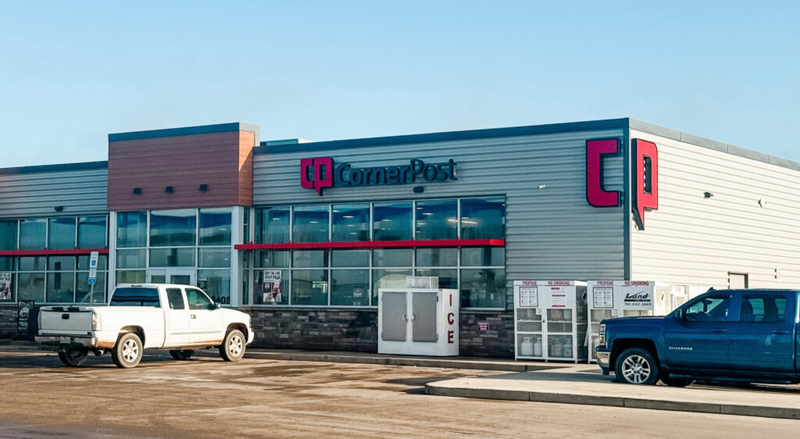
A court case brought by the Corner Post truck stop near Watford City, N.D., over debit card processing fees could have national implications. (Photo by Nicole Morton/For the North Dakota Monitor)
A federal appeals court has upheld a North Dakota judge’s decision ordering a Federal Reserve board to change how it regulates debit card transaction fees.
The fees, which apply every time someone makes a debit card purchase, are meant to compensate banks for processing the transactions.
The lawsuit was brought by Corner Post, a Watford City truck stop and convenience store. The northwest North Dakota business claimed in court records that it has paid hundreds of thousands of dollars in debit card transaction fees to banks.
More than a year ago, then-North Dakota U.S. District Court Judge Dan Traynor ruled that the Federal Reserve Board of Governors regulated the fees in a way that unfairly favored banks at the expense of businesses and consumers.
North Dakota truck stop paves way for reducing debit card fees nationwide
A panel of three judges on the U.S. Court of Appeals for the 8th Circuit in a Monday decision unanimously agreed with that finding, and said the board must rewrite its rule governing the fees.
The ruling won’t take effect until the board has an opportunity to appeal the decision further, the order states.
The board started regulating debit card transaction fees after Congress passed a law called the Durbin Amendment in 2010. Congress sought to rein in the fees after learning banks had used them to profit billions.
Lawmakers directed the Board of Governors to write a rule setting new guardrails for what the fees could cost and what kinds of expenses they could cover.
The 8th Circuit, like the district court, found that the rule, which the board enacted in 2011, did not implement the law as Congress intended.
For one, the amendment said the fees should only reimburse banks for costs related to processing the transactions, according to the opinion. But the board’s regulations also allow the fees to cover other expenses like labor, technology infrastructure and fraud prevention.
The law also directs the board to regulate the fees in a way that is “reasonable and proportional” to debit card transactions. However, the rule enables banks to add a blanket charge on all transactions regardless of cost, the courts found.
In regulating the fees this way, the board was “ignoring what it was supposed to consider and considering what it was supposed to ignore,” the 8th Circuit wrote in its opinion.
The Federal Reserve Board of Governors has argued it was following the plain language of the law. Attorneys for the board have also said making the fees proportional to each transaction would be too complicated to implement.
The board on Tuesday declined a request for comment. It has not indicated whether it plans to appeal the decision to the U.S. Supreme Court.
The owners of Corner Post have said in court filings that they hope to bring down the cost of the fees for other businesses and consumers.
The 8th Circuit has jurisdiction over North Dakota, South Dakota, Minnesota, Iowa, Missouri, Nebraska and Arkansas.
Traynor, the judge who presided over the Corner Post lawsuit in federal district court, joined the 8th Circuit earlier this year but was not one of the three judges who heard the case at the appellate level.
Supreme Court case
The Corner Post case previously went before the U.S. Supreme Court over a statute of limitations question.
When the case was first filed in 2021, it initially had two plaintiffs — neither of which were the Watford City truck stop. The suit was brought by the North Dakota Retail Association and the North Dakota Petroleum Marketers Association on behalf of their members. Corner Post, which belongs to both associations, joined the legal challenge later.
Traynor initially tossed the case on the grounds that the six-year statute of limitations on challenging the Federal Reserve’s rule had already expired.
The 8th Circuit Court of Appeals upheld Traynor’s ruling, but the Supreme Court in 2024 overturned the decision. The high court ruled that the clock on the statute of limitations does not start ticking until a plaintiff is first harmed by a rule. Since Corner Post didn’t open until 2018, the Supreme Court found the gas station still had grounds to bring the case.
Bismarck, ND