Ohio Supreme Court: Village with data center moratorium won’t have to consider site plan
Oct 26, 2026 | 3:50 am ET
Description
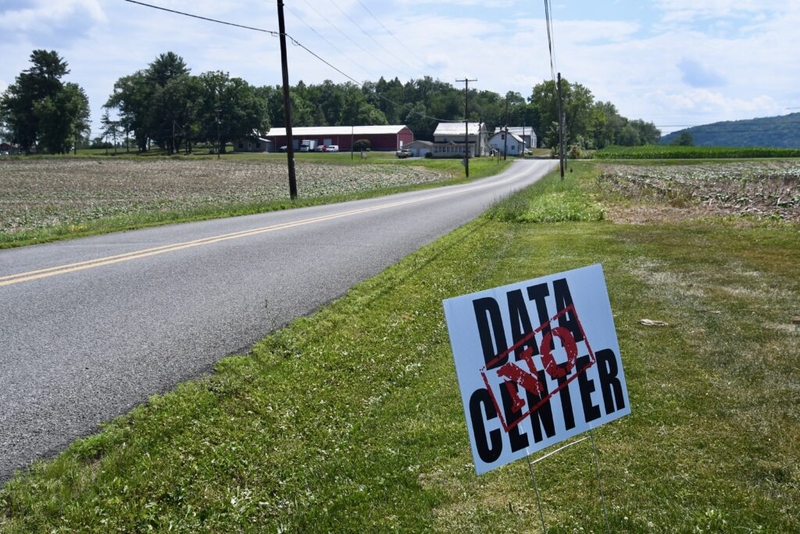
Muncy Township, Lycoming County, is the site of a proposed data center. (Photo by Peter Hall/Pennsylvania Capital-Star)
An Ohio village won’t have to consider the proposal from a new data center after putting a moratorium in place, according to a unanimous ruling by the Ohio Supreme Court.
The unanimous decision released this week by the state’s highest court said that the village of Lordstown’s leaders were allowed to stop the process of a data center site-plan review. They were not required to review the plans because, at the time, the village council had banned data centers in their area.
The company attempting to start the site-review, Bristolville 25 Developer, started the process in October of 2025, two weeks before the village council adopted a data center ban. The company had purchased property zoned for industrial use in Lordstown in February of that year, with the specific intent to build a data center.
The day after the site-review was requested in October, the village’s planning and zoning administrator, Kellie Bordner, sent an email to the company notifying them that a ban on data centers had received a second reading before the village council, and that the planning and zoning office “would not be able to proceed until council makes a decision on the ban at the next council meeting,” according to court documents.
In early November, the council passed a prohibition on data centers in Lordstown, adding that “no zoning permit, building permit, or certificate of occupancy shall be issued for any use that meets the (ordinance’s) definition of a data center.”But the ban didn’t apply to every data center.
“The ordinance was explicitly inapplicable to any data-center facility already existing or under construction as of the ordinance’s effective date,” the supreme court wrote in their decision.
Still, Bordner and Village Solicitor Matthew Ries said they were working to review the drafts from Bristolville, but Ries predicted the project would “likely be prohibited” by of the new data center ban.
After the supreme court had received the case but before it made any decisions, the village council repealed the data center ban, instead passing an ordinance that would place a “temporary moratorium on the issuing of any new permits, as well as the receipt and processing of applications for permits, for proposed data centers in Lordstown,” supreme court documents stated.
In June, the village also passed a 180-day extension to the moratorium, one of more than 100 data center moratoriums across the state.
The data center developers asked the state supreme court to order that the village follow the review process as it would have done before the moratorium was put in place, arguing that their review was initiated before zoning laws were changed to prohibit the facilities.
The court disagreed, saying the company did not prove the right to have the review based on an out-of-date zoning ordinance. The court further said Bristolville “has not met the legislative requirements for obtaining a permit and therefore has no vested right to enforcement of any particular zoning ordinance.”
“Under the moratorium, the village is under no legal duty to proceed with a site-plan review of Bristolville’s project under (the ordinance) and (the company) has not shown a clear legal right to have Bristolville’s site plan reviewed under the premoratorium zoning ordinance,” the court stated.
Columbus, OH