Ohio incumbent US Sen. Jon Husted’s campaign is trying to portray Sherrod Brown as the incumbent
Oct 26, 2026 | 3:35 am ET
Description
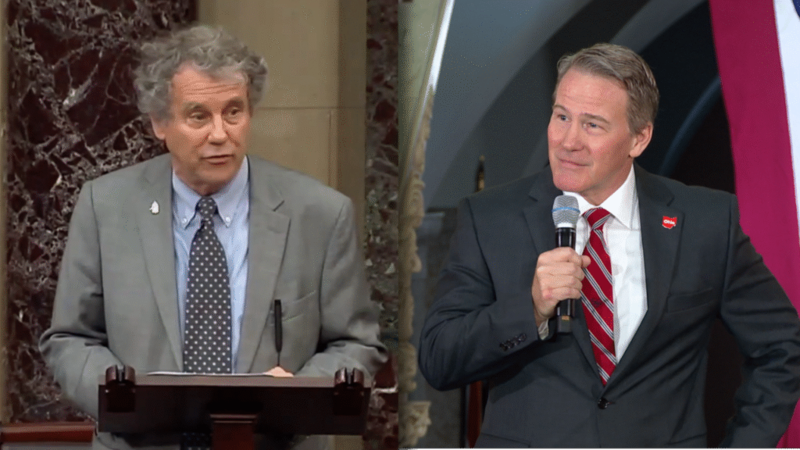
Former U.S. Senator Sherrod Brown, left, will take on U.S. Senator Jon Husted, right, in 2026. (Photos by CSPAN/Morgan Trau)
There are some peculiar dynamics at play in Ohio’s race for U.S. Senate between Republican incumbent Jon Husted and his Democratic challenger Sherrod Brown.
What’s a Senator who is running for reelection in a state his party has controlled for most of close to four decades to do when voters think the state and country are going in the wrong direction? Use AI. No, this is not another think piece about Artificial Intelligence. We mean Artificial Incumbency. Here is what we mean by that.
In 2024 in Ohio longtime Democratic US Senator Sherrod Brown lost a tough re-election fight to Republican Bernie Moreno. Meanwhile, Ohio’s other Senator, Republican JD Vance won the Vice Presidency. Gov. Mike DeWine appointed his Lieutenant Governor Jon Husted to the Senate seat Vance vacated, and now Brown is running again in a special election to serve out the remainder of the term until 2028.
Since 1992, Ohio Republicans have had a gubernatorial and legislative trifecta for all but seven years. And according to the latest BGSU Poll, likely voters are not happy about the direction of the state of Ohio, with 52% saying the state is off on the wrong track. Additionally, 61% think the same thing about the country as a whole. This is not friendly terrain for an incumbent.
According to the New York Times, “One Republican strategist in Ohio, granted anonymity to speak candidly about the race, said the (Husted) campaign was intentionally casting Mr. Brown as the incumbent, a rare opportunity amid dismal Republican approval ratings for the party to harness anger at the status quo.”
Husted supporting ads even refer to Brown as “Senator Sherrod Brown.”
This is what we call Artificial Incumbency: the deliberate attempt to cast your opponent as the currently serving senator when in fact you are the incumbent.
Traditionally, incumbents enjoy a significant advantage over challengers, so one could think this casting of Brown as the incumbent would be to his benefit. However, voter dissatisfaction may be so great that they just want a change.
In recent years, a populist message has gained traction among voters on the left and right of the political spectrum. Democrats have focused on messages about elite billionaires, which according to the BGSU poll only 14% of voters view favorably.
Republicans have focused their populist message on political elites, and the same poll shows that only 31% view Democrats in Congress favorably and only 34% view Republicans in Congress favorably. There may be less advantage to being the incumbent in a political climate that is anti-elite.
Is Husted’s Artificial Incumbency pointed at Brown working? The most recent BGSU Poll shows that 25% of likely voters think Brown is the incumbent. Who are these voters and for which candidate are they likely to vote?
Education appears to be a dominant factor in explaining which likely voters believe Brown is the incumbent, with those with more education generally being more likely to know that Husted is the current Senator. Interestingly, party identification tells us nothing.
Black and women likely voters are more likely than others to believe Brown is the incumbent, while members of union households are less likely to believe Brown is currently serving.
Who do likely voters who think Brown is the incumbent support? While 48.6% of voters overall say they plan to vote for Sherrod Brown, only 44.5% of voters who think Sherrod Brown is the incumbent say they plan to vote for him, while 43.3% say they plan to vote for Husted.
Interestingly, those who think Brown is the incumbent are more likely than other voters to say they plan to support the Libertarian, independent, or some other candidate, although these percentages are quite small. Could they matter if voters actually stick with these choices and the election is incredibly close? It’s possible.
Ohio Republicans have a problem in that voters are not happy with the direction of the state that Republicans have controlled politically for most of close to 40 years.
It appears that incumbent U.S.Sen. Jon Husted has utilized the strategy of Artificial Incumbency to create the appearance that former Sen. Sherrod Brown is still in office.
About a quarter of likely voters believe it and are slightly less likely to vote for Brown because of it. We won’t know until all the votes are counted if the strategy worked.
Columbus, OH