Getting beyond the ideological force behind Michigan’s political and economic woes
Oct 24, 2026 | 8:00 am ET
Description
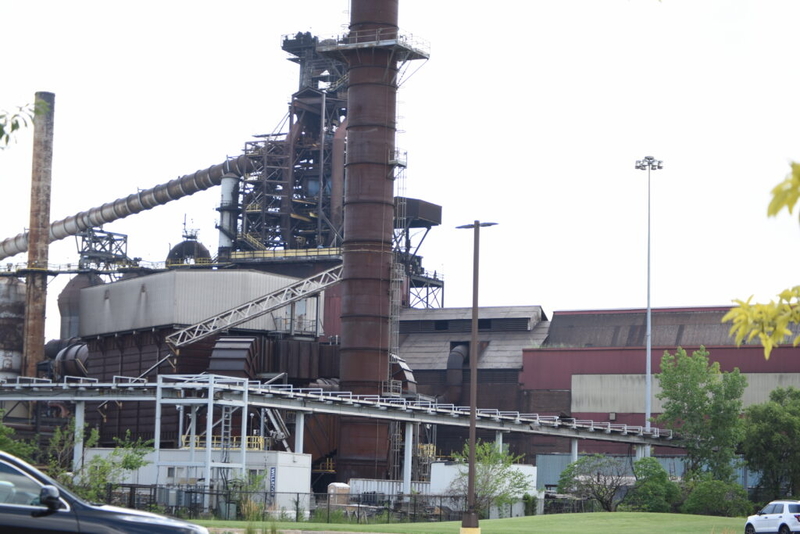
The Ford Rouge Plant in Dearborn on July 7, 2026. (Photo by Katherine Dailey/Michigan Advance)
The economy consistently ranks among the leading problems cited by voters in Michigan, sentiment that is supported by the evidence.
Economic indicators show Michigan struggling with very slow growth and falling economic competitiveness. The economic performance rankings in Rich States, Poor States dropped Michigan from 12th place in economic outlook in 2019 to 32nd in 2026. The latest rankings in the U.S. News & World Report Overall Best States report points to a similar conclusion.
After eight years of Gov. Gretchen Whitmer’s administration, Michigan stands among the worst states (43rd) in the nation in economic vitality and performance.
The state’s economy is exacerbating the affordability crisis for lower-and middle-income Michigan residents. A September report from the Georgetown Center on Poverty and Inequality found nearly two-thirds of Michigan families were in a cost-of-living squeeze, as stubbornly high prices for essential goods continue to strain household budgets. Families increasingly rely on credit cards and loans to cover basic living expenses, pushing household debt to unprecedented heights.
Michigan’s economic problems are decades in the making. The state’s shrinking manufacturing sector has caused the Michigan unemployment rate to be mostly higher than the national average since the 1980s. Per capita income has been generally lower than the national average since 1980, and the gap between the state and national median incomes has more than doubled since 2014, Income inequality also has worsened since the 1970s.
Michiganders worry about their economic future but also about the threats to democracy. They are particularly concerned with how wealthy special interests influence political leadership. According to a poll released by Progress Michigan, there is strong bipartisan support for Proposal 2, a ballot initiative that aims to ban utility monopolies from donating to state officeholders and that prohibits corporations with government contracts from making certain kinds of political contributions.
Today’s political upheaval and economic challenges are driving the resurgence of democratic socialism, a broad political ideology that combines a democratically-elected government with a collective arrangement of the economy. Millennials and Gen Z, particularly, display a significant tolerance of socialist concepts. According to a recent survey, 62% of American adults under 30 say they hold favorable views of socialism. Their support for candidates who embrace its core principles has made these candidates a viable political force that is challenging the right-of-center candidates for the future direction of the Democratic Party.
This is not the first time that the form capitalism has taken has been brought into question. In fact, capitalism has taken different forms in times of political and economic upheaval.
To survive the Great Depression, for example, Franklin Roosevelt abandoned the federal government’s hands-off approach to the economy that had dominated since the country’s founding in favor of a more regulated form of state-assisted capitalism. Similarly, the economic trauma of high inflation and high unemployment of the 1970s prompted the Carter administration to replace government management of the economy with neoliberalism, a doctrine that shifted the locus of power to central banks and Wall Street.
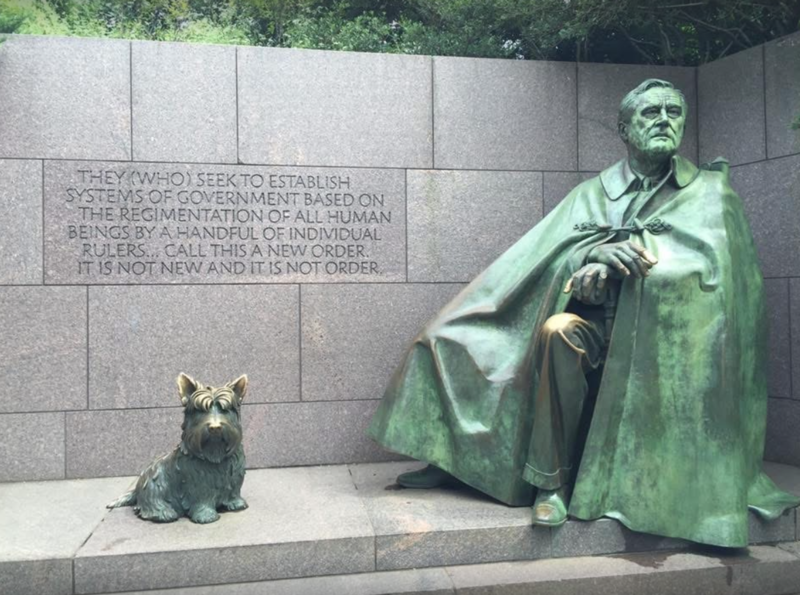
This form of capitalism, which now reigns over much of the world, is anti-union and advocates open markets, global free trade, less regulations, less government spending, and an enhanced role of the private sector in the economy.
While positive changes have taken place under neoliberalism, its chief policy prescription, that financial markets and central bankers manage the economy, has failed mightily. So is the conclusion of many critics of neoliberalism, both on the left as well as in the mainstream.
Neoliberalism has effectively created a plutocracy, corrupting American democracy in the process. It is the ideological force behind the rise in severe inequality and aggravated racial disparities. Its stance on the role of government in the economy explains why the United States is the only developed country that does not have universal health care, why the homeless problem has become a crisis, and why children in many states do not get free meals at school.
However, despite the growing criticism and visible damaging impacts on our politics and our economy, this reigning ideological force continues to be upheld in the name of freedom, individualism, and economic growth.
The negative impacts of neoliberalism are particularly evident in Michigan, a state that has served as a laboratory for neoliberal experiments. The state’s decline in industrial capacity, for example, can be traced to neoliberal policies enacted in the 80s that incentivized major auto companies to restructure their operations and supply chains to leverage cheaper labor markets and fewer regulations outside the United States.
Once an industrial powerhouse, Michigan is now the epicenter of deindustrialization, a process that strips high-wage jobs from the state and strains local economies. Even Gov. Whitmer, who does not explicitly use the term neoliberal to define her political ideology, has drawn criticism from both the left and the right for favoring corporate favoritism over free market restraint.
Beyond favoring corporate America, neoliberal policies have led to significant reductions in state funding to municipalities, as state leaders prioritized cutting corporate and individual income taxes to attract business. The emergency manager laws of 2012, passed in the interest of neoliberal fiscal responsibility, enabled state-appointed unelected managers to run financially distressed predominantly Black cities. In practice, these managers prioritized corporate creditor payouts and fiscal austerity over local democratic control.
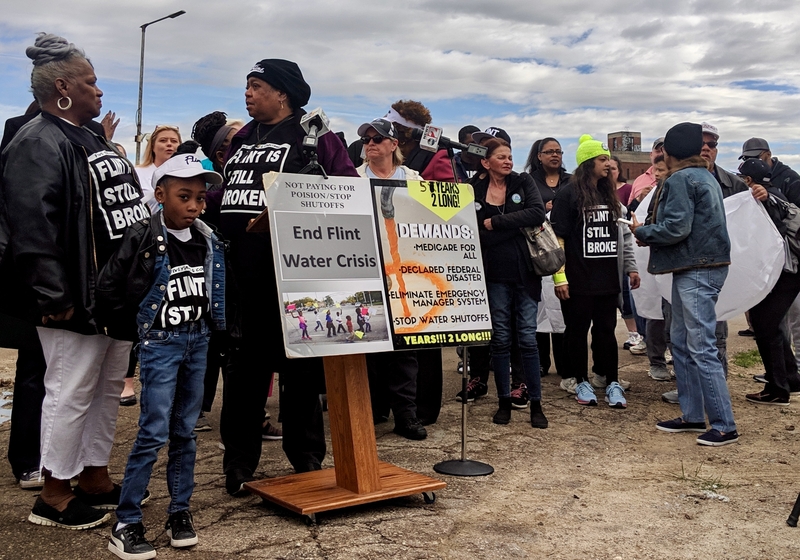
The Flint Water Crisis of 2014 is similarly seen as a direct consequence of neoliberal policies that prioritized fiscal austerity and market-based logic over public health. Neoliberal ideas also have sought to restructure state public education, causing the state’s public-school systems to contend with market-based reforms, charter school expansion, and district takeovers.
Some political and economic experts also assert that Donald Trump’s 2016 victory was a direct result of decades of inequality and other failures of neoliberalism. The results of his presidency have been devastating to democracy. The 2026 Democracy Report notes that democracy in the United States has fallen back to the same level as in 1965. The country lost its long-term status as a liberal democracy for the first time in 2025.
Importantly, the backsliding of American democracy is part of a broader global decline in democracy that is occurring under neoliberalism. Over the past two decades, both the number of autocratic regimes and the share of the global population living under authoritarian rule have increased significantly. Today, autocratic countries not only outnumber democracies globally, but they rule over most of the world’s population. Roughly 7 in 10 people in the world live under autocratic rule.
The failures of neoliberal capitalism has led to calls for its reform and for the need to chart a new vision for society.
I am not a member of the Democratic Socialists of America, but I do favor a change in today’s economic arrangements that channel the country’s wealth into the hands of the few. The emergence of democratic socialism as a political force offers the opportunity to discuss its merits in reforming our current economic system to create a more just society.
Rather than debating its virtues in terms of socialism vs capitalism, it is more productive to focus on what this philosophy means for deepening our democracy, stabilizing the economy, and reducing economic inequality, the latter being the main source of today’s political divisions.
Lansing, MI