‘We don’t want it’: Voter backlash against data centers consumes midterm elections
Oct 23, 2026 | 5:44 pm ET
Description
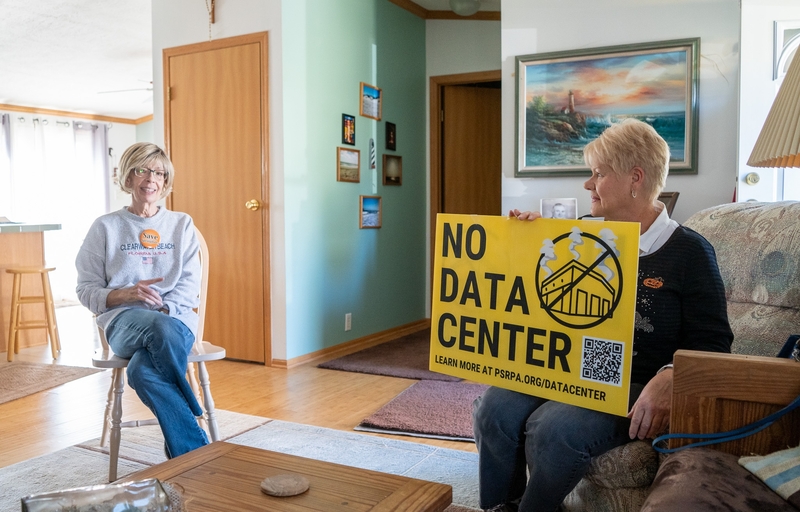
Vicki Wanamaker, left, and Cathy Mager, right, talked in Wanamaker's Springdale, Pennsylvania, home on Oct. 19, 2026, about their opposition to a proposed hyperscale data center roughly a quarter mile away. (Photo by Ashley Murray/States Newsroom)
SPRINGDALE, Pa. — Residents in a small southwestern Pennsylvania town are facing the prospect of a 47-acre data center facility on their doorstep.
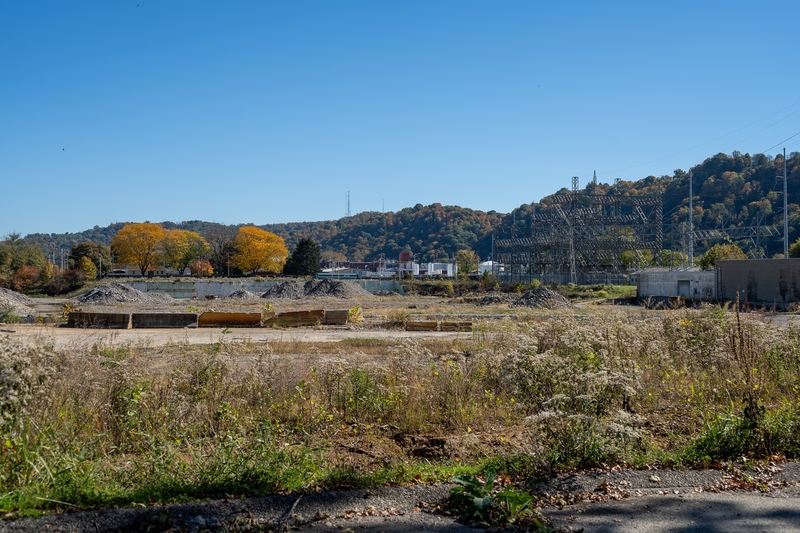
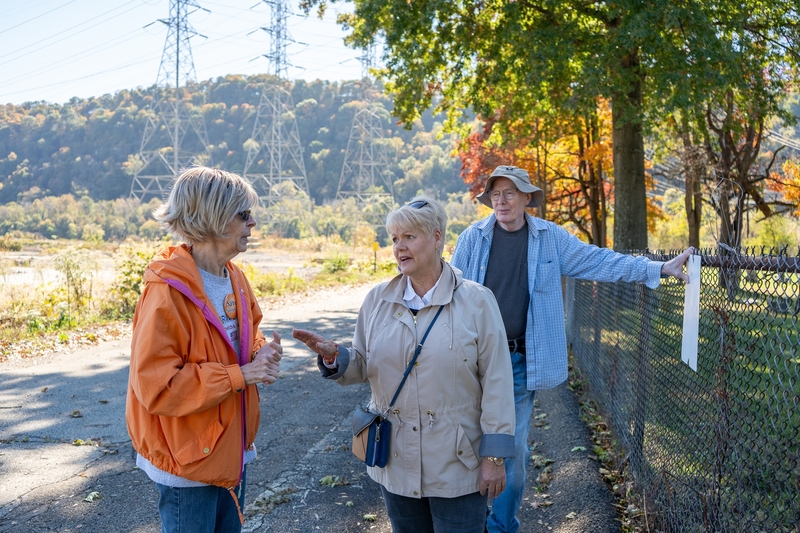
“Right here behind this fence is where they want to put up the data center, and as you can see, there’s houses right across the street, roughly 100 feet,” said lifelong Springdale borough resident Cathy Mager, stretching her arms to show the distance from the development site’s perimeter to a line of houses across Porter Street.
“We don’t want it,” she told States Newsroom on Oct. 19
The scenario is playing out around the United States. Both Democratic and Republican candidates during the heated midterm election cycle have had to navigate deep voter resentment of the massive advanced computer server farm developments that will power artificial intelligence.
“The issue has blown up over the last year,” said Darrell West, a senior fellow at the Brookings Institution’s Center for Technology. “It wasn't that long ago politicians were fighting to bring data centers to their communities. Now these facilities are completely controversial, and many people don't want them in their neighborhood. So public opinion has changed very rapidly on this issue.”
53 years with a power plant
Mager is among a few dozen residents in Springdale, in northeastern Allegheny County, who formed the group Save Allegheny Valley Environment to protest the proposed data center development on the community’s riverfront site of a coal-fired power plant that went offline in 2022.
“We've already lived for 53 years under that power plant,” said Vicki Wanamaker, 66, a lifelong Springdale resident who lives about a 10th of a mile from the fencing around the site.
She’s worried now about the noise a data center would bring to the neighborhood, with its water coolers running and back-up diesel generators on site, and whether she would experience electricity shortages.
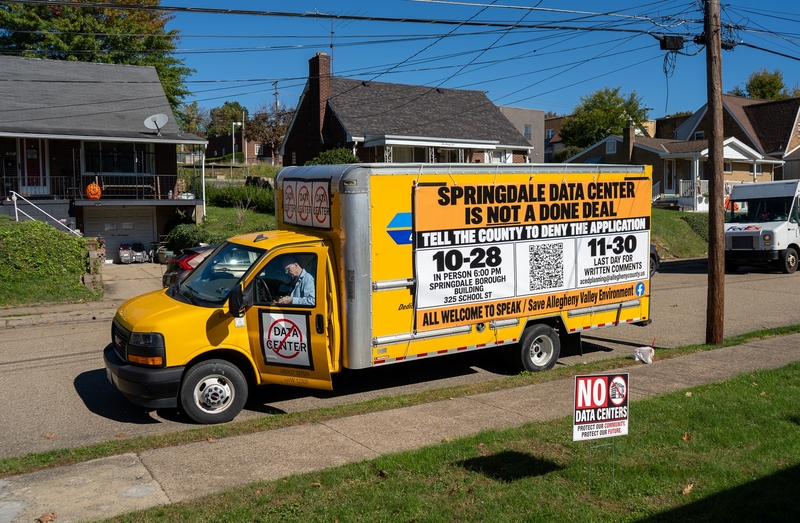
Springdale’s council voted 5-2 in December to approve a conditional use permit for the project by Dynamo DC, a company with a Springdale-based address that “builds AI data centers on environmentally remediated brownfield sites,” according to its website. Residents are now asking Allegheny County to stop further land use plans.
Dynamo DC spokesperson Brian Regli said the developers will use “acoustical shielding” to keep noise well below ordinance levels.
The hyperscale data center will recycle 500,000 gallons of water in a closed-loop system to cool the servers, he told States Newsroom during an interview in late October. The facility is planned to handle up to 240 megawatts, which it will pull from a regional electricity grid, Regli said.
Dynamo DC has not yet identified which company or contractors will actually use the data center. The company plans for the data center to go online by 2029.
Regli said the company is exploring “environmentally conscious” fuels for the diesel back-up generators. The amount of back-up power needed for the site will ultimately depend on how the data center is used.
Some uses “may need a fraction of the backup power that we put forward,” he said. “But you know, if this is a critical facility, let's say it is being used by the military — which I doubt that the center would become that, but let's use that as an example — you're going to want to have as robust of a backup infrastructure as you can,” Regli said.
Amie Downs, of Caveat Communications, which is providing communications for Springdale, said the borough “was able to negotiate a number of other provisions that benefit the community and its taxpayers that relate to noise, lighting, traffic, landscaping, and other requirements, imposing stricter standards than the borough's ordinances otherwise required.”
Thousands of data centers planned
Data centers are a linchpin of the modern internet, but the scale needed for advanced computing is new.
There are 1,394 data centers already operating around the United States, and they carry a combined capacity of 64,764 megawatts.
As of October, 2,841 more data centers are planned and would add 413,152 megawatts of additional capacity, according to the energy market firm Cleanview’s data center project tracker.
“What we're seeing now is huge facilities that are being built. These are data centers that occupy the size of several football fields,” said West, who also publishes the progressive organization’s TechTank and is a senior fellow on governance studies. “They require a lot of energy. Some of them require water as well. So the size of the data centers creates public anxiety and worry.”
Sixty-three percent of American adults say they don’t want a data center built in their community, according to a late August poll published by YouGov and The Economist.
A CNN poll conducted in mid-September found nearly two-thirds of registered voters surveyed said AI and data center development will be an extremely or very important factor in their vote this midterm election. The poll also found a partisan divide: Democrats are 26 percentage points more likely than Republicans to say they’re very concerned about data centers, according to the results.
From Trump on down
The issue is permeating politics and races at the federal, state and local levels.
President Donald Trump on Wednesday wrote on his Truth Social platform that data centers “are mandated by me to make their own electricity.”
“If companies want to make their Data Centers popular, pay the community, and/or individuals within the community, a ‘dividend.’ … MAKE DEALS, and get them built!!!” he wrote.
The statement is a pivot from his late August post, when he called opponents of data center developments “backwards and poor.”
Resentment against the large-scale projects has become a dominant issue in hotly contested U.S. Senate races that will determine party control for the closely divided upper chamber.
A Democratic-backed political action committee poured $2.5 million in late October into ad campaigns depicting incumbent Republican U.S. Sens. Roger Marshall of Kansas and John Husted of Ohio as friends of the tech industry and AI developers.
States Newsroom did not immediately receive a response for comment about the new ads from Husted’s and Marshall’s reelection campaigns.
Marshall told the publication Semafor in July that he was supportive of data center moratoriums. Husted blamed Senate Democrats for blocking a procedural vote in late September on a House-passed bill that aimed to regulate electricity costs associated with large-scale data center projects.
Not all Democrats voted against the measure. Democratic senators who voted for it included Jon Ossoff and Raphael Warnock of Georgia, where Osoff is seeking reelection; Minnesota’s Amy Klobuchar, who is running for governor; and New Hampshire’s Maggie Hassan, who is not seeking another term.
West said anxiety about data centers exists on both sides of the aisle, but that it’s become a “partisan issue in the election because Republicans historically have been more pro-business.”
“Democrats are now using that past support for tax breaks against Republican officials,” he said, pointing to Texas Gov. Greg Abbott’s pause on data center development after rapid growth. Abbott is seeking reelection this November.
But party lines on the issue blur, West noted.
Pennsylvania politics
Pennsylvania Gov. Josh Shapiro, a Democrat who is seeking reelection, has touted the commonwealth’s infrastructure and workforce as ripe for hyperscale data center and AI development, and until recently provided a fast-track permitting path.
In June 2025, he joined state leaders from both sides of the aisle to announce a $20 billion investment by Amazon Web Services for two development sites, including a 1,200-acre site in northeast Pennsylvania that would reportedly consume as much energy as 900,000 homes and require millions of gallons of cooling water each day.
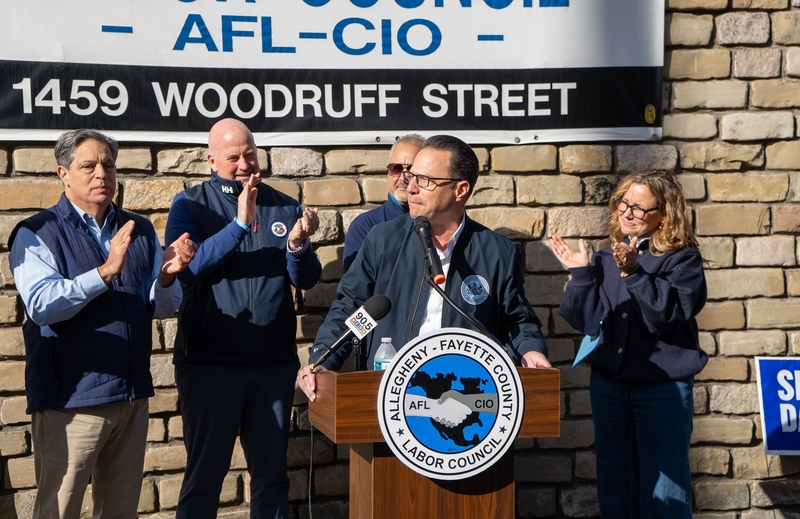
The technologies, he said, “should be developed by the hands of a Pennsylvania worker…not in communist China,” according to the Pennsylvania Capital-Star.
Under pressure from grassroots opposition and from his Republican challenger, state Treasurer Stacy Garrity, Shapiro signed an executive order in August 2026 mandating energy usage and transparency requirements on “greedy” data center developers.
In Pennsylvania state politics, Hadley Haas, a Democrat vying to unseat Republican state Rep. Valerie Gaydos in the 44th House District, said data center regulations have become a main issue in her campaign.
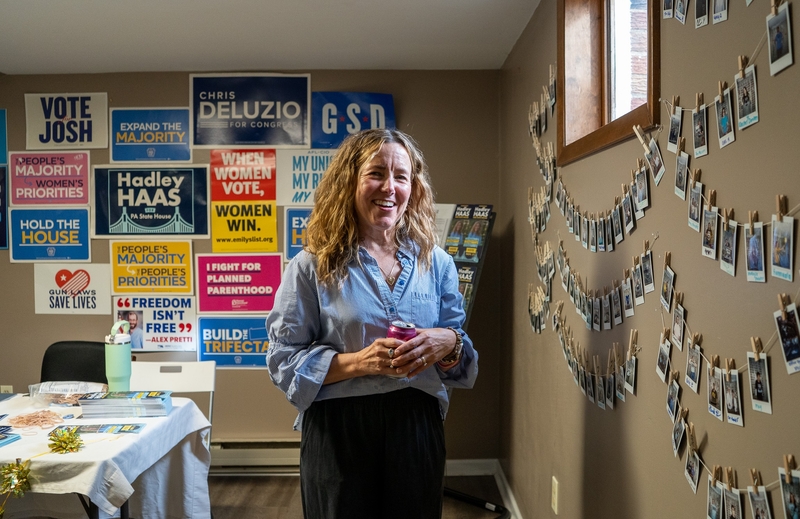
“There's just a generalized anxiety, I would say, about AI and data centers, especially around the cost of utilities,” Haas told States Newsroom. “Sometimes people will bring up water consumption or noise and that kind of thing. But mostly, they're concerned about the cost implications.”
Haas said her platform includes “guardrails” on data center development. She accused her opponent of flip-flopping on the issue — voting “no” in March on a data center regulation bill in the Democratic-led Statehouse, but then announcing support for a 180-day pause proposal in July.
“People started to see actual data that this was an issue that was a concern for people, and that's when we saw more of the Republicans starting to chime in,” she said.
States Newsroom reached out to Gaydos’ campaign for comment but did not receive a reply.
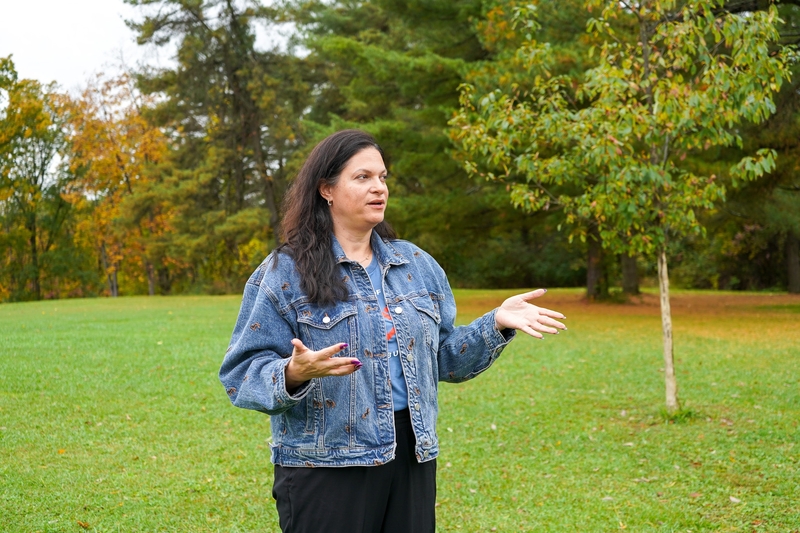
Pennsylvania’s 44th House District occupies the west side of Allegheny County, where the 15-member countywide council voted unanimously in September to ban the development of data centers over 25 megawatts on any county-owned land, including vast tracts of park land.
Council member Kathleen Madonna-Emmerling, who represents a portion of the county’s western side, said ,“It’s important we do this proactively because it gives us the strong legal foundation to deny those permits without discriminating against a certain type of business.”
States Newsroom reached out to all members of the Springdale borough council for comment but did not hear back.
West said he expects “this issue is going to stay on the political scene for several years as people debate how we should handle these facilities.”
All States Newsroom content is free to republish. Read our republishing policy for more information.