Cooper rallies support one week into North Carolina’s early voting
Oct 22, 2026 | 9:29 pm ET
Description
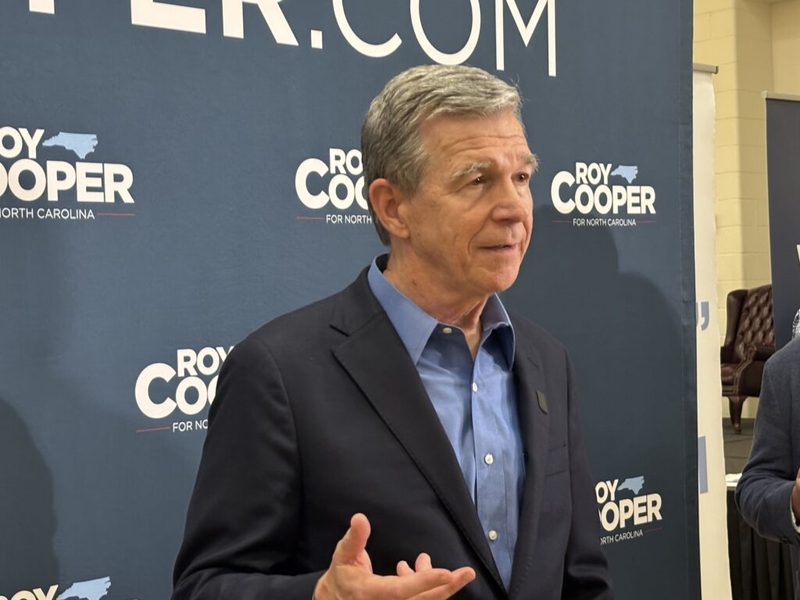
Roy Cooper speaks to reporters during a "Make Stuff Cost Less" campaign event in Raleigh on Oct. 22, 2026. (Photo: Christine Zhu/NC Newsline)
A week into early voting, more than a million North Carolinians have cast their ballots. While the numbers currently swing toward Democrats, Roy Cooper’s campaign isn’t slowing down.
The Democratic former governor spoke to about 150 supporters in downtown Raleigh Thursday night as part of his “Make Stuff Cost Less” campaign blitz across the Tar Heel State.
Sarah Redd was one of the people in the crowd. The Raleigh behavioral technician said her most important issues are Medicaid and the cost of childcare.
In her personal life, she’s had to cut back on hobbies and non-essentials, like travel and clothes. At work, many of her clients rely on Medicaid.
“It’s impacted them a lot, and how many hours we’re able to give them therapy,” Redd said.
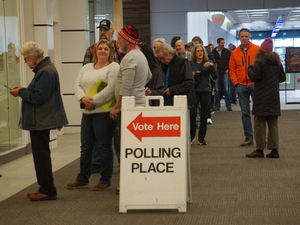
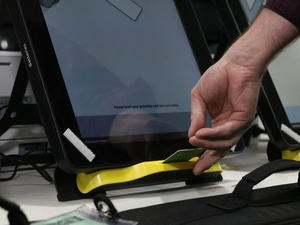
Redd voted early in person Monday, one of 1,101,318 North Carolinians who have cast their ballots in the first week of early voting. That’s an increase of 302,540 ballots, or 38%, over the last midterm election in 2022.
Of those numbers, registered Democrats cast 43% of those votes and registered Republicans account for 22.5%. Democrats historically have higher turnout during early voting in North Carolina, while Republicans favor going to the polls on Election Day.
Unaffiliated voters make up the largest share of North Carolina’s electorate — and they’re responsible for 34% of ballots cast so far.
Compared to the 2022 midterm, unaffiliated voters have the largest increase in turnout so far this year. According to an analysis of state voter data by Catawba College political scientist Michael Bitzer, unaffiliated voters were up by 72% over 2022 in the first week of early voting. Democrats were up by 62%. Republican turnout has increased by just 1.7%.
Democrats outraise opponents in NC’s most contentious congressional races
That looks like good news for Democrats, since polls show unaffiliated voters breaking for Democrats this year, thanks to high inflation and fuel costs, and an unpopular war. But there are still ten more days of early voting for Republicans to catch up.
Cooper isn’t taking anything for granted.
“We have to remember that oftentimes, things can change during early voting as we get toward Election Day, so we’ve got to keep working and getting people out to vote,” Cooper told reporters.
Cooper, a two-term governor and four-term attorney general, is relying on unaffiliated voters to help him defeat GOP candidate Michael Whatley in the contest for North Carolina’s open U.S. Senate seat.
Democrats, who need a net gain for four seats this fall to gain majority control of the U.S. Senate, view North Carolina as one of their best pickup opportunities this fall. Cooper has led Whatley by double digits in the polls for months. Election forecaster Cook Political Report rates the race as “likely Democrat.”
Whatley, former chair of the Republican National Committee and North Carolina Republican Party, has closely aligned himself with President Donald Trump and said he ran for the seat following Trump’s request. But Trump’s approval ratings in North Carolina have slipped into the mid-30s in recent polls.
Cooper criticized Whatley for benefitting from corruption and the status quo in Washington.
“People are very frustrated that their paychecks are not keeping up with the cost of living,” Cooper told reporters. “They’re frustrated that Washington not only is not doing anything about it, they’re making it so much worse with the chaotic tariffs and with this war in Iran.”
The Whatley campaign did not respond to NC Newsline’s request for comment.
Cooper has centered his campaign around affordability and the economy. For healthcare, he wants to reimplement the Affordable Care Act tax credits and cap annual out-of-pocket costs for prescription drugs.
That’s one reason Michael Kimsal, a small business owner from Franklin County who attended Thursday’s event, said he’s supporting Cooper.
Kimsal, who’s self-employed, is responsible for buying his own health insurance. Last year, he said he paid about $650 per month, in part due to extended subsidies under the Affordable Care Act.
But Congress cut out those premium tax credits at the end of 2025. Now, Kimsal’s health insurance is $1,650 each month.
“It probably doesn’t seem like much to the insurance companies, but it’s quite a lot for us to absorb,” he said. “It means that that’s $1,000 a month less that’s going to our local community, so eating out less, giving to charities less, going to local events less.”
Kimsal reflected on Cooper’s record as governor of helping to lower costs and increase access to health services through Medicaid expansion.
“We want good change. We want positive change,” Kimsal said. “We need a strong leader like Roy Cooper to go out and deal with people like us.”
Raleigh, NC