Colorado is way behind on Waymo rules
Oct 22, 2026 | 12:55 pm ET
Description
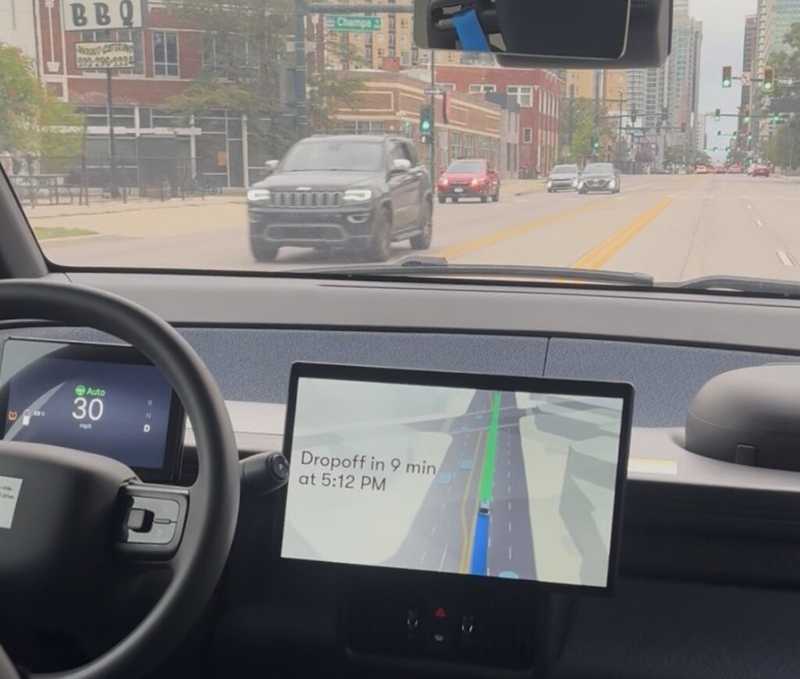
A view from inside a Waymo driving south on Broadway in downtown Denver on Sept. 7, 2026. (Photo by Quentin Young/Colorado Newsline)
Last month, as vendors were setting up booths at a farmers market on South Pearl Street in Denver, a car drove down the closed road. It evaded barricades, ignored signs and came precariously close to market participants, who eventually were able to guide it out of the danger zone.
The behavior would likely be considered a traffic violation had the car been driven by a human. But this was a Waymo, an autonomous passenger service vehicle. No people were inside it. There was no one to ticket.
The incident was not the only time since the beginning of September when Waymo started operating in Denver that its cars have performed in a way that might have earned a fine for a human driver. But Colorado law does not account for misbehaved autonomous vehicles, and local police have no way to issue tickets when the cars violate traffic laws.
That’s got to change.
At least one Colorado lawmaker is thinking about how to address this regulatory gap. Rep. Jenny Willford, a Democrat who represents Northglenn and north Thornton, plans to introduce a bill in the next legislative session, which starts in January, that would regulate autonomous vehicles and establish a way for police to enforce laws when Waymos run afoul of them.
One of the main provisions in the bill would create and define a new oversight category for autonomous vehicles within the state’s Public Utilities Commission. They’re licensed under the luxury limousine carrier type, Willford said.
“Obviously they’re not luxury limousines,” she said. Her bill would create a category that reflects Waymo’s business model, includes appropriate safety provisions and clarifies the commission’s oversight authority, such as its ability to investigate complaints.
The bill would also establish how law enforcement could issue tickets when autonomous vehicles break the law.
Willford said she’s engaging with stakeholders about the bill, and these will include local law enforcement officials and representatives from Waymo. Asked whether she foresees the bill attracting bipartisan support, she expressed doubt.
“In the past, I’ve certainly recognized that my colleagues on the other side of the aisle have been opposed to establishing any sort of oversight or regulation on businesses. So my expectation is that will be consistent when we’re looking at this legislation, but who knows? Maybe they’ll surprise me.”
She previously told Westword that she had considered running a bill on autonomous vehicle regulations during the last legislative session, but Gov. Jared Polis, a fellow Democrat, stood in the way.
“The governor was very, very, very opposed to doing anything connected to Waymo,” Willford told the outlet.
Polis is term-limited and will leave office in January.
Willford’s law, were it to be enacted, would be similar to new regulations adopted in California, which took effect in July. They allow law enforcement to cite autonomous vehicle operators for moving violations and more generally ensure the operators comply with the state traffic code. The rules also ensure operators are responsive when their vehicles are involved in emergency situations.
Colorado regulations can’t arrive too soon, and state lawmakers should have anticipated the oversight gaps years ago. The farmers market incident was hardly the only time Waymos have gotten into trouble in Denver — it wasn’t even the only time they’ve threatened a local farmers market. They’ve been flummoxed by construction zones and pedestrians, and at least one has been involved in a crash (a human driver rear-ended it).
“Uncertainty is the kryptonite of all of AI, and especially self-driving cars,” Missy Cummings, a computer science professor at George Mason University, told 9News. “The instant that the environment changes in an unpredictable way, this confuses the car.”
Nevertheless, early data indicates that Waymos are much safer than cars with human drivers, and their rapid, widespread adoption should be encouraged, not thwarted.
Willford has used Waymo. She’s a fan. This year she sponsored a successful ride-hailing bill that sets requirements for driver background checks, a measure that followed a case in which a man was charged with unlawful sexual contact against Willford during a Lyft ride in 2024. Waymo offered extra security.
“Honestly, as a survivor of sex assault, like you know, via a Lyft driver, it was really nice to be able to get into a vehicle and not have to worry about, you know, the person in the driver’s seat,” Willford said.
As she develops proposed regulations for autonomous vehicles, she doesn’t want her posture to be adversarial, she said, adding, “But they do need to be regulated. There does need to be appropriate oversight.”
Denver, CO